#WriteTheWrong - Ad Analysis

AI Editor notes
Straight from the gut!!
“This is a case study, not an ad, and it works. It's smart because it shows, it doesn't just tell. Instead of another montage of sad kids, they created a physical thing, an art piece. It feels like an agency proving its own cleverness, but in this case, the cleverness serves the cause. The move to put it right in front of the UN is the critical piece—it's PR with a purpose.”
Quick Summary
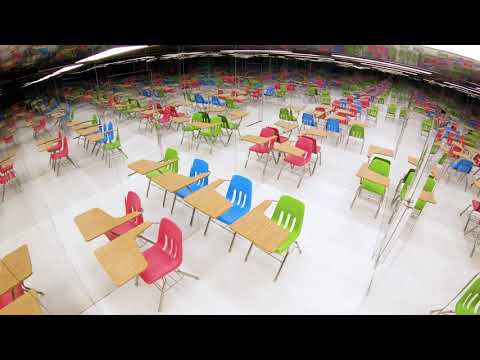
This campaign effectively translates an incomprehensibly large number—260 million children out of school—into a tangible, powerful physical experience. By creating the 'Infinity Classroom' and placing it at the United Nations, Theirworld bypassed traditional PSA formats to create a visceral, shareable symbol of the crisis, aimed directly at policymakers and the public.
Executive Summary
This piece by Theirworld is less of a traditional commercial and more of a video case study documenting a brilliant piece of experiential marketing. Its strength lies in its ability to solve a fundamental communication challenge for any social cause: how to make an abstract, overwhelming statistic feel real and urgent. The number '260 million' is functionally meaningless to most people; it’s too big to grasp. The campaign’s success is built entirely on its solution to this problem.
The Core Insight here is that showing is infinitely more powerful than telling, especially when dealing with data. The human mind can't visualize 260 million of anything, but it can understand the feeling of looking into an endless, empty space where something should be. The insight is that the absence of these children is a tangible loss, and the best way to communicate that loss is to make it physically present.
The execution follows a simple Problem-Solution-Proof structure. It opens by clearly stating the problem with stark data points: 260 million children are out of school. This isn't just a current problem; it’s a future one, with half of the world's children projected to lack basic skills by 2030. The film then pivots to the solution: 'Theirworld set out to show the magnitude of the crisis.' We see a quick montage of the 'Infinity Classroom' being built, which serves as a 'behind-the-scenes' glimpse that builds anticipation. The reveal of the installation at the United Nations is the payoff. Placing the classroom at the UN is the 'Proof' component—it demonstrates a serious, targeted effort to bring the message directly to those in power. The final section connects this action back to the broader mission—solving global challenges—and provides a clear call to action. The dramatic, fast-paced string music and quick cuts give the 51-second film a sense of urgency and importance.
The Debrief for the team that created this is a masterclass in targeted communication. They didn't try to boil the ocean with a generic awareness TV spot. They identified a key moment (the UN General Assembly) and a key audience (world leaders) and designed an experience precisely for them. [2, 4] The lesson is that a well-placed, highly creative physical activation can generate more earned media and targeted impact than a multi-million dollar ad buy. It proves that when your goal is to influence policy, you should take your message to the exact place where policy is made. The video itself becomes the scalable asset that shares the power of the physical event with the world.
Theme Keywords
Brand Position
The smart, creative catalyst for solving the global education crisis.
Brand Archetype
The Sage/Creator
Creative Game Plan
Visualize an unimaginable number to make the global education crisis impossible to ignore.
Diagnosis: Issues & Solutions
Primary Issue: Clarity of "What's Next?"
The Problem:
The call to action is the weakest part of an otherwise stellar campaign. 'Join Us' and '#WriteTheWrong' are emotionally resonant but functionally vague. It leaves the inspired viewer wondering what, specifically, they are supposed to do next. Is it donating, signing a petition, or something else?
The Solution:
The CTA should be made more concrete. A simple change like 'Join us at WriteTheWrong.org to petition your leader' would provide a clear, immediate, and measurable next step for the audience, converting emotional energy into direct action.
Secondary Issue: Emotional Connection
The Problem:
While the concept is powerful, the execution is sterile. The video documents the installation but lacks a human element. Seeing a world leader or even a regular person's reaction to being inside the classroom could have added a layer of emotional depth that the current video lacks.
The Solution:
Incorporate reaction shots. A 2-3 second shot of someone inside the installation, their face reflecting awe or sadness, would humanize the experience and make the emotional stakes feel more personal to the viewer at home.
Additional Notes
Related Links
Credits
Share this Analysis
More Theirworld ad breakdowns
- Sharing Space - Episode 1: Daniel Radcliffe | TrailerThe Trevor Project
- Violence marks forever - Join David Beckham and end violence against childrenUNICEF
- It's Time to Rise with Girl UpGirl Up
- Burns and Smiles - Awareness Campaign 2018 - Cinema - #SeeDifferent the burns victimsBurns and Smiles
- Goodwill: BikeGoodwill
- Brain Scan PSA for Alzheimer Society of B.C.Alzheimer Society of British Columbia
- Pro Audito Ruf Lanz Donations 50sPro Audito Bern
- What is love?Aistenok