Burns and Smiles - Awareness Campaign 2018 - Cinema - #SeeDifferent the burns victims - Ad Analysis

AI Editor notes
Straight from the gut!!
“This one hurts, in the way truly effective work does. The setup feels so intimate and disarming. You think you understand his 'trick' is about rewriting movie endings, but the real trick is the one he plays on himself to survive a social situation. The final realization that he leaves early to avoid the lights is a gut punch. It’s uncomfortable, memorable, and deeply human.”
Quick Summary
This film's power lies in a devastating reveal. It reframes the social isolation of a burn survivor not as a simple choice, but as a painful defense mechanism against the glare of public scrutiny. The simple act of the house lights coming up in a cinema becomes a moment of intense anxiety, forcing the audience to understand that for some, being seen is the most difficult part of their day.
Executive Summary
This film from Burns and Smiles and TBWA\Paris is a masterclass in narrative misdirection for social impact. [5] It operates on a simple, yet profoundly insightful premise: the deepest scars are not always the physical ones, but the emotional ones carved by social alienation. The campaign chooses not to lecture, but to immerse the viewer in the lived reality of a burn survivor, using the universal experience of going to the movies as its stage.
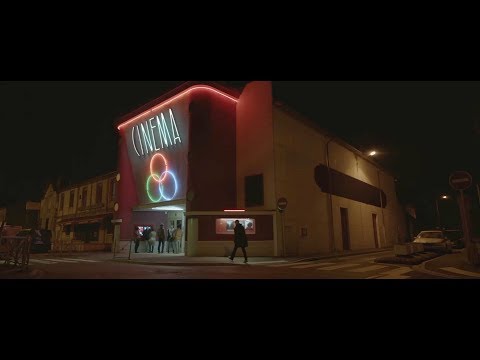
The execution follows a classic Setup-Turn-Payoff structure, but with a clever twist. The Setup introduces us to our protagonist, a man with severe burn scars who is immediately endearing and disarmingly open. He tells the filmmakers he has a 'special way' of watching movies, a 'trick.' He details how he mentally rewrites sad endings into happy ones. This initial setup cleverly makes the audience believe the story is about his internal resilience and imagination. The Turn happens as he arrives at the cinema. He waits for everyone to enter before him, slipping into the theater once the lights are down. At this point, the audience likely believes this is his trick—a way to avoid the judging stares of the crowd. The film lets us sit in this assumption, watching him enjoy the movie in the anonymous comfort of the darkness, sharing laughs with the strangers around him. The Payoff is the film's most powerful moment. As the movie ends and the house lights begin to rise, his smile vanishes, replaced by panic. He scrambles to leave before he can be seen, exiting into the street alone. His final voiceover delivers the gut-wrenching truth: 'I have to leave 15 minutes ahead... When the light comes on in the end, I just can't face it.' The 'trick' was never about rewriting movie plots; it was about orchestrating his entire experience to avoid the moment of being seen. The final line, 'Let's help burns victims come out of the shadows,' perfectly crystallizes the film's purpose.
The key lesson from this campaign is the power of experiential empathy. Instead of simply telling us that burn survivors feel isolated, the film makes us feel it. We share in the protagonist's joy in the dark and his panic in the light. It forces a moment of introspection, making the viewer aware that an act as simple as turning on the lights can be an act of exclusion for someone else. It's a quiet, devastating, and ultimately unforgettable piece of communication that achieves its goal with intelligence and grace.
Theme Keywords
Brand Position
The organization that understands and combats the social isolation of burn survivors.
Brand Archetype
The Caregiver
Creative Game Plan
Immerse the audience in the world of a burn survivor to reveal that the greatest pain isn't the scars, but the social anxiety of being seen.
Diagnosis: Issues & Solutions
Primary Issue: Clarity of "What's Next?"
The Problem:
The primary weakness is the slight disconnect between the powerful emotional film and the standard 'donate here' URL at the end. The viewer is left with a profound feeling of empathy but the path to action feels like an add-on rather than an integrated part of the story's conclusion.
The Solution:
Integrate the call-to-action more thematically. For example, a closing line like, 'Help us make the light a little warmer for everyone. Donate,' would bridge the emotional narrative with the practical request more seamlessly.
Secondary Issue: Strategic Sense
The Problem:
The film's 3-minute runtime is perfect for its intended cinema and long-form digital placement, but it limits its utility on short-form social platforms where it might not be seen in its entirety.
The Solution:
Develop shorter, 15- and 30-second cuts that focus on the most powerful moments—specifically, the contrast between his joy in the dark and his panic as the lights come up. These could act as teasers driving to the full film.
Additional Notes
Related Links
Credits
Share this Analysis
More Burns and Smiles ad breakdowns
- Burns and Smiles - Awareness Campaign 2017 - Halloween - #SeeDifferentBurns and Smiles
- Burns and Smiles - Awareness Campaign 2019 - Mathéo - #SeeDifferentBurns and Smiles
- Sharing Space - Episode 1: Daniel Radcliffe | TrailerThe Trevor Project
- Violence marks forever - Join David Beckham and end violence against childrenUNICEF
- It's Time to Rise with Girl UpGirl Up
- Goodwill: BikeGoodwill
- Brain Scan PSA for Alzheimer Society of B.C.Alzheimer Society of British Columbia
- Pro Audito Ruf Lanz Donations 50sPro Audito Bern