Burns and Smiles - Awareness Campaign 2017 - Halloween - #SeeDifferent - Ad Analysis

AI Editor notes
Straight from the gut!!
“This is a heavy hitter. It's long, but it earns every second. The setup is patient, almost uncomfortably so. You think it's going to be a horror short, but it flips the script into something deeply human. The use of Halloween is a smart, gut-punch of a creative device. It makes you feel complicit in the way we stare at people who are different.”
Quick Summary
This film brilliantly uses the context of Halloween—a night where everyone wears a 'mask'—to show the profound isolation of a burn survivor. It reveals that his scars are his everyday 'costume,' and only on this one night can he feel normal, hidden in plain sight among the other 'monsters.' The powerful reveal isn't that he's a burn survivor, but that Halloween is the only day he isn't.
Executive Summary
The core insight of this film is a simple, yet devastating, human truth: for people with visible differences, the world can be a place of constant, unwilling performance where they are the spectacle. The campaign’s genius is in revealing that the one day a year everyone else wears a costume is the only day a burn survivor can finally take his off.
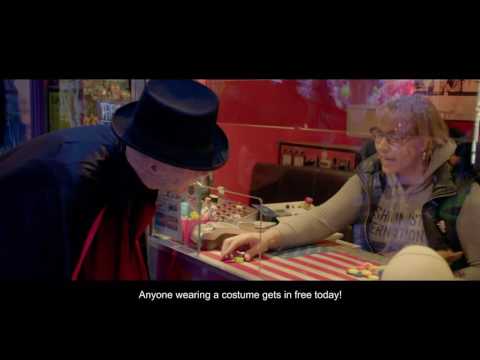
The execution follows a classic Setup-Turn-Payoff structure, masterfully subverting audience expectations. The Setup (0:00-1:00) introduces our protagonist, a man with severe facial scars, living in what appears to be self-imposed isolation. The date is Halloween, and the dark, moody cinematography leads us to believe this will be a story about his fear of the holiday. We anticipate a narrative of him being cruelly mistaken for a monster. The Turn (1:00-2:30) completely inverts this premise. He isn't afraid of Halloween; he's been waiting for it all year. The twist is that his vampire costume is not a disguise to hide his scars, but a passport to normalcy. It gives his appearance a context the world can accept. When he interacts with trick-or-treaters who see him only as a fun character, his relief is palpable and touching. This pivot transforms the story from one of fear into one of profound longing for acceptance. The Payoff (2:30-3:40) delivers on this new premise with an outpouring of joy. At the carnival, our protagonist is fully assimilated, just another person in costume. He rides bumper cars, eats fries, and dances with an abandon that is clearly a rare luxury for him. The true payoff, however, is the final on-screen text: 'Let's help burns victims smile again more than just once a year.' This line reframes the entire film. His night of freedom was a fleeting exception, and it crystallizes the charity's mission: to make that feeling of acceptance an everyday reality.
The team should learn that the most effective way to generate empathy is not to tell the audience what to feel, but to allow them to experience the world through another's eyes. By using the cultural hook of Halloween, the film creates a powerful metaphor for otherness and belonging that transcends the specific issue of burn survivors, making its message universal and unforgettable.
Theme Keywords
Brand Position
Burns and Smiles is the organization that helps burn survivors reclaim their place in society and rediscover joy beyond their scars.
Brand Archetype
The Caregiver. Personality: Empathetic, hopeful, human.
Creative Game Plan
Use the irony of Halloween to show that for a burn survivor, the one night of the year when people wear masks is the only night he can feel unmasked.
Diagnosis: Issues & Solutions
Primary Issue: Clarity of "What's Next?"
The Problem:
The film builds immense emotional momentum, but the final call to action—'Join us on burns-and-smiles.org'—is too generic. It fails to provide the emotionally-charged viewer with a specific, immediate action that channels the empathy the film worked so hard to create.
The Solution:
Sharpen the final call to action to be more specific and tangible. Pair the URL with a directive that reflects the film's message, such as 'Help make every day Halloween. Donate now.' or 'Change how people see. Share this film.'
Secondary Issue: Strategic Sense
The Problem:
At nearly four minutes, the film's length is a significant barrier to completion in the fast-paced digital advertising landscape. Many viewers may drop off before the crucial emotional payoff, limiting the message's overall reach and impact.
The Solution:
Develop shorter cutdowns (e.g., 60 and 30 seconds) that focus on the core emotional reversal—the joy of acceptance at the carnival—for use in paid media placements like pre-roll. These shorter assets can capture the essence and drive interested viewers to the full-length film.
Additional Notes
Related Links
Credits
Share this Analysis
More Burns and Smiles ad breakdowns
- Burns and Smiles - Awareness Campaign 2018 - Cinema - #SeeDifferent the burns victimsBurns and Smiles
- Burns and Smiles - Awareness Campaign 2019 - Mathéo - #SeeDifferentBurns and Smiles
- American Cancer Society: CourageAmerican Cancer Society
- “Fight disinformation. Arm yourself with facts” – RSF unveils its new year’s end campaign video.Reporters Without Borders (RSF)
- ¿Te imaginas cómo es la vida de los niños que nacen y crecen en prisión?Reinserta
- Médicos del Mundo - SIRIAMédicos del Mundo
- Before They’re Gone.This is Yolanda’s story.Dementia SA
- When I grow upReporters Without Borders