When I grow up - Ad Analysis

AI Editor notes
Straight from the gut!!
“This is a gut punch. Simple, stark, and brutal. The creative team knew exactly what they were doing by using the innocence of children to deliver these devastating lines. It's emotionally manipulative, but for a cause this important, it's justified. It makes the danger to journalists feel immediate and utterly wrong. You can't unsee it.”
Quick Summary
This ad's power comes from hijacking a universal childhood trope—'When I grow up'—and twisting it into a horrifying prophecy. By having children calmly state the violent fates that await journalists, the spot makes an abstract political issue feel like a deeply personal and unacceptable tragedy, forcing the viewer to confront the real-world cost of a free press.
Executive Summary
This spot from Reporters Without Borders, created by agency BETC, is a textbook example of how to make an abstract, global issue feel painfully immediate and personal. It operates on a simple, powerful insight: we universally expect children to have hopeful, ambitious dreams for their future. By systematically and brutally subverting this expectation, the ad corners the viewer emotionally, leaving them with a stark and uncomfortable truth.
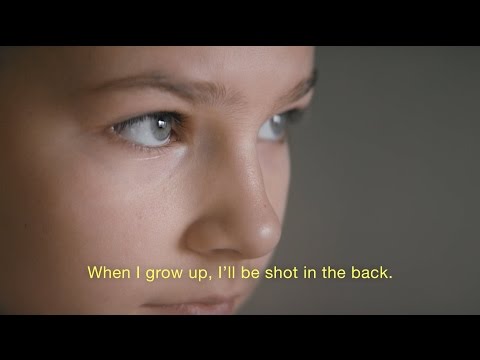
The execution follows a classic Setup-Turn-Payoff structure, deployed with near-perfect pacing. The Setup (0:00-0:31) establishes a familiar, almost documentary-style tone. We see a montage of children from around the world, looking directly at the camera. The setting, the casting, and the direct address all prime us for the classic 'When I grow up...' aspirational message common in charity advertising. The Turn happens almost immediately and repeats with escalating horror. The first child's line, 'When I grow up, I'll be beaten by the army,' creates a jarring disconnect. This isn't a dream; it's a nightmare. Each subsequent child adds another layer of dread: death threats, being shot, torture, imprisonment. The filmmaking is disciplined—no dramatic music, no quick cuts, just the child's face and their chilling words. This repetition builds an unbearable tension and a single, burning question in the viewer's mind: 'What profession could possibly lead to this?'
The Payoff (0:32) is the final piece of the puzzle, delivered on a silent, black screen: 'WHEN I GROW UP, I'LL BE A JOURNALIST.' This reveal is the entire point of the ad. It reframes everything, turning the children's statements from dystopian fiction into the documented, factual reality for reporters in many parts of the world. The brand, Reporters Without Borders, appears only after this truth has landed, positioning itself not as a generic charity, but as the necessary response to this specific, horrifying problem. [1]
The debrief for the team that made this would be short: this is how you create meaning. You find a universal truth, you build a structure around it that creates tension, and you deliver a reveal that changes the way the audience sees the world, even if just for a moment. It proves that you don't need a massive budget or complex effects to be powerful; a strong, singular idea executed with restraint is often more effective.
Theme Keywords
Brand Position
The fearless, essential defender of journalists who risk their lives for the truth.
Brand Archetype
Hero
Creative Game Plan
Juxtapose the universal innocence of childhood ambition with the brutal reality of being a journalist to shock viewers into recognizing the unacceptable cost of a free press.
Diagnosis: Issues & Solutions
Primary Issue: Clarity of "What's Next?"
The Problem:
The ad does a phenomenal job of creating emotional outrage but provides a very generic outlet for that feeling. The simple 'Donate' call-to-action feels disconnected from the specific horrors depicted. The viewer is left feeling angry and sad, but without a clear understanding of how their money will stop a journalist from being beaten, shot, or imprisoned.
The Solution:
The call-to-action should be more tangible. Instead of just 'Donate', try something like 'Your donation provides a journalist with legal aid' or 'Help us protect those who tell the truth.' Connecting the action to a specific solution would make the CTA more compelling and effective.
Secondary Issue: Emotional Connection
The Problem:
The ad's unrelenting bleakness risks overwhelming the viewer to the point of psychic numbing. While powerful, some may disengage from the message because it feels too hopeless, leaving them with a sense of dread rather than a motivation to help.
The Solution:
A small addition at the end could mitigate this. After the logo, a final card showing a journalist at work, perhaps with a caption like 'Your support keeps them safe,' would provide a sliver of hope and reinforce the positive impact of taking action, channeling the viewer's emotion more productively.
Additional Notes
Credits
Share this Analysis
More Reporters Without Borders ad breakdowns
- War ReportersReporters Without Borders
- Singing DictatorsReporters Without Borders
- "Great People" ENReporters Without Borders
- Bahrain: the two facesReporters Without Borders
- American Cancer Society: CourageAmerican Cancer Society
- “Fight disinformation. Arm yourself with facts” – RSF unveils its new year’s end campaign video.Reporters Without Borders (RSF)
- ¿Te imaginas cómo es la vida de los niños que nacen y crecen en prisión?Reinserta
- Médicos del Mundo - SIRIAMédicos del Mundo