Bahrain: the two faces - Ad Analysis

AI Editor notes
Straight from the gut!!
“This is smart, aggressive work. The audio trick is the whole idea, and it's brutally effective. It's not trying to be subtle; it's a punch in the gut designed to make you uncomfortable. This is what advocacy advertising should be: provocative, disruptive, and impossible to ignore. It makes the roar of the F1 engine sound like the noise of censorship.”
Quick Summary
This ad is a masterclass in tactical, high-impact advocacy. By weaponizing the sound of the Formula 1 Grand Prix to literally drown out a news report about violent protests in Bahrain, it creates a simple, brutal, and unforgettable metaphor for how major sporting events are used to whitewash human rights abuses and silence journalism.
Executive Summary
This campaign from Reporters Without Borders (RSF) is a textbook example of effective tactical advertising, leveraging a cultural moment to deliver a potent political message. The ad's power doesn't come from a complex narrative or high production values, but from a single, brilliantly executed creative idea that transforms sound into a political statement. It operates on a simple, undeniable insight: the glamour and noise of international sporting events are often used as a tool to distract from and cover up human rights abuses. RSF's campaign for press freedom in Bahrain was explicitly designed to counter the government's narrative, with one RSF official stating, 'Every year, the Bahraini government hopes the roar of Formula One cars will drown out criticism of the regime's human rights violations'. [4, 5]
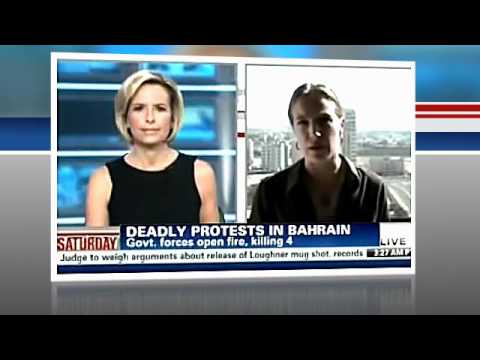
The ad’s execution follows a classic Setup-Turn-Payoff structure. The Setup (0:00-0:14) is deceptively conventional. It presents the viewer with the familiar format of a 24-hour news report, complete with a professional anchor, on-location correspondent, and authentic, grainy footage of civil unrest. This creates an immediate sense of credibility and draws the viewer in with what appears to be a legitimate news update on the deadly protests in Bahrain. The Turn (0:14-0:27) is the ad's moment of genius and aggression. Just as the field reporter begins to speak, her voice is completely obliterated by the deafening scream of a Formula 1 car. The audio is the entire creative concept. It functions as a weapon, hijacking the ad and physically demonstrating the act of censorship. By keeping the visual on the reporter's face as she tries to speak, the ad creates a deeply unsettling disconnect that forces the viewer to confront the act of being silenced. The Payoff (0:27-0:35) cuts through the noise. The screen goes black, and the text provides the thesis: 'Don't let the Formula 1 GP hide the reality of Bahrain.' This line explains the audio metaphor and crystalizes the ad's purpose. The RSF logo and call to action position the organization as the entity capable of cutting through the propaganda.
The key lesson from this ad is the power of a single, disruptive idea, particularly in the realm of audio. In a media landscape saturated with visual stimuli, using sound as the primary weapon for the creative makes the message feel more invasive and impossible to ignore. It also serves as a masterclass in 'event-jacking' or 'culture-jacking.' The campaign was launched just before the 2012 Bahrain Grand Prix, a race that was already controversial due to the ongoing political situation. [3] By inserting itself directly into this conversation, RSF maximized its relevance and ensured its message would be seen by the very audience—F1 fans and the global media—it sought to influence. It was a strategic choice to fight a multi-million dollar PR campaign not with a bigger budget, but with a smarter, more provocative idea.
Theme Keywords
Brand Position
The uncompromising, fearless watchdog that exposes the truth powerful entities try to hide.
Brand Archetype
Hero/Rebel
Creative Game Plan
Juxtapose the sound of Formula 1 with the silence of censored journalists to create a powerful, visceral metaphor for media suppression.
Diagnosis: Issues & Solutions
Primary Issue: Clarity of "What's Next?"
The Problem:
The on-screen call-to-action is 'Support us on RSF.org,' which is a broad, long-term brand-building goal. While the YouTube description contained a more immediate and specific link to a petition, the creative itself could have been stronger with a more tangible 'ask' that matched the urgency of the message.
The Solution:
Focus the call-to-action on a single, urgent task that viewers can perform immediately. For example: 'See the reality at RSF.org' or 'Demand press freedom in Bahrain. Sign the petition now.'
Secondary Issue: Emotional Connection
The Problem:
The ad's primary emotional tool is shock. It's highly effective at grabbing attention but less so at building a deeper, human connection with the victims of the repression it depicts. The approach is intellectual and metaphorical, which risks keeping the viewer at an arm's length from the human cost.
The Solution:
While the shock tactic is the core idea, a brief, silent shot of a protestor's face at the very end, just before the logo, could have added a layer of human empathy without slowing the pace, grounding the metaphorical noise in a real human consequence.