Violence marks forever - Join David Beckham and end violence against children - Ad Analysis

AI Editor notes
Straight from the gut!!
“This is a tough, visceral watch. Using Beckham—a global dad figure whose body art is part of his identity—is a smart move. Turning that art into animated horror stories is a jarring and effective creative twist. It's uncomfortable, which is the entire point. It's less about an immediate donation and more about searing a message into your brain. It definitely achieves that.”
Quick Summary
By twisting David Beckham's iconic, self-chosen tattoos into animated nightmares of abuse, the ad makes an unforgettable statement: violence leaves permanent, unchosen marks on children. The campaign brilliantly subverts a celebrity's personal brand to visualize the invisible, lifelong scars of trauma.
Executive Summary
This UNICEF campaign is a masterclass in subverting celebrity culture for social good. Instead of merely placing David Beckham in front of a camera to read a script, the creative team at BlindPig turned him into the very medium of the message. It's a move that transforms a standard PSA into a piece of art that is as disturbing as it is brilliant.
The Core Insight: The central idea rests on a simple, powerful dichotomy: tattoos are marks we choose to represent our stories and memories, while the scars of violence are marks inflicted upon children against their will, which they are forced to carry forever. [1, 2, 15, 16] This insight connects the abstract concept of psychological trauma to the tangible, permanent nature of ink on skin, making the invisible visible.
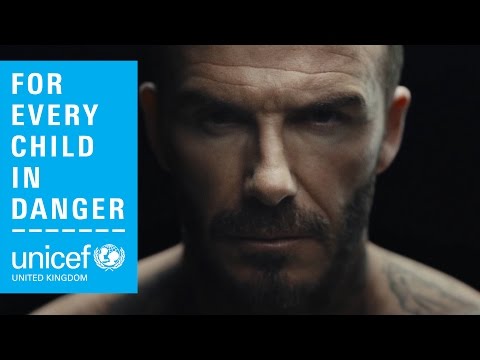
The Execution: The ad follows a classic Setup-Turn-Payoff structure. The setup (0:00-0:04) establishes a familiar scene: the iconic, tattooed torso of David Beckham. The audience recognizes him, and the mood is intimate and serious. The turn (0:05-0:51) is where the creative idea ignites. A child's voice delivers the thesis—'Violence marks forever'—and suddenly, the tattoos animate. These aren't just random animations; they are specific, harrowing vignettes of abuse—in the home, at school, online. [14, 19] The sound design here is crucial, as the jarring cries of children cut through the somber score, refusing to let the viewer look away. The technique of using mixed media (live-action and animation) serves the story perfectly, visualizing the internal trauma playing out on an external surface. The payoff (0:52-1:07) is simple and direct. Beckham turns to the camera, his celebrity persona stripped away to reveal a concerned human, and delivers the closing lines with gravitas. The final hashtag, #ENDviolence, provides the campaign's rallying cry. [11]
The Debrief: The key lesson here is the power of a perfectly matched concept and messenger. Using Beckham wasn't just about leveraging his fame; it was about leveraging his identity. His tattoos, his role as a father, and his global appeal were all integral to the idea's success. The campaign demonstrates that for a celebrity endorsement to be truly effective, it must go beyond a simple appearance and be woven into the creative fabric of the message itself. The result is work that doesn't just borrow interest from a celebrity but creates its own undeniable impact.
Theme Keywords
Brand Position
The world's leading protector of every child's right to a safe and healthy life.
Brand Archetype
Caregiver
Creative Game Plan
Visually manifest the permanent, invisible scars of child abuse by animating them onto the famously tattooed body of a global icon.
Diagnosis: Issues & Solutions
Primary Issue: Clarity of "What's Next?"
The Problem:
The call to action, while emotionally potent ('End it.'), is abstract. Viewers are left with a powerful feeling of outrage but without a clear, immediate, and tangible action to take beyond sharing the video, which can feel passive.
The Solution:
Supplement the broad call to action with a specific, low-friction task. For example, 'Join the 7 Fund,' 'Sign the petition to protect children online,' or even a simple 'Text UNICEF to donate $5.' This would channel the emotional energy the ad creates into a measurable outcome.
Secondary Issue: Emotional Connection
The Problem:
The film is so relentlessly grim that it risks overwhelming the viewer, potentially leading to emotional shutdown or aversion rather than empowerment. There is no moment of hope or resilience shown.
The Solution:
Introduce a single, fleeting image of hope or recovery. For instance, one of the violent tattoos could animate to show a hand reaching out to help, or a scar beginning to fade, visually representing the positive impact of UNICEF's work and giving the viewer a reason to believe their support matters.
Additional Notes
Related Links
Credits
Share this Analysis
More UNICEF ad breakdowns
- Watch what happens when parents join children to play | UNICEFUNICEF
- UNICEF 'Granatapfel'UNICEF
- Adrenaline ExperimentUNICEF
- These parrots will make you say WTF | UNICEFUNICEF
- #NoLostGeneration, Some stories were never meant for childrenUNICEF
- Millie Bobby Brown: Go Blue on World Children’s Day | UNICEFUNICEF
- The Greatest Story - The Good Guys Christmas - Eng - Unicef SwedenUNICEF
- Can Someone Find My Friends | Donate Your VoiceUNICEF