These parrots will make you say WTF | UNICEF - Ad Analysis

AI Editor notes
Straight from the gut!!
“I thought I was clicking on another dumb YouTube compilation. For 20 seconds, I was amused. Then the turn came, and it was a punch to the gut. It's a brilliant, insidious piece of creative because it uses the internet's own language against itself. It makes you feel complicit in the viewing, which is an incredibly uncomfortable and powerful place to put an audience. It's one of those ideas you wish you'd had.”
Quick Summary
This ad uses a classic bait-and-switch to devastating effect. It lures the audience in with the promise of a viral, funny-animal video—swearing parrots—only to pivot and reveal the horrifying truth that the parrots are mimicking the language of domestic abuse. This Trojan horse strategy bypasses viewer cynicism and makes the message about the lasting trauma of violence on children unforgettable.
Executive Summary
This UNICEF campaign is a textbook example of how to use misdirection to make a difficult message land with maximum force. It operates on a simple, powerful insight: the things children witness in a home are learned and repeated, and this exposure to violence leaves a permanent scar.
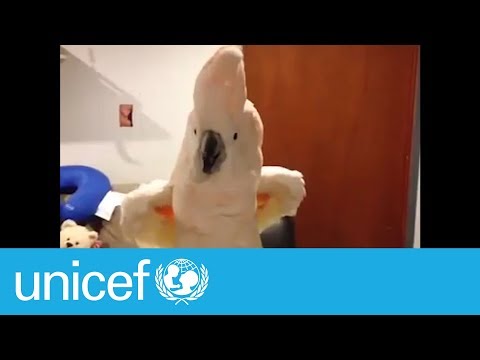
The execution follows a classic Setup-Turn-Payoff structure, optimized for a cynical online audience. The setup lasts for roughly the first 35 seconds. After a content warning that primes us for something shocking, we're presented with a montage of low-resolution, user-generated style clips of parrots swearing. This perfectly mimics a common internet video trope—the 'funny talking animal' compilation. The viewer is disarmed, expecting light entertainment. The clips are amusingly jarring, featuring phrases like "Shut the fk up" and "God damn, fking son of a bitch!".
The Turn is subtle but chilling. The phrases begin to shift from generic profanity to specific, contextual threats: "Don't touch me," "I'll kick your ass," and, most hauntingly, a distressed-sounding "You bitch!" The humor evaporates instantly. The viewer is forced to ask, "Where did these birds learn these specific words?" The context shifts from funny to deeply unsettling. The benign home settings now feel menacing.
The Payoff is delivered with a stark cut to black and a simple line of text: "If a parrot can remember what happens in an abusive home, imagine a child." This single sentence re-frames everything the viewer has just seen. The parrots are not performers; they are witnesses. Their words are not a joke; they are echoes of trauma. The ad follows this with a staggering statistic and a clear call to action, landing the full weight of the message now that the viewer's defenses are down. [2, 4] The use of what appears to be found footage, gathered by the agency Grey New York, lends a raw authenticity that a slickly produced shoot could never achieve. [2] By using an animal proxy, the ad cleverly avoids showing direct violence to children, which could cause viewers to turn away. Instead, it makes the audience piece together the horror themselves, making the realization far more personal and impactful.
Theme Keywords
Brand Position
The world's leading protector of children, exposing and combating the hidden crises that threaten their right to a safe childhood.
Brand Archetype
Caregiver
Creative Game Plan
Use the internet's fascination with 'funny animal videos' as a Trojan horse to deliver an unexpected and devastating message about the unseen impact of domestic violence on children.
Diagnosis: Issues & Solutions
Primary Issue: Clarity of "What's Next?"
The Problem:
The call to action—"Recognize it. Report it."—is strong but abstract. After delivering such an emotional gut punch, the ad doesn't provide an immediate, tangible resource for a viewer who may be motivated to act or may even be a victim themselves. It relies on the viewer's own initiative to find help.
The Solution:
In the final frames, alongside the hashtag, include a simple, memorable URL (e.g., UNICEF.org/ENDviolence) or a global resource locator. Providing a concrete next step would be more effective at converting the powerful emotional response into immediate, productive action.
Secondary Issue: Brand Attribution
The Problem:
The creative is so powerful and the gimmick so memorable that there's a slight risk of 'vampire video'—where the audience remembers the swearing parrots but forgets the message was from UNICEF. The branding is present but comes only at the very end, after the emotional climax.
The Solution:
A slightly earlier, subtle placement of the UNICEF logo—perhaps watermarked on the final text cards—could help better link the powerful emotional journey to the brand without disrupting the narrative flow of the reveal.
Additional Notes
Related Links
Credits
Share this Analysis
More UNICEF ad breakdowns
- Watch what happens when parents join children to play | UNICEFUNICEF
- UNICEF 'Granatapfel'UNICEF
- Violence marks forever - Join David Beckham and end violence against childrenUNICEF
- Adrenaline ExperimentUNICEF
- #NoLostGeneration, Some stories were never meant for childrenUNICEF
- Millie Bobby Brown: Go Blue on World Children’s Day | UNICEFUNICEF
- The Greatest Story - The Good Guys Christmas - Eng - Unicef SwedenUNICEF
- Can Someone Find My Friends | Donate Your VoiceUNICEF