'Thanks!'—An Animated Trip to Holiday Slaughter - Ad Analysis

AI Editor notes
Straight from the gut!!
“This is PETA's playbook in its purest form: shock and awe. It starts like a sweet kids' cartoon and nose-dives into a 'Happy Tree Friends' level of gore. Is it persuasive? Unlikely. It's built to preach to the choir and antagonize everyone else. The strategy isn't about winning hearts and minds; it's about generating outrage, media coverage, and reinforcing PETA’s brand as a radical provocateur. It's a gut punch, not a conversation starter.”
Quick Summary
This ad uses a jarring 'bait-and-switch,' luring viewers with a charming cartoon aesthetic before subjecting them to the graphic, industrialized reality of turkey slaughter. By forcing an uncomfortable role-reversal where a child experiences the process, PETA aims to shatter the sanitized image of the Thanksgiving meal and provoke an extreme emotional reaction to promote veganism.
Executive Summary
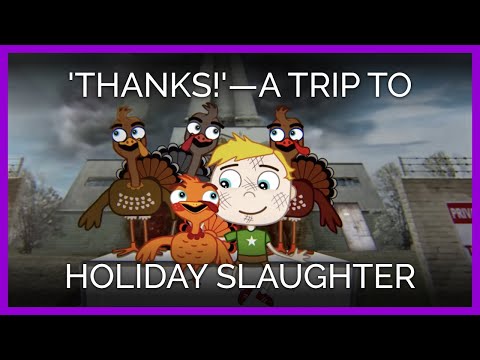
PETA's 2013 Thanksgiving campaign, "'Thanks!'," is a textbook example of shock advertising that leverages a classic narrative structure to deliver a brutal message. The piece, a collaboration with agency Cutter and production company Big Machine, is a deliberate exercise in cognitive dissonance, using the friendly veneer of animation to make its depiction of slaughterhouse violence all the more disturbing. [1, 2] It operates not to persuade the mainstream but to energize its base and generate media controversy, solidifying PETA's brand identity as an uncompromising provocateur.
The Core Insight: The campaign is built on a simple, uncomfortable human truth: we are willfully blind to the violence inherent in our food systems. The sanitized, shrink-wrapped turkey in the supermarket bears no resemblance to the living creature it was, allowing consumers to participate in a process they would find abhorrent if they witnessed it firsthand. The ad’s central thesis is that if this process is unacceptable for a human child, it should be unacceptable for an animal.
The Execution (Setup–Turn–Payoff): The ad follows a brutally effective three-act structure.
- The Setup (0:00-0:10): The film opens with all the tropes of a wholesome children's cartoon. A sunny day, rolling green hills, a smiling boy on a bike, and cheerful music establish a sense of safety and innocence. This initial charm is the bait, designed to lower the viewer's guard.
- The Turn (0:11-0:25): The narrative takes a sharp, ominous turn as the idyllic 'Fowl Farm' is revealed to be a dark, polluting industrial complex. The music shifts, the lighting darkens, and the friendly logo from the truck is now seen on a grimy, foreboding factory wall. This sudden tonal shift is the critical moment that signals to the viewer that their initial expectations were wrong, creating tension and confusion.
- The Payoff (0:26-1:38): The ad delivers its payoff with relentless, graphic detail. The boy is substituted for the turkey and subjected to the horrors of the slaughterhouse. This extended sequence is the core of the ad's argument, forcing the viewer to confront the mechanical, dehumanizing (or in this case, de-animalizing) process of industrial meat production. The final, twisted payoff comes when the roles are fully reversed: the turkeys drive away, leaving the packaged boy behind, with the lead turkey uttering a sarcastic "Thanks." This final word recasts the holiday's meaning from gratitude to a grim acknowledgment of survival.
The Debrief: The primary lesson from "'Thanks!'" is that shock for shock's sake has a specific, limited function. It's a powerful tool for grabbing attention and reinforcing a brand's edgy identity, but it is a poor tool for persuasion. The extreme graphic nature likely creates a boomerang effect, where the target audience becomes defensive and rejects the message and the messenger. While the creative execution is high-quality and the narrative structure is well-defined, the strategy prioritizes confrontation over conversion. The team achieved its goal of creating a memorable, talked-about piece of content, but it's a piece that preaches to the converted and alienates the undecided.
Theme Keywords
Brand Position
The uncompromising, confrontational truth-teller of the animal rights movement.
Brand Archetype
Revolutionary
Creative Game Plan
Force audiences to confront the brutality of poultry slaughter by swapping a turkey with a human child in a disturbingly graphic animated short.
Diagnosis: Issues & Solutions
Primary Issue: Emotional Connection
The Problem:
The ad's relentless use of horror and disgust creates an emotional wall. Viewers are so repulsed by the imagery that they are unable to connect empathetically with the actual issue of animal suffering, instead focusing on their own shock and the brand's extremism.
The Solution:
Instead of immediately switching to the boy's horror story, create a moment of genuine, quiet connection between the boy and the turkey. Show the turkey's intelligence or personality in a way that allows the audience to feel for the animal *before* the violence begins, making the subsequent horror feel like a tragedy for the turkey, not just a shocking event for the human proxy.
Secondary Issue: Strategic Sense
The Problem:
The strategy overestimates the power of shock to create positive behavioral change. For a mainstream audience, being graphically confronted and implicitly shamed is more likely to entrench existing beliefs than to open minds.
The Solution:
Develop a tiered campaign. Use this extreme version for a core, activist audience, but create a less graphic version that focuses on the 'Turn'—the contrast between the idyllic farm myth and the industrial reality—without the explicit gore. This would lower the barrier to entry and allow a broader audience to engage with the core insight without being immediately repelled.
Additional Notes
Related Links
Credits
Share this Analysis
More PETA (People for the Ethical Treatment of Animals) ad breakdowns
- “Hermès Birkin” DIY Tutorial🩸PETA (People for the Ethical Treatment of Animals)
- PETA - Get a Feel For AngoraPETA (People for the Ethical Treatment of Animals)
- Jason Biggs Loves SeaWorld So Much! He Just Loves It!PETA (People for the Ethical Treatment of Animals)
- WHAT? THIS MOTEL IS BANNING VEGANS? (Full Version)PETA (People for the Ethical Treatment of Animals)
- Boyfriend Went Vegan | PETAPETA (People for the Ethical Treatment of Animals)
- SOLIDAR Video: Rights First!SOLIDAR
- FAIRNESS WORKS! Fall 2014 Television AdCanadian Labour Congress
- Something is wrong - Rapunzel FailAPM - Aktionskreis gegen Produkt- und Markenpiraterie e.V.