Boyfriend Went Vegan | PETA - Ad Analysis

AI Editor notes
Straight from the gut!!
“This is pure, uncut 2012-era viral bait. It's trying so hard to be shocking and edgy you can almost feel the creative team high-fiving. Does it work? As a piece of shareable comedy, yes. As a serious tool of persuasion? I'm skeptical. The joke is so loud it nearly drowns out the brand. It feels more like a Funny or Die sketch than a piece of advocacy, and it courts controversy by making light of imagery associated with domestic abuse. [8, 9]”
Quick Summary
This ad succeeds by weaponizing a classic bait-and-switch. It masterfully mimics the somber tone of a public service announcement to set up a viewer's expectation of a serious issue, only to pivot to a provocative, sexual punchline. The core message is that veganism increases male vitality, a direct and memorable counterpoint to the stereotype of vegans being weak. It's designed for shares, not contemplation.
Executive Summary
PETA's 'Boyfriend Went Vegan' is a textbook example of early-decade viral marketing, built on a simple but effective subversion of expectations. The campaign's strategy hinges on confronting a prevailing cultural stereotype—that vegan men are frail or lack vigor—and turning it into a punchline that argues the exact opposite. It's a piece of communication designed not for quiet persuasion but for loud, public conversation, even at the cost of controversy.
The Core Insight: The simple human truth at the heart of this ad is that stereotypes are powerful, but they are also fragile enough to be shattered with humor. PETA recognized that a straightforward, preachy message about the health benefits of veganism would be ignored. Instead, they tapped into a more potent motivator: sex. The underlying insight is that linking veganism to enhanced sexual stamina is a far more disruptive and interesting claim than linking it to lower cholesterol. It repositions the lifestyle from one of deprivation to one of vitality and masculine power.
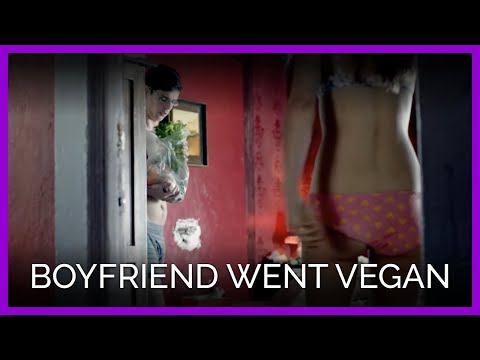
The Execution: The ad executes a perfect Setup-Turn-Payoff structure in just 30 seconds. The Setup is the opening: a gritty, somber visual of a woman in a neck brace, paired with a serious voiceover and funereal music. This expertly mimics the visual language of PSAs about disease or domestic abuse, lulling the audience into a specific set of expectations. The Turn is the reveal of the acronym 'BWVAKTBOOM'—'Boyfriend Went Vegan And Knocked The Bottom Out Of Me.' In this moment, the entire frame shifts from drama to comedy. The 'illness' is reframed as a humorous consequence of vigorous sex. This turn is the engine of the entire ad. The Payoff is twofold: the visual gag of the energetic, shirtless boyfriend and the exhausted but smiling girlfriend, followed by the final call-to-action. The line 'learn to go vegan... safely' completes the joke, cementing the idea that the 'danger' of veganism is its sheer potency.
The Debrief: The key lesson from this campaign is the power of a strong, singular comedic idea in cutting through media clutter. For a brand like PETA, which often struggles against public apathy, being provocative is a core part of the strategy. This ad demonstrates that you don't need a big budget or a complex narrative if you have a joke that is sharp, shareable, and directly tied to your message. However, it also serves as a case study in the risks of 'shockvertising.' The ad drew significant criticism for making light of imagery that resembled the aftermath of domestic violence, a line that many felt was inappropriate, regardless of the humorous intent. [8, 9] This highlights the fine line between edgy and offensive, a key consideration for any brand attempting to be disruptive.
Theme Keywords
Brand Position
The bold, provocative, and uncompromising leader in animal rights advocacy.
Brand Archetype
The Outlaw/Jester
Creative Game Plan
Subvert the stereotype of vegans being weak by creating a humorous PSA about the 'dangerous' side effect of their enhanced sexual stamina.
Diagnosis: Issues & Solutions
Primary Issue: Strategic Sense
The Problem:
The ad's biggest pitfall is that the joke is more memorable than the brand's core purpose. Viewers are likely to remember the funny premise of sexual exhaustion but may not connect it back to the ethical treatment of animals, which is PETA's central mission. The humor is so effective that it risks becoming detached from the organization's reason for being.
The Solution:
A stronger link back to the 'why' would have helped. Even a single line in the voiceover like, 'A diet this good for them, can be a little too good for you,' could have subtly bridged the gap between personal health benefits and the ethical choice, reminding viewers of the brand's foundational values.
Secondary Issue: Emotional Connection
The Problem:
The reliance on a single-note joke, while funny, creates no real emotional connection. The characters are archetypes in a gag, not relatable people. This makes the ad feel clever but ultimately disposable, lacking the sticking power that comes from a genuine emotional response.
The Solution:
Instead of immediately presenting the aftermath, the ad could have benefited from a 2-second 'before' shot showing the boyfriend as lethargic or the couple's life as mundane. This would create a stronger comedic contrast and a more satisfying narrative arc, giving the audience a mini-story to connect with rather than just a punchline.
Additional Notes
Related Links
Credits
Share this Analysis
More PETA (People for the Ethical Treatment of Animals) ad breakdowns
- “Hermès Birkin” DIY Tutorial🩸PETA (People for the Ethical Treatment of Animals)
- PETA - Get a Feel For AngoraPETA (People for the Ethical Treatment of Animals)
- Jason Biggs Loves SeaWorld So Much! He Just Loves It!PETA (People for the Ethical Treatment of Animals)
- 'Thanks!'—An Animated Trip to Holiday SlaughterPETA (People for the Ethical Treatment of Animals)
- WHAT? THIS MOTEL IS BANNING VEGANS? (Full Version)PETA (People for the Ethical Treatment of Animals)
- SOLIDAR Video: Rights First!SOLIDAR
- FAIRNESS WORKS! Fall 2014 Television AdCanadian Labour Congress
- Something is wrong - Rapunzel FailAPM - Aktionskreis gegen Produkt- und Markenpiraterie e.V.