“Hermès Birkin” DIY Tutorial🩸 - Ad Analysis

AI Editor notes
Straight from the gut!!
“This is classic PETA, turned up to eleven. They've weaponized the influencer format. It’s a horror film disguised as a craft tutorial. The shock value is undeniable, and it's built for shares. But who is this for? It will energize PETA's base and horrify people who already agree. But will it convince a luxury consumer to abandon their dream bag? I'm not so sure. It feels less like persuasion and more like a PR grenade designed to create noise and controversy.”
Quick Summary
This campaign uses the trojan horse of a familiar, cheerful DIY YouTube tutorial to smuggle a graphic and disturbing message about animal cruelty directly into the viewer's feed. By hijacking a popular content format, PETA creates a powerful and unavoidable collision between the sanitized image of luxury and the brutal reality of its production, making the violence feel personal and impossible to ignore.
Executive Summary
PETA’s 'DIY Birkin' is a calculated exercise in strategic dissonance. It operates by building a familiar, safe container—the cheerful, aspirational world of a YouTube DIY tutorial—and then violently smashing it. The entire strategy hinges on the power of contrast: the bubbly host versus the brutal act, the upbeat music versus the sounds of violence, and the clean aesthetic versus the splattering blood. By choosing to parody this specific format, PETA cleverly targets a culture obsessed with creation, authenticity, and 'hacks,' turning the language of that culture back on itself to expose a hidden truth. The core insight is that the consumer of a luxury item like a Birkin bag is profoundly disconnected from its origin. The ad’s mission is to close that distance with brutal immediacy. [2]
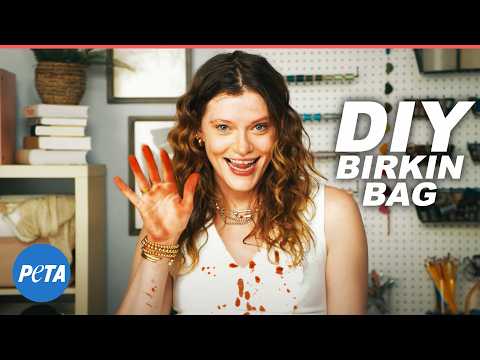
The execution follows a classic Setup-Turn-Payoff structure. The Setup (0:00-0:20) is a pitch-perfect imitation of an influencer video, from the host's vocal fry to the sparkling on-screen graphics. This lulls the audience into a state of passive consumption. The Turn (0:21-0:31) is a two-stage shock. First, the introduction of a live crocodile creates an unsettling juxtaposition. The true turn, however, is the moment the host stabs the animal. The sudden splatter of blood, paired with the host's fleeting break in character, is the point of no return. The cognitive dissonance is extreme, as the brain tries to reconcile the form (happy tutorial) with the content (graphic violence). The Payoff (0:32-1:24) forces the viewer to sit with this discomfort. The remainder of the 'tutorial' is a relentless, graphic depiction of the process, made all the more horrifying by the host's attempts to maintain her perky demeanor. The final shot of her waving with a bloody hand, followed by the stark explanatory text, ensures the message is not just felt but explicitly understood. [1]
The debrief for any team watching this is a lesson in weaponizing cultural formats. This isn't just an ad; it's culture jamming. It demonstrates that by mastering the codes and conventions of a specific media genre, a brand or organization can infiltrate it, subvert its meaning, and deliver a message that would otherwise be ignored. The success isn't just in the shock, but in the perfect execution of the parody that precedes it. It’s a powerful, if polarizing, approach to cutting through the noise.
Theme Keywords
Brand Position
PETA positions itself as the uncompromising and provocative conscience of consumer culture.
Brand Archetype
Rebel/Outlaw
Creative Game Plan
Juxtapose the innocent, upbeat format of a DIY influencer video with the graphic, brutal reality of creating a crocodile-skin bag to shock viewers out of their complacency.
Diagnosis: Issues & Solutions
Primary Issue: Strategic Sense
The Problem:
The ad is incredibly effective at generating outrage against Hermès but offers a weak pathway for positive action. The core message is 'don't do this,' which can leave a mobilized audience feeling angry but disempowered. It highlights the problem without sufficiently illuminating the solution.
The Solution:
Integrate a stronger, more tangible 'what to do instead' message. For example, pivot from the horror to showcasing a beautiful, high-end, cruelty-free alternative bag, or end with a direct, on-screen call to sign a petition demanding Hermès change its practices, channeling the outrage into a specific, measurable action.
Secondary Issue: Emotional Connection
The Problem:
The reliance on pure shock and gore risks desensitizing the audience or causing them to tune out. While disgust is a powerful motivator, it's a blunt emotional instrument that can preclude more complex feelings like empathy or sadness, which can be more effective at driving long-term changes in belief.
The Solution:
Intersperse the graphic horror with a brief, quiet moment showing the crocodile in a natural, non-threatening state. Allowing the viewer to see the animal as a living creature, rather than just a victim, could add a layer of empathetic sadness to the shock, creating a more profound and lasting emotional connection.
Additional Notes
Related Links
Credits
Share this Analysis
More PETA (People for the Ethical Treatment of Animals) ad breakdowns
- PETA - Get a Feel For AngoraPETA (People for the Ethical Treatment of Animals)
- Jason Biggs Loves SeaWorld So Much! He Just Loves It!PETA (People for the Ethical Treatment of Animals)
- 'Thanks!'—An Animated Trip to Holiday SlaughterPETA (People for the Ethical Treatment of Animals)
- WHAT? THIS MOTEL IS BANNING VEGANS? (Full Version)PETA (People for the Ethical Treatment of Animals)
- Boyfriend Went Vegan | PETAPETA (People for the Ethical Treatment of Animals)