Just 1 Look - Depaul France - Ad Analysis

AI Editor notes
Straight from the gut!!
“This one hits hard. It's so simple it's brutal. You watch the counters and you just feel this growing sense of shame. It's not preachy, it's evidentiary. They're not telling you you're a bad person, they're just showing you the data from one day on one street, and it's damning. This is how you do a social cause ad—you make the viewer the subject of the experiment.”
Quick Summary
This ad's power comes from turning a painful, invisible truth into a simple, undeniable visual experiment. By contrasting our reflexive empathy for a cute dog with our societal blindness to a homeless person, it forces the viewer to confront their own biases without a single word of accusatory dialogue. It doesn't just ask for a donation; it fundamentally challenges our perception of the world.
Executive Summary
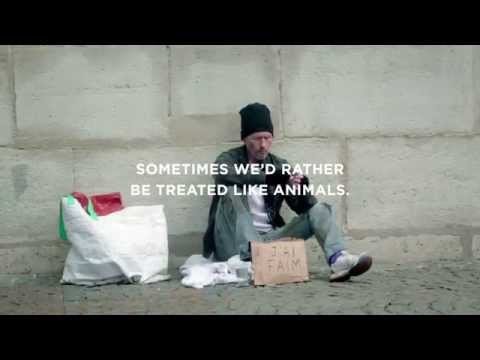
Depaul France’s "Just 1 Look" is a masterclass in strategic provocation. It operates on a simple, uncomfortable insight: that in our daily lives, our empathy is often misallocated, flowing more easily to a vulnerable animal than a vulnerable human being. The ad eschews traditional charity tropes of overtly sad stories or direct pleas, opting instead for the cold, hard format of a social experiment to prove its point, making the conclusion feel less like an accusation and more like an undeniable finding.
The execution, created by Publicis Conseil, is what gives the ad its power. [2] It follows the classic YouTube ABCD framework, particularly effective for grabbing and holding attention. The Attract is the premise itself: 'A homeless person and a dog stayed seated in the same place for a whole day.' This immediately creates a compelling question in the viewer's mind. The Brand is introduced early but subtly, letting the story unfold. The Connect is achieved through the raw, hidden-camera footage that makes the audience feel like they are on that Paris street, witnessing the experiment firsthand. The emotion builds as the counters on screen provide a stark, visual representation of our collective indifference. The viewer becomes complicit in the results. Finally, the Direct is twofold: the devastating concluding line, 'Sometimes we’d rather be treated like animals,' followed by the clear call to action to donate. The entire narrative is built to make that final ask not just a request for money, but a chance for the viewer to resolve the cognitive dissonance the ad has created.
The debrief for any team looking at this work is about the power of demonstration over description. Depaul didn't need to tell us people ignore the homeless; they provided the data. By gamifying the act of looking with on-screen counters, they created a narrative tension that is far more engaging than a voiceover could ever be. The final reveal—the man’s sign reading “J’ai faim” (I am hungry)—is the critical humanizing element. It transforms him from a statistic in the experiment into a person with a basic, unmet need, making the public’s collective oversight all the more tragic. This is effective, efficient, and deeply resonant work.
Theme Keywords
Brand Position
The clear-eyed truth-teller in the fight against homelessness.
Brand Archetype
The Sage (revealing a hidden, uncomfortable truth)
Creative Game Plan
Visually prove society's unconscious bias by showing that a dog receives exponentially more attention than a homeless man, thereby shocking viewers into recognizing their own indifference.
Diagnosis: Issues & Solutions
Primary Issue: Emotional Connection
The Problem:
The ad's primary risk is that its powerful, guilt-inducing message could cause some viewers to become defensive rather than empathetic, potentially leading them to disengage from the message altogether to avoid the uncomfortable feeling of complicity.
The Solution:
Soften the final blow slightly by framing the call to action more collaboratively. Instead of just 'Help us change the way we see homeless people,' consider adding a line like, 'We all get busy. Let's make a conscious choice to see everyone.' This shifts the tone from accusation to shared responsibility.
Secondary Issue: Clarity of "What's Next?"
The Problem:
The ad brilliantly diagnoses the problem (invisibility) but the only solution offered is a donation. The broader call to 'change the way we see homeless people' is abstract and lacks a concrete, non-monetary action a viewer can take immediately.
The Solution:
Supplement the donation ask with a simple, tangible behavioral CTA. For example: 'This week, make eye contact. Offer a smile. Acknowledge the person. It starts with just one look.' This gives viewers a way to participate in the solution, regardless of their ability to donate.
Additional Notes
Credits
Share this Analysis
More Depaul France ad breakdowns
- 100 years of... - Depaul FranceDepaul France
- Sharing Space - Episode 1: Daniel Radcliffe | TrailerThe Trevor Project
- Violence marks forever - Join David Beckham and end violence against childrenUNICEF
- It's Time to Rise with Girl UpGirl Up
- Burns and Smiles - Awareness Campaign 2018 - Cinema - #SeeDifferent the burns victimsBurns and Smiles
- Goodwill: BikeGoodwill
- Brain Scan PSA for Alzheimer Society of B.C.Alzheimer Society of British Columbia
- Pro Audito Ruf Lanz Donations 50sPro Audito Bern