Dublin's Unfair City: Justin's story told through Artificial Intelligence - Ad Analysis

AI Editor notes
Straight from the gut!!
“It's a clever idea, hijacking the AI hype train for a good cause. The visual execution is compelling and the story is genuinely moving. But at almost three and a half minutes, it's a huge ask for an online audience. Does the technological novelty create an emotional distance that a raw, 60-second piece of footage wouldn't? It feels more like a short film for award shows than a hard-hitting fundraising tool, but you can't deny it makes you stop and watch.”
Quick Summary
This campaign's core strategy was to use a 'new' problem—the cultural hype and anxiety around Artificial Intelligence—to force a desensitized audience to reconsider an 'old' problem: the homelessness crisis. By translating a raw, authentic audio testimony into surreal, AI-generated visuals, it created a novel viewing experience that made a familiar story feel shockingly new, ensuring it couldn't be easily ignored.
Executive Summary
Dublin Simon's 'Unfair City' is a strategically sharp piece of communication that correctly diagnosed its biggest challenge: public apathy. For decades, charity advertising has relied on a familiar playbook of gritty, heart-wrenching footage. While effective, its power has been diluted through repetition. This campaign's masterstroke was realizing that to make people care about an old problem, they had to present it in a completely new way.
The Core Insight here is that the public has become desensitized to the visual language of homelessness. To break through, the story needed a new vessel. The team cleverly hijacked the 2023 cultural zeitgeist around Artificial Intelligence, using the public's fascination and anxiety with the new technology as a hook to tell a story people might otherwise ignore. [4, 5] The strategy is explicitly stated: use AI to attract a younger, tech-savvy audience that the charity was struggling to reach. [5]
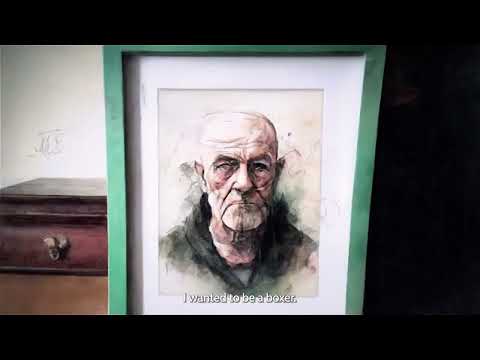
The Execution follows a classic Setup-Turn-Payoff narrative structure, using the AI-generated visuals to amplify the emotional beats of Justin Cannon's testimony. The Setup establishes his normal childhood aspirations before descending into the chaos of addiction and homelessness. The visuals are abstract and constantly shifting, mirroring the instability and trauma of life on the streets. The Turn is the moment of crisis on Brighton beach—a near-death experience that leads to intervention. Here, the visuals hint at hope, with a 'guardian angel' paramedic piercing the gloom. The Payoff is the journey back to stability, facilitated by the Simon Community. The animation becomes calmer, the colours warmer, culminating in the powerful, simple image of Justin with his own key, in his own home, with his cat. This visual resolution provides a deeply satisfying emotional release and tangibly demonstrates the impact of the charity's work. The use of AI was also a practical solution, allowing Justin to share his traumatic story without the vulnerability of appearing on camera. [2, 6]
The Debrief for any team watching this is twofold. First, it's a powerful lesson in the value of matching medium to message. The unstable, dream-like quality of early AI art was a perfect visual metaphor for memory, trauma, and a life unravelling. Second, it proves that innovation can be the key to unlocking empathy. By refusing to use the expected creative approach, BBDO Dublin and Dublin Simon forced the audience to look again, listen harder, and feel something new about a problem they thought they already understood.
Theme Keywords
Brand Position
The innovative and empathetic pathway from homelessness to hope.
Brand Archetype
Caregiver
Creative Game Plan
Visualize one man's authentic, harrowing journey from homelessness to recovery using the surreal, morphing language of AI to make an old story feel un-ignorable.
Diagnosis: Issues & Solutions
Primary Issue: Clarity of "What's Next?"
The Problem:
The film does a masterful job of building emotional investment for over three minutes, but the call-to-action is a text card at the very end. Given typical online video drop-off rates, a significant portion of the most engaged viewers likely never even saw the donation request.
The Solution:
Integrate the call-to-action earlier or in a more persistent way. A simple, non-intrusive graphic with the URL could appear in the corner during the final minute, or a YouTube 'pinned comment' could place the donation link directly below the video player for immediate access.
Secondary Issue: Emotional Connection
The Problem:
While the AI visuals are unique and conceptually brilliant, they inherently create a layer of abstraction between the viewer and Justin's reality. The artistic interpretation, however beautiful, might soften the gut-punch of his experience for some viewers.
The Solution:
To bridge the gap between the abstract and the real, the film could have ended with a brief, live-action shot of the real Justin Cannon today, perhaps smiling with his cat. This would ground the entire animated journey in a powerful, tangible reality and reinforce the authenticity of the story.
Additional Notes
Related Links
Credits
Share this Analysis
More Dublin Simon Community ad breakdowns
- Simon Community - 1916 ProclamationDublin Simon Community
- Feed a child. Feed a Childhood. | World Vision CanadaWorld Vision Canada
- #BikesForUkraine Join our international campaign!Bikes For Ukraine
- Winter Appeal 2021Anglicare WA
- ONG Viva Rio - FloodingViva Rio
- BØRNEfonden(Children & Youth Foundation): How old is old enough?BØRNEfonden (Children & Youth Foundation)
- Get Cancer | ChemistryIrish Cancer Society
- AloneThe Salvation Army