BØRNEfonden(Children & Youth Foundation): How old is old enough? - Ad Analysis

AI Editor notes
Straight from the gut!!
“This is a clever, gut-punch of a film. The social experiment format isn't new, but the execution here is solid. The slow-burn awkwardness turning into parental horror is incredibly tense and effective. It's a smart way to break through charity fatigue. It makes you ask: what would I do? The only risk is that the 'prank' format itself is what's remembered, not the organization behind it.”
Quick Summary
This campaign's power comes from making a distant, abstract tragedy feel immediate and personal. By transposing the horror of child marriage into a comfortable Danish suburb, it forces the audience to experience the protective shock a parent would feel, creating a potent emotional foundation for a direct call to action.
Executive Summary
This film from BØRNEfonden is a sharp piece of communication that understands a fundamental challenge in the charity sector: donor apathy. The problem of child marriage in a country like Mali can feel abstract and distant to a Danish audience. The ad’s core strategy is to shatter that distance.
The Core Insight here is that while people can intellectually process a statistic, they are moved to act by emotion. A parent’s protective instinct is one of the most powerful human emotions. The campaign correctly identifies that if you can make a Danish father feel, even for a moment, the horror that a Malian father lives with as a reality, you can create an unbreakable empathetic link.
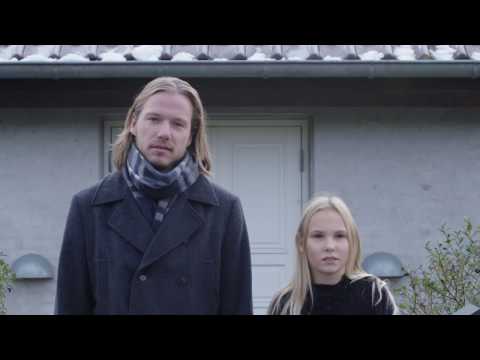
The execution uses a Setup-Turn-Payoff structure, delivered in a raw, documentary style. The Setup (0:00-0:45) is a masterclass in building subtle tension. A 30-year-old actor, Alexander, arrives at several homes to see his 13 and 14-year-old 'friends.' The fathers are polite but visibly confused. The use of hidden cameras and real families makes these initial interactions feel authentic and unscripted. We, the audience, are in on the secret, which makes watching the fathers' dawning discomfort even more compelling.
The Turn (0:45-1:27) is where the strategy ignites. Alexander calmly states his intentions: he and the daughter have been 'seeing each other,' and he thinks they should get married and move in together. The shift in the fathers' demeanors is electric. Confusion turns to disbelief, then to barely-concealed rage. The editing cross-cuts between the different fathers, showing a universal reaction of paternal protection. Lines like "She's 13!" and one father's ultimatum, "Either I call the police, or you tell me it isn't true," are not scripted drama; they are the real, visceral reactions the campaign was designed to provoke.
The Payoff (1:27-2:00) provides a moment of relief before delivering the final blow. Alexander reveals the stunt, and the tension dissolves into laughter and hugs. This catharsis is crucial, as it allows the viewer to exhale before the ad pivots to its real purpose. The screen cuts to a stark red background with the statistic: "Every day 82 girls under 15 are married in Mali." After witnessing the staged horror, this fact is no longer just a number. It's now connected to a feeling. The final shot of a young Malian girl and the direct call to action—"Become a sponsor"—lands with immense force.
The Debrief for the creative team is clear: making an issue personal is the most effective way to make it important. This ad doesn't just show a problem; it makes the audience live a simulation of it. It proves that a powerful insight, executed with a simple but brave creative device, can be far more effective than a bigger budget or more complex production.
Theme Keywords
Brand Position
The humanitarian organization that makes global issues feel local and impossible to ignore.
Brand Archetype
Caregiver, using the tactics of the Jester.
Creative Game Plan
Force a comfortable Western audience to confront the emotional reality of child marriage by staging the unthinkable in their own front yards.
Diagnosis: Issues & Solutions
Primary Issue: Strategic Sense
The Problem:
The primary risk is a potential disconnect between the ad's viral format and the brand itself. The 'social experiment' is so powerful that viewers might remember the stunt ('the one where the guy asks to marry the little girl') but forget that it was a BØRNEfonden campaign.
The Solution:
To improve brand attribution, the reveal moment could more explicitly feature the brand. For instance, Alexander could open his jacket to reveal a BØRNEfonden t-shirt as he says, 'I'm with BØRNEfonden,' visually connecting the moment of peak emotion directly to the organization's identity.
Secondary Issue: Clarity of "What's Next?"
The Problem:
The call to action is clear ('Become a sponsor'), but it doesn't explicitly state the mechanism of change. A potential donor is left to assume how their money solves the problem of child marriage.
The Solution:
A simple line of text added to the final cards could bridge this gap. For example: 'Sponsorship funds education, keeping girls in school and safe from early marriage.' This connects the requested action directly to the solution, increasing donor confidence.
Additional Notes
Credits
Share this Analysis
More BØRNEfonden (Children & Youth Foundation) ad breakdowns
- Feed a child. Feed a Childhood. | World Vision CanadaWorld Vision Canada
- #BikesForUkraine Join our international campaign!Bikes For Ukraine
- Winter Appeal 2021Anglicare WA
- ONG Viva Rio - FloodingViva Rio
- Get Cancer | ChemistryIrish Cancer Society
- Dublin's Unfair City: Justin's story told through Artificial IntelligenceDublin Simon Community
- AloneThe Salvation Army
- HomeForTheBlindZurich StevieWonderHome for the Blind Zurich (Blindenwohnheim Mühlehalde)