We Will Always Have London - Ad Analysis

AI Editor notes
Straight from the gut!!
“This feels like a massive, intentional course correction. They've hired Nan Goldin, a legend of raw, intimate photography, to strip away the glitter. It's a serious art-world flex. But does this quiet, moody 'realness' sell billion-dollar handbags to the same audience? I'm left wondering if the old, spectacle-loving customer feels abandoned and if this new, more subtle approach is strong enough to capture a new one. It's beautiful, but is it *Gucci* anymore?”
Quick Summary
This campaign is Sabato De Sarno's definitive statement that Gucci is pivoting from the theatrical, maximalist fantasy of the past to a more intimate, personal, and wearable vision of luxury. By enlisting photographer Nan Goldin and icons like Debbie Harry, the brand grounds itself in an authentic, cultured reality, trading overt spectacle for quiet confidence.
Executive Summary
Gucci's 'We Will Always Have London' is less a commercial and more a declaration of a new regime. It marks the most definitive step yet in Creative Director Sabato De Sarno’s project to steer the Italian house away from the vibrant, chaotic fantasy of his predecessor, Alessandro Michele, and toward something quieter, more personal, and rooted in a tangible reality. The entire campaign serves as a strategic reset, using the visual language of authenticity to signal a new era of 'wearable' luxury. [6, 8]
The choice of collaborators is the central pillar of this strategy. Enlisting photographer Nan Goldin is a profound statement. Goldin is not a typical high-fashion photographer; she is an artist celebrated for her raw, unflinching, and deeply personal documentary work. Her signature style—seen in the grainy film texture, the unposed moments, and the focus on intimate, often melancholic scenes—is the antithesis of the polished, fantastical worlds luxury brands usually create. This choice immediately grounds the campaign in a world of artistic credibility and raw emotion. Pairing her with cultural icons like Debbie Harry, a symbol of enduring downtown cool, and the contemporary artist Kelsey Lu creates a bridge across generations of authentic creatives. [15] This isn't about chasing fleeting trends; it's about aligning the brand with timeless, independent artistry.
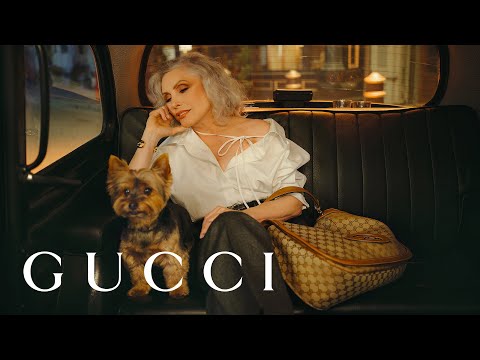
The execution is a masterclass in mood-building. Structured as a series of vignettes rather than a linear narrative, the film functions as a visual poem to London and the quiet moments that define a life lived within it. We see couples in hotel rooms, friends laughing in the back of a taxi, and solitary figures lost in thought. The product, the Gucci Blondie handbag, is present throughout but often as a natural part of the scene rather than the explicit hero. This subtlety reinforces De Sarno's stated vision: 'I want to see you wearing Gucci, not Gucci wearing you.' [6] The remixed Blondie soundtrack adds another layer of sophisticated melancholy, its lyrics about a 'heart of glass' underscoring the film's themes of fleeting connection and fragile intimacy.
Ultimately, this is a brand awareness campaign of the highest order. Its goal isn't just to make you remember a handbag but to make you feel the brand's new sensibility. The team's key learning should be that a dramatic brand pivot can be effectively communicated by choosing collaborators who embody the new direction. By lending its platform to Nan Goldin, Gucci absorbs her authenticity. The risk is that in becoming more 'real' and subtle, it might lose the bombastic, instantly recognizable quality that defined its recent success. It's a gamble on the idea that in today's landscape, quiet confidence is more powerful than a loud spectacle.
Theme Keywords
Brand Position
The brand of personal, wearable luxury for the culturally discerning individual.
Brand Archetype
The Creator
Creative Game Plan
Ground Gucci's luxury in the raw, authentic intimacy of real life by collaborating with legendary artists who embody timeless cool.
Diagnosis: Issues & Solutions
Primary Issue: Emotional Connection
The Problem:
The film's aesthetic is so committed to 'cool' and restrained intimacy that it borders on being emotionally distant. The melancholy and artfulness are beautiful but may feel inaccessible or cold to a broader audience not versed in Nan Goldin's work.
The Solution:
Introduce one or two brief moments of uninhibited, genuine warmth or joy within the montage. A shot of spontaneous, hearty laughter or a truly tender, smiling embrace could have provided an emotional anchor without compromising the overall sophisticated tone.
Secondary Issue: Strategic Sense
The Problem:
While the brand-building is superb, the specific product—the Gucci Blondie handbag—sometimes feels like a passenger in its own advertisement. In the quest for authenticity, the bag occasionally fades into the background, potentially weakening its direct commercial desirability.
The Solution:
Craft a few more deliberate 'hero' moments for the bag that still feel narratively integrated. For example, a shot where a character interacts with the bag in a meaningful way—searching for something inside, clutching it protectively—could draw more attention to it as a central object of desire.
Additional Notes
Related Links
Credits
Share this Analysis
More Gucci ad breakdowns
- Gucci Together for Valentine’s DayGucci
- The Gucci Aria Advertising CampaignGucci
- Introducing New Fragrances from The Alchemist’s GardenGucci
- Gucci Gift: The Holiday CampaignGucci
- Miley Cyrus for Gucci FloraGucci
- Gucci GiftGucci
- Actor,singer,global brand ambassador Xiao Zhan, unveils GUCCI's brand-new Chinese New Year campaignGucci
- The New Gucci Bloom Campaign with Anjelica Huston, Florence Welch, Jodie Turner-Smith and Susie CaveGucci