Miley Cyrus for Gucci Flora - Ad Analysis

AI Editor notes
Straight from the gut!!
“This is less a Gucci ad and more a high-budget music video for a song that was already a hit. It's a smart, if somewhat lazy, way to buy cultural relevance. But does it build the Gucci brand? I'm not so sure. It feels like Gucci is the supporting act for Miley, Inc. You remember the song and you remember Miley, but the fragrance feels like an afterthought. Is this selling a scent or just reminding us of a great pop song?”
Quick Summary
Gucci is making a calculated bet that the cultural tidal wave of Miley Cyrus's anthem of self-love, 'Flowers,' is potent enough to define their new fragrance. Instead of crafting a new story, they've licensed a global hit, using its pre-packaged narrative of empowerment to associate Gucci Flora with modern independence. It's a strategic shortcut to emotional relevance, borrowing Cyrus's voice to tell the audience that self-love is the ultimate luxury.
Executive Summary
In the hyper-competitive luxury fragrance market, Gucci has opted for a path of least resistance with its campaign for Flora Gorgeous Orchid, and it’s a strategically sound, if creatively predictable, decision. The core of this campaign isn't a new creative concept; it's a pre-existing cultural artifact: Miley Cyrus's 2023 mega-hit, 'Flowers.' The entire ad functions as a visual accompaniment to the song, effectively making the fragrance an accessory to a global anthem of self-love and independence.
The Core Insight here is that for a modern audience, particularly Millennials and Gen Z, the ultimate form of luxury isn't about being desired by others, but about the power and pleasure of celebrating oneself. The narrative of buying your own flowers, holding your own hand, and loving yourself better has more resonance than traditional fragrance tropes of seduction and romance. Gucci isn't selling attraction; it's selling autonomy.
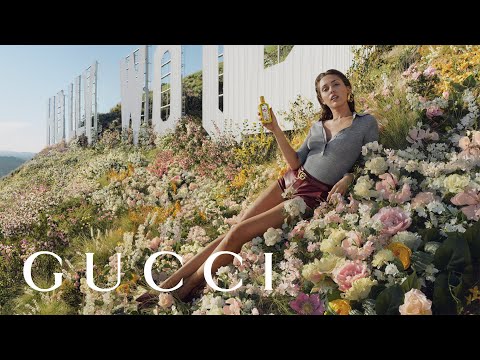
The execution follows a simple narrative structure that mirrors the song's journey from melancholy remembrance to empowered joy. It begins with Miley walking alone, with the Hollywood sign—a symbol of dreams both made and broken—in the distance. This is the Setup. The Turn happens as she steps into a surreal 'Flora' world, a hyper-real dreamscape where the environment itself is an explosion of flowers. This visual metaphor represents the internal shift from loneliness to a world of one's own making. The visuals escalate—spinning, flying petals, plunging into a floral pool—mirroring the chorus's soaring declaration of independence. The Payoff is the final, serene shot of Miley, confident and self-possessed, followed by the product reveal. The message is clear: this fragrance is the physical embodiment of that feeling of self-sufficient joy.
The debrief for the creative team should be a lesson in the power and peril of borrowing equity. The decision to use 'Flowers' was a massive strategic shortcut. It solved the problems of grabbing attention, creating an emotional connection, and ensuring memorability in one fell swoop. The campaign is instantly relevant. However, the risk is that the brand becomes a footnote to the celebrity and their art. The ad is so dominated by the song that it struggles to establish a distinct identity for Gucci Flora. It's a powerful moment, but it might not build a lasting brand asset beyond its association with Cyrus's hit.
Theme Keywords
Brand Position
The scent of rebellious and joyful self-love.
Brand Archetype
The Rebel
Creative Game Plan
Fuse the cultural power of Miley Cyrus's self-love anthem 'Flowers' with the new Gucci Flora fragrance to create an instant association with empowerment and independence.
Diagnosis: Issues & Solutions
Primary Issue: Brand Distinctiveness
The Problem:
The campaign's greatest strength—the use of Miley Cyrus's 'Flowers'—is also its biggest weakness. The ad is so completely dominated by the song's narrative and Cyrus's persona that it feels less like a Gucci story and more like a music video with product placement. The brand's own identity is relegated to the background.
The Solution:
Integrate Gucci's unique design codes more deeply into the fantasy world. Instead of just generic flowers, imagine a world inspired by Gucci's iconic Flora print, with its specific insects and botanical illustrations coming to life. This would have made the dreamscape uniquely ownable by Gucci, not just a beautiful floral scene.
Secondary Issue: Clarity of "What's Next?"
The Problem:
The ad ends with a standard, passive product shot. After a 60-second emotional journey of empowerment, the viewer is left with no clear action or tagline to crystallize the connection between the feeling and the fragrance. It relies on the hope that the positive association is enough.
The Solution:
Introduce a campaign-specific tagline that bridges the song's message with the product. A simple line like, "Gucci Flora. Your flowers," or "Self-love has a scent," would give the audience a portable piece of brand language to connect the emotion directly to the purchase intent.
Additional Notes
Related Links
Credits
Share this Analysis
More Gucci ad breakdowns
- We Will Always Have LondonGucci
- Gucci Together for Valentine’s DayGucci
- The Gucci Aria Advertising CampaignGucci
- Introducing New Fragrances from The Alchemist’s GardenGucci
- Gucci Gift: The Holiday CampaignGucci
- Gucci GiftGucci
- Actor,singer,global brand ambassador Xiao Zhan, unveils GUCCI's brand-new Chinese New Year campaignGucci
- The New Gucci Bloom Campaign with Anjelica Huston, Florence Welch, Jodie Turner-Smith and Susie CaveGucci