Valentino Pavillon des Folies | Campaign - Ad Analysis

AI Editor notes
Straight from the gut!!
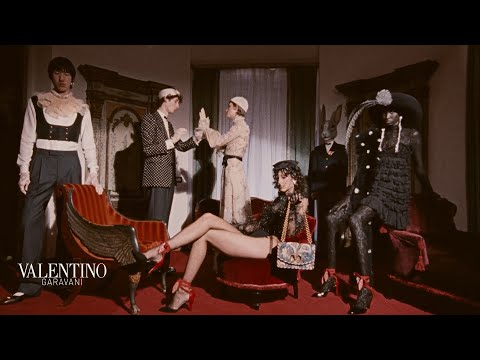
“So, this is Michele’s big debut for Valentino. It feels… exactly like his work for Gucci. The Wes Anderson color palette, the quirky casting, the random animals—it's all here. It's beautifully shot by Glen Luchford, but is it Valentino? It feels like they just slapped a new logo on a Gucci mood board. I'm left wondering if this is a bold new chapter or a creative director just repeating his greatest hits for a different paycheck. Who is this for, besides the insiders who get the reference?”
Quick Summary
Valentino is signaling a radical creative overhaul under new Creative Director Alessandro Michele, deliberately abandoning its established romanticism for an eccentric, surreal, and intellectual brand of luxury. This film isn't about selling a specific product; it's a loud, art-house declaration to the fashion world that a provocative and weirder new era has begun.
Executive Summary
This campaign, 'Pavillon des Folies', serves as a formal declaration of a palace coup. It's less an advertisement and more a piece of strategic communication aimed squarely at the fashion industry, announcing that the romantic, elegant Valentino of the past has been usurped by the eccentric, maximalist vision of its new Creative Director, Alessandro Michele. The film is a calculated exercise in brand disruption, using a dramatic shift in tone and aesthetic to signal a new creative regime. [16]
The core insight driving this work is that in high fashion, the ultimate currency is a distinct point of view. The ad rejects the notion of conventional beauty and instead celebrates a more theatrical, strange, and intellectual interpretation of luxury. It's a world populated by archetypes rather than people, where a sheep in a living room or a man in a rabbit mask is presented as the new normal. The film argues that true style isn't about fitting in; it's about belonging to your own strange, beautiful world.
The execution follows a classic Setup-Turn-Payoff structure. The Setup (0:00-0:24) meticulously builds a world of eerie, static perfection. Guided by quiet classical music, director Glen Luchford presents a series of surreal but composed tableaus. This is a world of beautiful things, but it's tense, cold, and lifeless. The Turn (0:24-0:25) is a brilliant moment of sensory disruption. The classical score is violently cut by a record scratch and the sound of a glass smashing. This auditory shock is the pivot upon which the entire film hinges, instantly shattering the preciousness of the opening scenes. The Payoff (0:26-0:57) is the 'folly' the title promises. As a 90s house track kicks in, the static world erupts into chaotic, joyful motion. The previously frozen characters are now dancing, throwing things, and exuding energy. The edit becomes a rapid-fire montage of moments and product details—a spilled can of paint, a close-up on heels, a shared glance—that feels alive and spontaneous. This is the new Valentino: no longer a museum piece, but a party.
The debrief for the brand team should be mixed. They have succeeded in creating a high-impact, conversation-starting piece of content that signals change. However, the victory is complicated by the fact that the aesthetic is almost entirely lifted from Michele's previous, highly publicized tenure at Gucci. [4, 6] The crucial lesson is that while hiring a star creative director brings a valuable pre-packaged aesthetic, the brand must work to integrate its own DNA into that vision. Without it, the brand risks becoming a mere vessel for a famous designer's signature style, rather than forging a new, unique identity.
Theme Keywords
Brand Position
To own the space of 'Eccentric, Intellectual Maximalism' in luxury fashion.
Brand Archetype
The Magician (with Jester tendencies)
Creative Game Plan
Shatter Valentino's quiet, romantic image with a loud, surreal, and chaotic party to announce a new creative vision.
Diagnosis: Issues & Solutions
Primary Issue: Strategic Sense
The Problem:
The campaign's single biggest flaw is its failure to differentiate itself from Alessandro Michele's previous work at Gucci. The aesthetic, casting, and overall vibe are so similar that it feels less like a new chapter for Valentino and more like a reboot of a Gucci campaign, undermining Valentino's unique brand identity. [4, 6, 8, 10, 11]
The Solution:
Future campaigns must intentionally weave in distinctive Valentino brand codes—whether it's a modern interpretation of Valentino Red, a nod to its Roman heritage, or a specific archival silhouette—to create a visual language that is a true hybrid of Michele's style and Valentino's soul.
Secondary Issue: Emotional Connection
The Problem:
The film is intellectually stimulating and visually arresting, but its surrealism creates an emotional distance. The characters are presented as strange 'archetypes' rather than people, making it difficult for an audience to connect on a human level. It's a world to be observed, not felt.
The Solution:
Introduce a moment of genuine, albeit quirky, human connection within the chaos. A shared, knowing smile between two characters or a brief, unguarded moment of warmth would make the fantasy world feel more inviting and emotionally resonant.
Additional Notes
Related Links
Credits
Share this Analysis
More Valentino ad breakdowns
- Valentino L'École | Jolin TsaiValentino
- Valentino Avant Les Débuts | Holiday Season CampaignValentino
- Valentino Rendez-Vous | Starring ZendayaValentino
- Maison Valentino: Chinese New Year 2026 – Future PerfectValentino
- Discover the Dior Autumn-Winter 2024-2025 CampaignChristian Dior
- We Will Always Have LondonGucci
- Gucci Together for Valentine’s DayGucci
- The Gucci Aria Advertising CampaignGucci