UNICEF USA: Liam Neeson's Plea to End Violence Against Children - Ad Analysis

AI Editor notes
Straight from the gut!!
“This is a tough, heavy piece of work, but it's undeniably effective. Using Liam Neeson, an actor culturally typecast as a protector because of films like *Taken*, is a smart bit of casting. The creative concept—'make the invisible visible'—is the real star. It avoids showing kids in peril, which would feel exploitative and cause people to look away, yet it still lands a gut punch. It's a masterclass in implication.”
Quick Summary
The ad's power comes from a chillingly effective creative device: making violence visible by showing its invisible aftermath. By pairing Liam Neeson's grave narration of horrific acts with shots of empty, silent spaces, the ad forces the audience's imagination to fill in the blanks. This makes the unseen horror feel disturbingly present and immediate, bypassing the viewer fatigue associated with graphic imagery while maximizing emotional impact.
Executive Summary
This UNICEF PSA is a masterstroke of strategic communication, built on a single, powerful human truth: the most pervasive forms of cruelty are often the ones we don't see. The campaign, titled '#ENDviolence,' doesn't just ask for help; it reframes the entire problem. It argues that the first step to solving violence is to acknowledge its hidden, everyday nature. The core insight is that out of sight cannot mean out of mind, and the ad's job is to drag this uncomfortable reality into the light.
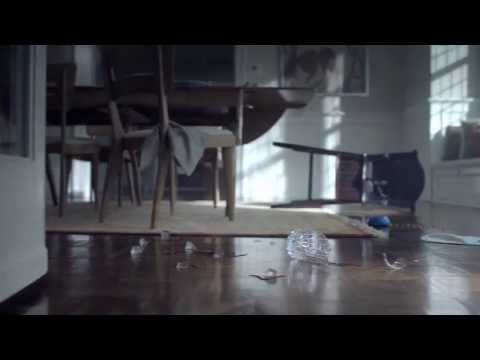
The execution uses a classic narrative structure, but with a brilliant inversion. It’s a Problem-Solution framework where the 'problem' is described, not shown. The ad opens with a hook that is both cinematic and deeply unsettling. We see a desolate alleyway, and Liam Neeson’s authoritative voice calmly states, 'This is a 15-year-old girl being gang-raped.' The disconnect between the brutal words and the empty scene is the engine of the ad. This pattern continues—an empty classroom, a shattered glass—each location a silent testament to an invisible horror. This technique, developed by agency Naked Communications and production company Brand New School, is the ad's defining feature. It cleverly avoids the ethical pitfall of showing actual violence, which could lead to viewer tune-out, and instead co-opts the audience's imagination, making the impact far more personal and disturbing. The 'proof' in this narrative is twofold: the inherent credibility of UNICEF and the borrowed credibility of Neeson, a UNICEF Goodwill Ambassador since 2011, whose screen persona as a protector adds a layer of righteous anger. The ad pivots when Neeson finally appears, breaking the fourth wall to deliver the payoff and the 'ask': 'Make the invisible visible. Help us make violence against children disappear.' This direct appeal, combined with the clear on-screen call to action, transforms the viewer from a passive observer into a potential participant.
The key lesson from this campaign is that what you choose not to show can be more powerful than what you do. In a media landscape saturated with graphic content, suggestion can be more provocative than depiction. The campaign demonstrates that a strong central creative idea, rooted in a simple insight and executed with discipline, can cut through the noise. It proves that you don't need to scream to be heard; a quiet, chilling statement can be far more deafening.
Theme Keywords
Brand Position
The world's leading, authoritative force in protecting children from the hidden violence they face every day.
Brand Archetype
Caregiver
Creative Game Plan
Force audiences to confront the hidden reality of child abuse by narrating horrific acts over empty, silent scenes, making them use their own imagination to 'see' the violence.
Diagnosis: Issues & Solutions
Primary Issue: Emotional Connection
The Problem:
The ad's unrelenting grimness, while effective, risks leaving the viewer feeling helpless rather than empowered. It masterfully presents the problem but offers little emotional resolution or vision of the solution, which can sometimes lead to paralysis instead of action.
The Solution:
Introduce a single, final image of hope after the call to action. For instance, after 'Help us make violence against children disappear,' show one of the previously empty scenes now safely occupied by a child—perhaps the bike being ridden, or a student raising their hand in the classroom. This would frame the viewer's potential contribution in positive terms, showing the future they are helping to build.
Secondary Issue: Clarity of "What's Next?"
The Problem:
The call to action—'Join Us' and visit a website—is standard for the category but lacks a specific, immediate behavioral directive. It places the burden on the viewer to figure out what 'joining' means once they arrive at the site.
The Solution:
Sharpen the call to action with a more tangible first step. For example: 'Join us. Share this video to make the invisible visible.' or 'Join us. Learn the hidden signs of abuse at unicefusa.org.' This gives the audience a concrete, low-friction action to take immediately.
Additional Notes
Related Links
- Liam Neeson | UNICEF✓ Validated9/10AI Source
- Liam Neeson, UNICEF Goodwill Ambassador✓ Validated9/10AI Source
- UNICEF appoints actor Liam Neeson as global Goodwill Ambassador | UN News✓ Validated9/10AI Source
- Liam Neeson - Wikipedia✓ Validated9/10AI Source
- UNICEF Goodwill Ambassador Liam Neeson Meets with Syrian Children and Youth in Jordan✓ Validated9/10AI Source
- Unicef unveils 'End of Violence Against Children campaign' supported by Liam Neeson✓ Validated9/10AI Source
- Liam Neeson Stars in UNICEF PSA | LBBOnline✓ Validated9/10AI Source
- Liam Neeson Partners with UNICEF to End Violence Against Children (Video) - TheWrap✓ Validated9/10AI Source
- UNICEF ANNUAL REPORT - AWS✓ Validated9/10AI Source
Credits
Share this Analysis
More UNICEF USA ad breakdowns
- Fill the Backpack of a Future GeniusUNICEF USA
- Walk for Memories - RichardFederation of Quebec Alzheimer Societies
- Public Inc. x PERIOD. | Deck The StallsPERIOD.
- Mission Talita – Saving the Prostitutes of Los SantosTalita
- Animalife: The WalkAnimalife
- IsrA.L.S mannequin challengeIsrA.L.S (The Israel A.L.S Research Association)
- 100 years of... - Depaul FranceDepaul France
- Josh Groban "Finish the Fight" TV CommercialAmerican Cancer Society