Josh Groban "Finish the Fight" TV Commercial - Ad Analysis

AI Editor notes
Straight from the gut!!
“This is a solid, if a bit dated, concept. The 'flash mob' interruption feels very 2013. But the core idea—flipping 'silence' into 'noise'—is smart. It cuts through the typical somber non-profit messaging. Does it feel a little staged? Yes. The crowd's reaction is a bit too perfect. But for a 30-second TV spot, it gets the job done quickly and makes the point without being depressing.”
Quick Summary
This ad's power comes from a simple, effective misdirection. It sets up the expectation of a somber 'moment of silence'—a common but passive gesture—and pivots to a call for 'noise' and action. This clever turn transforms a familiar, tired trope into an urgent, empowering message that perfectly encapsulates the American Cancer Society's shift towards a more aggressive, hopeful stance in its fight against cancer.
Executive Summary
The American Cancer Society's "Finish the Fight" spot is a tightly executed piece of communication that leverages a simple narrative reversal to great effect. In a category often defined by somber tones and stories of loss, this ad makes a deliberate choice to pivot towards empowerment and action. Its effectiveness lies not in complex storytelling but in its strategic subversion of a familiar trope: the 'moment of silence.' The ad operates on a classic Setup-Turn-Payoff structure, guiding the viewer from a place of passive respect to active participation in under 30 seconds.
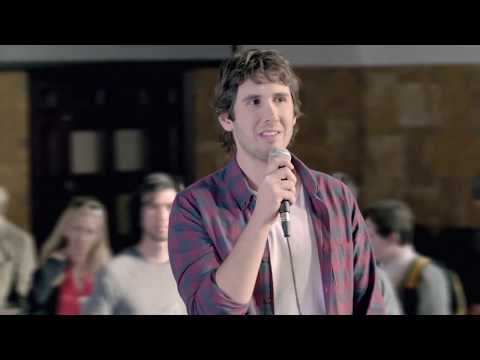
The Setup is established in the opening seconds. Josh Groban, acting as a man of the people with his simple amp, calls for a moment of silence in a busy train station. This immediately frames the ad within a recognizable, solemn context, tapping into a cultural ritual of remembrance. The audience anticipates a quiet, respectful pause. This expectation is the key to the ad's success. The Turn comes swiftly and decisively when Groban says, "You know, actually silence is the last thing that we need." This single line instantly breaks the established frame and recaptures the audience's attention. It's a moment of mild disruption that repositions the entire message from one of memorializing the past to one of changing the future. The Payoff is the subsequent call to action. By reframing silence as inaction and passivity, the alternative—making noise, joining the fight, and donating—becomes the logical, powerful conclusion. The crowd's cheering provides the social proof, transforming a personal appeal from Groban into a collective movement.
The debrief for the creative team would highlight the power of subverting expectations. The ad demonstrates that you don't need a massive budget or elaborate narrative to create an impactful message. The core insight—that honoring victims should be done through action, not just quiet remembrance—is strong and translates into a clear creative execution. It proves that a simple, well-structured idea can be more effective than a more emotionally overwrought but less focused concept. The learning here is to identify familiar tropes within a category and find ways to intelligently flip them to make the brand's message feel fresh and urgent.
Theme Keywords
Brand Position
The proactive, determined leader in the fight to end cancer for everyone.
Brand Archetype
Hero: The brand is positioned as a courageous and determined force leading a collective battle against a common villain (cancer).
Creative Game Plan
Subvert the traditional 'moment of silence' to deliver an urgent message that action, not passive remembrance, is what's needed to cure cancer.
Diagnosis: Issues & Solutions
Primary Issue: Clarity of "What's Next?"
The Problem:
The ad's primary call to action is to 'Donate Now,' but the concept of 'making noise' is broader and more abstract. While the donation link is clear, the ad doesn't fully capitalize on the 'make noise' idea by giving viewers other immediate, tangible, non-monetary actions they could take, like sharing a message or signing a petition.
The Solution:
Supplement the donation CTA with a simple, shareable social media action. For example, the end card could have included a hashtag like #MakeNoiseFor and prompted viewers to share who they are fighting for, thereby turning a broadcast message into a user-generated campaign and giving more meaning to 'making noise'.
Secondary Issue: Emotional Connection
The Problem:
The execution, while clever, feels slightly staged and impersonal. The focus is on the concept and the celebrity, with the crowd acting as a generic backdrop. There's no single human story or face of survivorship for the audience to connect with on a deeper level.
The Solution:
Incorporate brief, authentic cutaways to one or two real people in the crowd who are visibly moved or are survivors themselves. A quick, subtle shot of a person quietly nodding with a tear in their eye before joining the applause would have added a layer of genuine human emotion without slowing the ad down.
Additional Notes
Credits
Share this Analysis
More American Cancer Society ad breakdowns
- American Cancer Society: CourageAmerican Cancer Society
- Screening Saves Lives - 2023American Cancer Society
- Walk for Memories - RichardFederation of Quebec Alzheimer Societies
- Public Inc. x PERIOD. | Deck The StallsPERIOD.
- Mission Talita – Saving the Prostitutes of Los SantosTalita
- Animalife: The WalkAnimalife
- IsrA.L.S mannequin challengeIsrA.L.S (The Israel A.L.S Research Association)
- 100 years of... - Depaul FranceDepaul France