The Story of Generosity - IGA's Busy Beavers - Ad Analysis

AI Editor notes
Straight from the gut!!
“This is a solid, feel-good CSR play. It's safe, effective, and very Canadian. Moving from a product-push to brand-building during the holidays is smart. The 'Busy Beavers' metaphor is a bit on the nose, but the footage of real employees at work makes it feel authentic. Nothing groundbreaking that'll win a Lion, but it absolutely gets the job done for its target audience.”
Quick Summary
By showcasing the massive, real-world scale of its employee-driven holiday food drive, IGA reinforces its brand positioning not just as a supermarket, but as an essential, caring partner integrated into the fabric of the community. The ad is less of a commercial and more of a tangible impact report, proving its generosity rather than just talking about it.
Executive Summary
IGA’s 'The Story of Generosity' is a textbook example of modern corporate social responsibility (CSR) marketing. It understands that in a competitive retail landscape, brand affinity is often built outside the aisles. The ad works because it pivots from selling products to selling an idea: the idea that IGA is a cornerstone of the community. The core insight here is simple: consumers, especially during the holidays, want to feel that their spending contributes to a greater good. They want proof, not just promises.
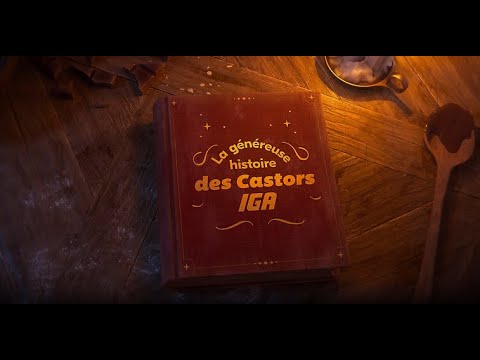
The execution follows a straightforward and effective Setup-Proof-Payoff structure. The Setup is the animated storybook, framing the initiative as a charming tale of 'Busy Beavers.' [1] This creative choice softens the corporate message, making it feel more like a festive story than a financial report. It's a gentle, family-friendly entry point. The crucial turn is the immediate switch to live-action footage, which serves as the Proof. By showing real employees and a massive hall filled with hundreds of volunteers, IGA provides tangible evidence of its commitment. The sheer scale of the operation—endless rows of Yule logs being prepared—is the most powerful visual in the ad. This isn't a token cheque donation; it's a demonstration of manpower and genuine effort. The Payoff is both emotional and quantitative. The shot of the cheering volunteers provides an emotional release, while the on-screen text '+ $1.7M in donations' delivers the hard, impressive fact. The campaign tagline, 'Vive la bouffe qu'on partage' (Long live the food we share), neatly summarizes the entire brand ethos in a single line. [10]
The key lesson from this campaign is the power of 'showing, not telling.' Many brands claim to support their communities, but IGA uses documentary footage to provide irrefutable proof. This ad is essentially a 30-second impact report, designed to make existing customers feel proud of their loyalty and to persuade potential customers that IGA's values align with their own. It’s a smart, focused piece of brand work that understands its regional audience perfectly.
Theme Keywords
Brand Position
The local supermarket that actively nurtures and unites the community.
Brand Archetype
Caregiver
Creative Game Plan
Prove our commitment to the community by showing the massive, authentic, and employee-driven effort behind our holiday food drive.
Diagnosis: Issues & Solutions
Primary Issue: Emotional Connection
The Problem:
The ad effectively showcases the impressive scale of the collective effort but keeps the audience at a distance. We see the 'many' but don't connect with the 'one,' which limits the depth of the emotional resonance.
The Solution:
Incorporate a 3-4 second shot of a single, intimate interaction—like a volunteer sharing a smile with a recipient at a food bank—to ground the large-scale spectacle in a relatable, human moment.
Secondary Issue: Strategic Sense
The Problem:
The animated 'Busy Beavers' framing, while charming, feels slightly misaligned with the authentic, documentary-style footage of the real-world effort. It creates a slight tonal dissonance between a children's story and a serious community initiative.
The Solution:
Replace the animated bookends with a more tonally consistent device, such as elegant, live-action title cards that read 'This is a true story.' to maintain the 'storybook' feel with more gravitas.