IGA - Mr Beaver's Yule Log ❤️🐿️🦝🐼 - Ad Analysis

AI Editor notes
Straight from the gut!!
“It's a solid piece of holiday creative, straight out of the John Lewis playbook. The animation is top-tier. But the story-within-a-story frame feels a little clunky for a 90-second spot. It's all heart, but I question if this warmth is enough to stop shoppers from heading to discount competitors like Maxi or Costco, which is their real business problem. The ad builds brand love, but does it build business?”
Quick Summary
IGA masterfully uses a high-quality, Pixar-esque animated tale not just to generate holiday warmth, but to create a tangible brand action. By linking the story's moral of sharing directly to a real, in-store charitable product—the "Yule Log of Generosity"—the ad successfully converts passive emotional goodwill into active community participation, reinforcing IGA as a cornerstone of the community.
Executive Summary
IGA's 'Mr. Beaver's Yule Log' is a polished and emotionally intelligent piece of holiday marketing that understands its role perfectly. It’s not designed to win a price war against discount grocers; it’s designed to win the hearts of the community it serves. The core strategy is to elevate the brand beyond a transactional relationship, positioning IGA as a facilitator of the deeper meaning of food: sharing, family, and generosity.
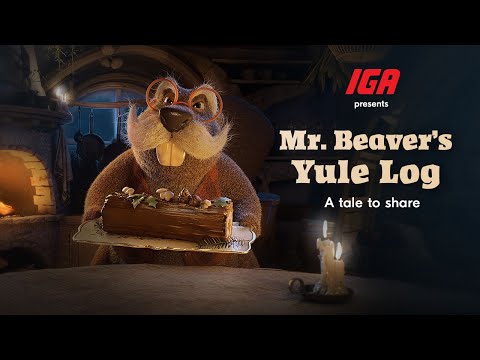
The execution uses a classic Setup-Turn-Payoff structure, framed within a story-within-a-story. The Setup introduces us to a grumpy, selfish beaver who hoards his Yule Log, a character whose initial selfishness is meant to be transformed. This narrative is cleverly co-created by a grandfather and his granddaughters, making the audience feel like they are part of the storytelling tradition. The Turn is twofold. First, the beaver doesn't punish the thieves; instead, he teaches them his craft, a turn from revenge to mentorship. The bigger turn occurs when the newly-empowered 'rascals' immediately share their creation with others in need, demonstrating that the lesson has been truly learned and passed on. The Payoff brings it all home. We return to the 'real world' kitchen, where the grandfather and children are boxing up their own Yule Log to share. This connects the fable's moral directly to the family's actions, which the audience is then invited to replicate through the IGA brand. The final tagline, 'Sharing is everything,' and the promotion of the 'Yule Log of Generosity' benefiting La Guignolée, transforms the ad from a passive viewing experience into a call for community action. [1, 18]
The team should learn that emotional brand building, when linked to a tangible, real-world action, can be incredibly powerful. The campaign didn't just tell people IGA believes in sharing; it provided a direct mechanism for customers to enact that value through the brand, generating nearly $1.9 million for food banks. [4] This is how a market leader defends its position not on price, but on purpose.
Theme Keywords
Brand Position
The supermarket that champions the joy of eating and sharing better.
Brand Archetype
Caregiver
Creative Game Plan
Use a world-class animated story to connect the IGA brand with the core holiday spirit of generosity and sharing.
Diagnosis: Issues & Solutions
Primary Issue: Strategic Sense
The Problem:
The campaign excels at building brand warmth but does not directly address the primary business threat: market share erosion from price-focused competitors like Maxi and Costco. [9] While building emotional equity is a valid long-term strategy, it sidesteps the immediate financial pressures facing its target audience.
The Solution:
Integrate a subtle value message alongside the emotional one. A subsequent, smaller campaign could feature the animated characters enjoying simple, affordable IGA products, creating a bridge between the high-concept brand love and everyday value perception.
Secondary Issue: Emotional Connection
The Problem:
The story-within-a-story framing device, while charming, adds a layer of complexity that slightly distances the audience from the core emotional narrative of the beaver. It takes time to settle into the beaver's world because we keep cutting back to the kitchen.
The Solution:
Simplify the framing. Start and end in the kitchen, but let the middle section be fully dedicated to the beaver's story. This would allow for deeper immersion and a more potent emotional payoff without losing the heartwarming family context.