The Monster Who Came to Tea - Ad Analysis

AI Editor notes
Straight from the gut!!
“This is a gut punch. The slow-burn dread is masterfully handled, starting innocently before descending into horror. The twist—"Daddy's home"—is devastatingly effective because it forces us to see abuse not as a statistic, but as a monstrous reality for a child trying to make sense of the incomprehensible. It's deeply uncomfortable, and it's supposed to be.”
Quick Summary
This film uses the powerful Trojan horse of a children's story to pull the viewer into the world of domestic abuse, reframing it through a child's eyes to make the hidden horror feel immediate, personal, and impossible to ignore. [1, 3]
Executive Summary
This campaign from Women's Aid, 'The Monster Who Came to Tea', is a textbook example of how to make an abstract social issue feel viscerally real. Its core insight is devastatingly simple: to a child, an abusive parent isn't just a flawed person; they are a terrifying, unpredictable monster living inside their home. By choosing to tell this story not through gritty realism but through the subversion of a children's book, the ad bypasses the audience's natural defenses against difficult subjects and creates a powerful, lasting emotional impact.
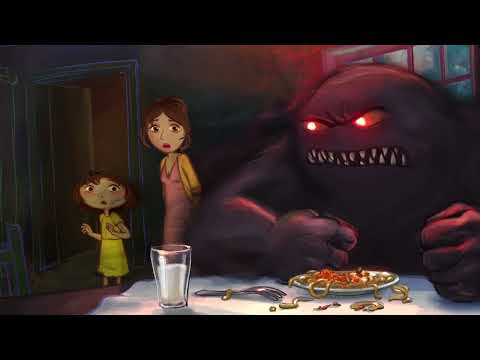
The execution follows a classic Setup-Turn-Payoff structure. The Setup (0:00-0:20) is disarmingly warm: a mother reads a story to her child in a cozy bedroom. The animated storybook begins, titled 'The Monster Who Came to Tea'—a clever and intentional nod to the beloved UK classic 'The Tiger Who Came to Tea', which creates a false sense of security. [9, 10] The monster arrives and is initially described as 'charming'. The Turn (0:21-1:41) is a masterful, slow descent into horror. Once behind closed doors, the monster's behavior shifts. He becomes 'moody and rough', his actions escalating from poor manners to throwing plates, smashing the mother's phone, and launching into a tirade of verbal abuse. The animation style darkens, the music becomes ominous, and the rhyming couplets of the narration take on a sinister tone. The storybook format, initially a symbol of innocence, becomes a prison, trapping the mother and child in this escalating cycle of fear. The Payoff (1:42-2:11) is twofold and brutal. First, a real knock at the door brings us back to the live-action bedroom. The mother's panicked 'Shh' is followed by the chilling line, 'Daddy's home.' This single sentence re-contextualizes the entire film: the monster is not a fantasy, but a metaphor for the father. The second payoff is the call to action, which grounds the fictional horror in factual reality, explaining that for many families, 'this isn't fiction'. [1, 3]
The key lesson from this work is the power of a well-executed metaphor. Instead of showing the physical violence, it shows the emotional fallout through a lens that is both universally understood (a children's story) and deeply unsettling. This creative choice makes the ad more memorable, more shareable, and ultimately, more effective at achieving its goal of forcing a difficult conversation and driving political action. [1]
Theme Keywords
Brand Position
The leading advocate and authority fighting to end domestic abuse and ensure the safety of women and children in the UK.
Brand Archetype
Caregiver
Creative Game Plan
Illustrate the hidden horror of domestic abuse by depicting it as a dark children's story, allowing the audience to experience the trauma from a child's terrified perspective.
Diagnosis: Issues & Solutions
Primary Issue: Clarity of "What's Next?"
The Problem:
The primary call to action, visiting the website to sign an open letter, is strong and specific. However, the final narrated line, 'Speak up to help rewrite their stories,' is emotionally resonant but strategically vague and less actionable.
The Solution:
Sharpen the final voiceover to directly align with the on-screen URL. A more direct line like, 'Sign our open letter and demand they are protected. Help us rewrite their stories,' would connect the emotional plea to the specific, measurable action required.
Secondary Issue: Strategic Sense
The Problem:
The film's 2:11 runtime is perfect for its intended emotional build, but its reliance on the final twist means its core message could be lost in shorter formats required for different media placements.
The Solution:
For shorter social media cutdowns (e.g., 15-30 seconds), the structure should be inverted. Start with the core message—'This is how a child sees domestic abuse'—and then use quick, jarring cuts from the animation to prove the point, ensuring the strategy lands even without the slow burn.
Additional Notes
Related Links
Credits
Share this Analysis
More Women's Aid ad breakdowns
- Domestic abuse is a national emergencyWomen's Aid
- Mental Health Awareness Week 2022 - LonelinessMental Health Foundation
- Closer to You | Ronald McDonalds House CharitiesRonald McDonald House Charities Netherlands
- The Moment You Stand | Stand Up To CancerStand Up To Cancer UK
- Proud Mistletoe 2021| #ProudMistletoeStonewall
- It's Time to Even It Up | Oxfam GBOxfam GB
- Tommy's - Projecting LifeTommy's
- #DontSayDontSend cyber bullying campaignKidscape