Domestic abuse is a national emergency - Ad Analysis

AI Editor notes
Straight from the gut!!
“This is a gut punch. The bait-and-switch from the familiar, practiced drill of a fire emergency to the silent, lonely terror of domestic abuse is brutally effective. It weaponizes public safety messaging to expose a fatal societal blind spot. It's an incredibly smart, angry, and necessary piece of work.”
Quick Summary
By masterfully equating the terror of domestic abuse with the universally understood crisis of a house fire, this ad jolts the audience out of complacency and reframes a 'private issue' as the urgent, public emergency it truly is.
Executive Summary
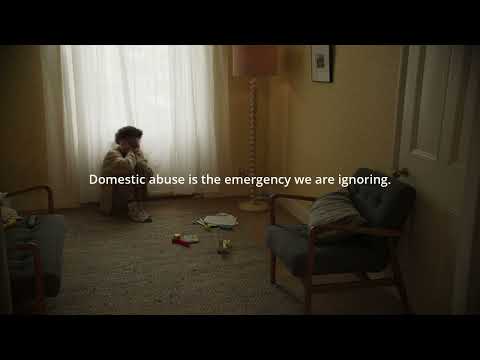
This Women's Aid film is a masterclass in strategic comparison. It operates on a simple, powerful insight: we, as a society, are conditioned to respond to certain emergencies with a clear set of protocols and a sense of collective urgency, yet we treat the statistically more deadly emergency of domestic abuse as an invisible, private matter. The entire creative execution is built to expose this cognitive dissonance with surgical precision.
The ad's structure is a classic 'Setup-Turn-Payoff' model. The setup (0:00-0:18) brilliantly leverages the visual and auditory language of a public service announcement for fire safety. Everything from the smoke-filled room and the instructional voiceover ('Stay low, cover your face') to the sound of approaching sirens taps into a shared cultural understanding. This creates a sense of familiar crisis, lulling the audience into a known narrative framework. The 'Turn' (0:19) is both sudden and devastating. The cut to silence, the instant clearing of the smoke, and its replacement with the violent, intimate sound of a fist banging on a door is a masterful piece of misdirection. The 'help' the voiceover promised is pointedly absent. This is where the ad's true thesis is revealed: for victims of domestic abuse, there is no public alarm, no cavalry coming to the rescue. The 'Payoff' is delivered by the voiceover and the on-screen text. The statistic—that a woman is more than twice as likely to be killed by a partner than by fire—lands with incredible force because the preceding 30 seconds have made the comparison visceral, not just academic. The final line, 'Domestic abuse is the emergency we are ignoring,' isn't just a tagline; it's the unavoidable conclusion the ad has led us to. The debrief for any team watching this is clear: a powerful analogy can be more effective at changing minds than a direct, literal depiction of a problem. By reframing the issue in a context the audience already understands and respects, the ad forces a profound and uncomfortable re-evaluation of societal priorities.
Theme Keywords
Brand Position
The authoritative national voice that treats domestic abuse with the life-or-death urgency it demands.
Brand Archetype
The Ruler, demanding that society re-order its priorities, mixed with The Hero, actively fighting to save lives.
Creative Game Plan
Force society to confront its own hypocrisy by contrasting our well-rehearsed response to a public emergency like a fire with our collective inaction on the deadlier emergency of domestic abuse.
Diagnosis: Issues & Solutions
Primary Issue: Strategic Sense
The Problem:
The ad establishes an incredibly powerful 'public emergency' frame but doesn't fully carry that metaphor through to the call-to-action. The CTA 'Donate now,' while clear, feels like a standard charity ask and a slight disconnect from the specific, innovative framing of the creative.
The Solution:
Strengthen the link between the problem's frame and the solution's frame. A more integrated CTA might have been 'Help us be their emergency service' or 'Fund a lifeline when the sirens won't come,' explicitly tying the act of donating to filling the void the ad so powerfully depicts.
Secondary Issue: Clarity of "What's Next?"
The Problem:
While the ad is excellent for awareness, a viewer who is moved to action beyond donating might not immediately know what to do. The focus is on the 'why' (it's an emergency) and the 'what' (donate), but less on the 'how' for broader societal change.
The Solution:
The end card could have included a secondary, non-monetary action that aligns with the 'public response' theme, such as 'Learn the signs' or 'Know how to help a friend,' turning passive viewers into potential active allies and reinforcing the idea of collective responsibility.