The Lesson - Learn Without Fear - Ad Analysis

AI Editor notes
Straight from the gut!!
“This is a punch to the gut. The bait-and-switch from a hopeful 'day-in-the-life' film to a horror sequence is jarring and deeply effective. It makes you uncomfortable, as it should. It’s the kind of work that makes you put your phone down. Is it exploitative? It walks a fine line, but for an issue this horrific and widespread, playing it safe would have been a bigger failure. It’s hard to watch, and harder to forget.”
Quick Summary
This film's power comes from a single, brutal creative choice: shattering the viewer's prejudice. By showing that the terror of sexual violence in school is a universal threat—plaguing a girl in the UK just as it does a girl in Africa or Asia—it makes the problem immediate, undeniable, and impossible to dismiss as something that happens 'over there.' It forces a Western audience to confront a horror they thought was distant, transforming abstract sympathy into visceral fear and, hopefully, urgent action.
Executive Summary
This film by Plan International UK is a masterclass in narrative misdirection for social impact. It doesn't just present a problem; it manipulates the audience's own biases to make its point. The core insight is that while viewers in developed nations may perceive school-based sexual violence as a problem for the developing world, it is in fact a universal horror. The ad is constructed to dismantle this comforting distance.
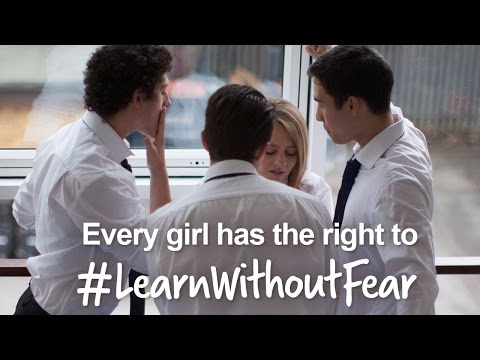
The execution follows a classic Setup-Turn-Payoff structure. The Setup (0:00-0:22) is deceptively gentle. We see three girls in the UK, Africa, and Asia preparing for school. The cinematography is warm, the music is hopeful, and the scenes are mundane—tying a shoe, fixing hair, walking with friends. This creates a parallel narrative where the only expected difference is geography. The viewer is lulled into a familiar 'day in the life' comparison common in charity ads. The Turn (0:23-0:53) is a masterstroke of tension. The music shifts to an ominous, discordant score. The camera angles become predatory—a boy's leering gaze, a teacher's unnerving stare, a feeling of being followed. The sense of safety established in the first act is systematically dismantled for all three girls simultaneously. The editing pace quickens, cross-cutting not just their locations but their shared, escalating fear. The Payoff (0:54-1:16) is a brutal climax. A rapid-fire montage of implied violence—grabbing, cornering, screaming—collapses the three stories into one universal experience of terror. This culminates in the stark, silent statistic on a black screen, which hits with the force of a final blow. The voiceover then calmly delivers the campaign's thesis: 'School should be a safe place. A place to learn without fear.'
The Debrief for the creative team would be clear: this film works because it weaponizes the viewer's own assumptions. By placing the British girl's experience on equal footing with the others, it demolishes the 'us vs. them' mentality. The shock is not just the violence itself, but the realization of its proximity. It’s an uncomfortable but necessary strategy. The film proves that the most powerful way to generate empathy is not to ask the audience to imagine someone else's suffering, but to make them feel, for a moment, that it could be their own.
Theme Keywords
Brand Position
The leading global advocate dedicated to ensuring every girl's right to a safe education, free from the threat of violence.
Brand Archetype
The Caregiver, with strong elements of the Hero. It aims to protect the innocent while fighting the injustice of gender-based violence.
Creative Game Plan
Force a comfortable Western audience to confront the universal reality of school-based sexual violence by collapsing the distance between 'here' and 'there.'
Diagnosis: Issues & Solutions
Primary Issue: Clarity of "What's Next?"
The Problem:
The call to action—'Join us now'—feels emotionally disconnected from the visceral horror the ad creates. The film generates immense emotional energy (fear, anger) but provides a generic outlet that fails to capitalize on that specific feeling.
The Solution:
Make the call-to-action more specific and empowering. Instead of the vague 'Join us,' use a directive that channels the emotion, such as 'Demand safe schools for every girl' or 'Help fund programs that protect girls from violence.'
Secondary Issue: Emotional Connection
The Problem:
The ad's intensity, while effective, risks alienating or overwhelming some viewers, causing them to tune out before the final branding and call to action appear.
The Solution:
Consider adding a fleeting, final image of hope after the call to action—perhaps one of the girls looking defiant or a shot of a truly safe classroom—to leave the viewer with a sense of agency rather than just despair.
Additional Notes
Credits
Share this Analysis
More Plan International UK ad breakdowns
- What do girls really learn at school? Learn Without FearPlan International UK
- Walk for Memories - RichardFederation of Quebec Alzheimer Societies
- Public Inc. x PERIOD. | Deck The StallsPERIOD.
- Mission Talita – Saving the Prostitutes of Los SantosTalita
- Animalife: The WalkAnimalife
- IsrA.L.S mannequin challengeIsrA.L.S (The Israel A.L.S Research Association)
- 100 years of... - Depaul FranceDepaul France
- Josh Groban "Finish the Fight" TV CommercialAmerican Cancer Society