#STOPVirusEVA The social virus that affects women because it is so - Ad Analysis

AI Editor notes
Straight from the gut!!
“This is a heavy, effective piece of communication. The 'virus' metaphor is a smart, jarring hook that forces you to pay attention. The power, however, comes from the raw, unfiltered testimonials. You feel their pain and exhaustion. My only question is whether the clever metaphor risks medicalizing a deeply political and social problem. It's a fine line, but the emotional truth of the stories makes it land.”
Quick Summary
This campaign frames a complex social issue—gender inequality—as a communicable disease called the 'EVA Virus.' This powerful metaphor makes the systemic, harmful nature of inequality tangible and urgent, reframing it as a public health crisis that demands an immediate response from everyone, not just a distant problem for others to solve.
Executive Summary
Médicos del Mundo's 'EVA Virus' is a masterclass in using a creative metaphor to make an abstract social issue immediate and visceral. It doesn't just present a problem; it redefines it. The core strategic decision is to take gender inequality—a sprawling, complex topic often discussed in academic or political terms—and reframe it through the universally understood lens of a public health crisis.
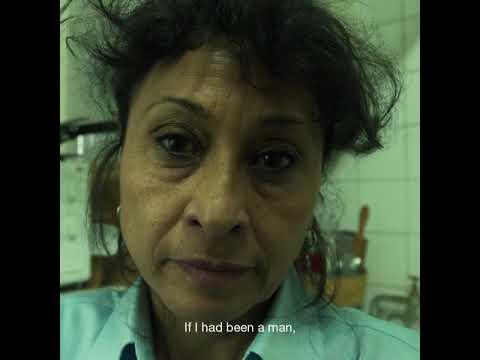
The execution follows a clear narrative path designed for maximum impact. It begins with a powerful Hook, introducing the idea of a social 'virus' that affects half the world. This is a brilliant piece of misdirection; the viewer is primed for a medical documentary before the social nature of the 'illness' is revealed. The body of the ad is a montage of raw, documentary-style Testimonials. These are not polished performances; they are quiet, weary accounts of struggle, fear, and injustice from a diverse group of women. Each story functions as a 'symptom' of the EVA Virus—economic vulnerability ('no pension'), physical and emotional abuse ('I've felt afraid'), and exploitation ('working for a family that is not mine'). The low-key, intimate cinematography enhances the authenticity, making the viewer feel like a confidant rather than a spectator. The campaign's Turn is the visual reveal of women putting on surgical masks. This crystallizes the central metaphor: they are trying to protect themselves from an invisible, airborne social contagion. The final Ask is a direct appeal from Médicos del Mundo, positioning them as the front-line workers fighting this 'pandemic' and directing viewers to a campaign website. [3]
The debrief for the creative team would be overwhelmingly positive. This campaign demonstrates that the most effective way to tackle a complex issue is not to explain every nuance, but to find a simple, powerful analogy that unlocks an emotional truth. By diagnosing inequality as a virus, the campaign makes it feel less like an intractable political issue and more like a treatable disease we all have a responsibility to cure. It's a strategic and creative success.
Theme Keywords
Brand Position
The medical authority that diagnoses and treats the physical and mental health consequences of social injustice.
Brand Archetype
Caregiver
Creative Game Plan
Reframe systemic gender inequality as a contagious, deadly virus to make its threat feel tangible, urgent, and personal.
Diagnosis: Issues & Solutions
Primary Issue: Clarity of "What's Next?"
The Problem:
The ad does a phenomenal job of building emotional energy and a sense of urgency, but the final call-to-action—a simple URL—is too passive to effectively channel that energy. Viewers are left feeling 'I want to help,' but without a clear, immediate first step, that motivation can dissipate.
The Solution:
The final super should include a more directive and tangible action. Instead of just 'Help Us,' it could say, 'Help us provide care. Donate at...' or 'Demand action. Sign the petition at...' This gives the viewer a concrete mission and makes their potential impact feel more real.
Secondary Issue: Strategic Sense
The Problem:
While the 'virus' metaphor is brilliant, it runs a slight risk of being misinterpreted as medicalizing a political issue. By framing gender inequality as a health problem, it could inadvertently downplay the structural, legal, and political changes required to address the root causes.
The Solution:
The campaign's supporting materials on the website must explicitly connect the 'virus' metaphor back to the systemic causes of inequality. A single line in the ad like 'A virus transmitted by injustice' could have helped bridge this potential gap, ensuring the metaphor is understood as an analogy, not a literal diagnosis.