Res.Pirator - свіже повітря вже не в моді - Ad Analysis

AI Editor notes
Straight from the gut!!
“This is smart, sharp work. It baits you with a slick, cool fashion film and then hits you with the twist. I'm a little tired of the 'dystopian future' trope, but this makes it feel fresh because it's tied to a real, measurable event in Kyiv. [3] It's not some abstract sci-fi idea. It's basically asking: 'Is this the world we want to live in?' It's a great portfolio piece for the agency.”
Quick Summary
This ad cleverly hijacks the visual language of a trendy fashion launch to deliver a stark warning about air pollution. By ironically positioning respirators as the hot new accessory, it forces viewers to confront the absurdity of accepting a dystopian future instead of fighting for clean air, making the environmental crisis feel immediate and personal.
Executive Summary
This piece from Linza Agency is a masterclass in misdirection for a cause. It's a social-commentary Trojan Horse, disguised as a slick, aspirational fashion ad. The core strategy is to appropriate the visual language of consumer desire to highlight a future nobody should desire. Instead of selling a product, it's selling an uncomfortable truth: that we are becoming dangerously accustomed to environmental decay.
The core insight is that society often adapts to or even aestheticizes problems rather than solving them. The ad taps into the cynical observation that if air pollution becomes the permanent norm, capitalism will inevitably turn respirators into the next trendy fashion accessory, complete with lifestyle marketing. It's a chillingly plausible scenario that turns a distant environmental statistic into a tangible, cultural phenomenon.
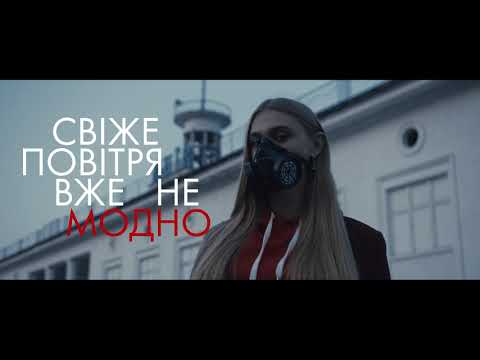
The execution follows a classic Setup-Turn-Payoff structure. The Setup is the first 45 seconds, which perfectly mimic a product launch for a brand called 'Res.Pirator'. We see a montage of attractive young people in Kyiv, shot with the high-energy, quick-cut style of a music video or a Zara campaign. They dance, skate, and pose, exuding effortless cool. The Turn happens when they begin to don gas masks and respirators, not with alarm, but with the same casual flair as putting on sunglasses. The ad leans into the parody with supers like 'Stylish and comfortable'. The critical moment of the Payoff arrives when a woman removes her mask and coughs, breaking the fourth wall of the fantasy. The music stutters, and the screen flashes with the words 'Smog,' 'Dust,' and 'CO2.' The final title card, 'Fresh air is no longer in fashion,' lands as the devastating punchline. The ad then reveals its true intent: this isn't a product ad, but a warning about a real environmental crisis happening in Kyiv. [3]
The debrief for the team that created this should focus on the power of cultural juxtaposition. They successfully took two disparate worlds—the aspirational gloss of fashion advertising and the grim reality of environmental pollution—and smashed them together to create meaning. The key lesson is that to make people care about a difficult topic, you can't just present them with facts and figures. You have to translate it into a language they understand. By speaking the language of 'cool,' the ad made a statement about pollution that was more resonant and shareable than any traditional PSA could ever be.
Theme Keywords
Brand Position
For the fictional brand 'Res.Pirator': The only fashion accessory that matters in a world that has given up on clean air.
Brand Archetype
The Jester (using satire and irony to expose a difficult truth) mixed with The Sage (revealing a profound insight about our future).
Creative Game Plan
Juxtapose the aspirational aesthetics of fashion advertising with the dystopian reality of wearing gas masks to shock viewers into confronting the normalization of air pollution.
Diagnosis: Issues & Solutions
Primary Issue: Clarity of "What's Next?"
The Problem:
The ad is brilliant at raising alarm but offers no outlet for that energy. After making the viewer feel concerned about air pollution, it provides no concrete action, such as directing them to a relevant NGO, a petition, or even an informational resource like the SaveEcoBot mentioned in the description.
The Solution:
Add a final card with a clear, simple call-to-action. For example: 'Our air is in crisis. Support [Name of Ukrainian Environmental Org] to demand change.' or 'See the pollution levels in your city. Visit SaveEcoBot.com'. This would channel the emotion it creates into potential impact.
Secondary Issue: Strategic Sense
The Problem:
While effective as a viral piece, the 'fictional brand' approach risks being *too* slick. A portion of the audience might miss the satirical intent and either get confused about the product's existence or simply appreciate the cool visuals without internalizing the warning, slightly dulling the message's urgency.
The Solution:
Introduce the 'Turn' slightly earlier. The moment of the cough and the reveal of the pollutants could happen a few seconds sooner to ensure the second half of the ad is dedicated to reinforcing the real message, reducing the risk of the satire overshadowing the substance.
Additional Notes
Related Links
Credits
Share this Analysis
More Res.Pirator (Fictional) ad breakdowns
- Kunhadi - New Year's TVC (English)Kunhadi
- CAMPAÑA FAD 2013 - Spot chica 30"Fad (Fundación de Ayuda contra la Drogadicción)
- Don't let speed change youBruxelles Mobilité
- Jack's StoryNational Drowning Prevention Alliance
- Random is Always in PlayResponsible Gambling Council
- Alcohol misuse during winter months | The Snowball - A Short FilmSAFE Project
- Campaña: 'Esto no es un cuento'. ¿Has sufrido el robo de algún familiar?Generalitat Valenciana
- Een tegen Eenzaamheid | TVC verhuisd omstanderEen tegen Eenzaamheid