Judy and Gary's story - Ad Analysis

AI Editor notes
Straight from the gut!!
“This is a gut punch. Projecting a lifetime of memories onto the cold, empty walls of a home that had to be sold for medicine is a haunting and effective device. It feels real, raw, and deeply unfair. My only question is if the profound sadness risks overwhelming the viewer before they even get to the call to action. It's powerful, but it's a tough watch.”
Quick Summary
This ad transforms the complex policy debate over universal pharmacare into a devastatingly simple human story of love, loss, and an impossible choice. By using a home as a screen for memories, it makes the political intensely personal and argues that no one should have to sell their past to afford a future.
Executive Summary
This ad from the Canadian Labour Congress isn't selling a product; it's selling an idea, and it does so with immense emotional weight. The core insight is that a debate about healthcare policy isn't about budgets and legislation—it's about the real, devastating choices people are forced to make between their health and the life they've built. The ad makes the abstract tangible by focusing on the story of one man, Gary, who lost his wife, Judy, and the home that contained their shared memories, all because of the prohibitive cost of her medication.
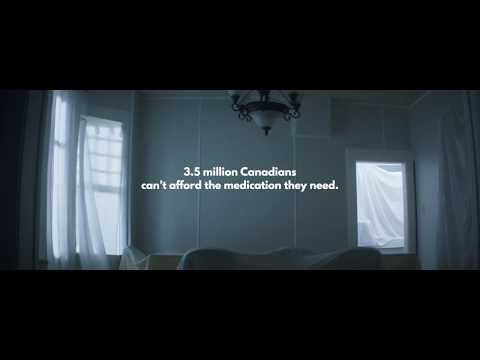
The execution uses a powerful testimonial format, but elevates it with a brilliant creative device. The narrative follows a simple arc: Setup, Conflict, and Resolution. The setup lovingly establishes the lifelong romance between Judy and Gary. Their memories are literally projected onto the walls of their now-empty house, a haunting visual metaphor for how a home is a container for a life's story. This isn't just stock footage; it's a ghost of a life lived. The conflict arrives with Judy's diagnosis. The tone shifts from sweet nostalgia to quiet desperation as Gary recounts the 'life and death' math of an $3,800 pill. The projections of happy family moments now play against Gary's pained expression in the present, creating a heartbreaking juxtaposition. The resolution is tragic on a personal level—he had to sell the home his wife wanted him to keep—but pivots to a societal one. The ad channels the viewer's anger and sadness into a clear political action: 'Join the call for a universal prescription drug plan for Canada.'
The debrief for the creative team here is clear: authentic, personal stories are the most powerful weapons in an advocacy campaign. While statistics can frame a problem, a single, well-told story can make an audience feel it. The choice to use projection mapping wasn't just a stylistic flourish; it was the perfect visual expression of the ad's central theme of memory and loss. It demonstrates that the most effective way to move people toward a political goal is to first connect with a universal human truth—in this case, the love for a partner and the sanctity of a home.
Theme Keywords
Brand Position
The defender of everyday working people against systemic injustices.
Brand Archetype
Caregiver
Creative Game Plan
Demonstrate the devastating human cost of gaps in Canada's healthcare system through one man's authentic, heartbreaking story.
Diagnosis: Issues & Solutions
Primary Issue: Emotional Connection
The Problem:
The ad's greatest strength—its profound sadness—is also a potential pitfall. It is so emotionally taxing that it may lead some viewers to tune out or avoid sharing it, limiting its reach to those not already sympathetic to the cause.
The Solution:
Introduce a brief moment of hopeful resolve or collective action near the end, just before the call-to-action. A subtle shift in music or a shot of Gary looking determined could pivot the emotion from pure grief to a feeling of purpose, empowering the viewer to act.
Secondary Issue: Clarity of "What's Next?"
The Problem:
The call-to-action is clear ('visit aplanforeveryone.ca'), but it doesn't specify what the viewer will do there. This ambiguity can create a moment of friction that reduces the number of people who follow through.
The Solution:
Make the call-to-action more specific and task-oriented. For example: 'Visit aplanforeveryone.ca to add your name to the call.' This sets a clear expectation and makes the next step feel more concrete and achievable.