Turn Ignorance Around - Ad Analysis

AI Editor notes
Straight from the gut!!
“This is sharp, aggressive work. It doesn't plead, it punches back. Instead of making a polite case against stereotypes, it shoves the ugliest labels in your face and forces you to read them. The turn-and-reveal is such a simple, visual, and sticky idea. It's the kind of work you see and immediately wish you'd thought of it. It's pure, uncut political advertising that knows exactly who it's for and who it's against.”
Quick Summary
This campaign's power comes from a single, brilliant creative device: it hijacks hateful stereotypes, confronts the viewer with them, and then physically 'turns them around' to reveal the positive, professional truths of the Latino community. It’s a masterclass in narrative jujitsu, using the weight of an attack against the attacker.
Executive Summary
The 'Turn Ignorance Around' campaign by the CHIRLA Action Fund is a masterclass in reactive, strategic communication. Launched during the contentious 2016 U.S. presidential election, it doesn't just respond to a political attack—it seizes control of the narrative with a simple yet powerful creative device. The ad's brilliance lies in its structure, a textbook example of Setup-Turn-Payoff that transforms it from a simple PSA into a memorable piece of political art.
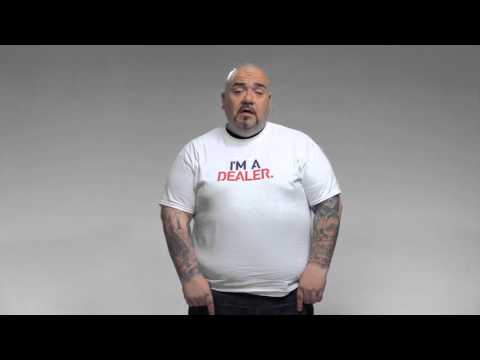
The Setup is confrontational and immediate. A diverse group of Latino individuals look into the lens and claim negative identities: 'I'm a dealer,' 'I'm a killer,' 'I'm a murderer.' These are the very stereotypes they've been burdened with, presented here without filter or apology. This creates a moment of intense discomfort for the viewer, forcing them to confront the ugliness of the prejudice head-on. The stark, minimalist production design focuses all the attention on the human faces and the weight of their words.
The Turn is both literal and metaphorical. At the 14-second mark, a man wearing a t-shirt that says 'I'M A TRAFFICKER' physically turns around. This action is the core of the entire campaign. The camera follows, revealing the back of his shirt: 'A TRAFFICKER OF STORIES. I'M A DIRECTOR AND I'M LATINO.' In this single motion, the ad pivots from absorbing hate to deflecting it. The negative label is not just refuted; it's reappropriated and redefined.
The Payoff is a cascade of empowerment. One by one, the other negative labels are turned into positive, meaningful professions: a 'murderer of boredom' is a comedian, a 'dealer of flavor' is a chef, an 'attacker of ignorance' is a student. The initial tension resolves into a feeling of pride and defiance. The final call to action, 'It's time to turn ignorance around,' feels earned and powerful, serving as a rallying cry. This structure ensures the message is not just heard, but felt, making it incredibly effective and shareable.
Theme Keywords
Brand Position
The defiant champion of truth for the Latino community.
Brand Archetype
Rebel
Creative Game Plan
Take the hateful words being used as weapons against the Latino community and reforge them into badges of professional and cultural honor.
Diagnosis: Issues & Solutions
Primary Issue: Strategic Sense
The Problem:
The ad's greatest strength—its direct political confrontation with the #DumpTrump hashtag—is also a strategic limitation. While incredibly effective for mobilizing its base and allies, its explicitly partisan nature likely prevented the core message of challenging stereotypes from reaching persuadable audiences who are turned off by direct political attacks.
The Solution:
Produce a second, de-politicized version of the ad. By removing the #DumpTrump hashtag and focusing solely on the unifying #TurnIgnoranceAround message, the campaign could have been placed in broader media markets to change hearts and minds, while the more aggressive version continued to rally the base on social media.
Secondary Issue: Clarity of "What's Next?"
The Problem:
The ad is exceptional at generating awareness and emotion, but the pathway for a viewer who is fired up and wants to contribute is limited to sharing on social media or visiting a general website. There isn't a simple, low-friction, non-monetary action to capture that energy.
The Solution:
The campaign website could have featured a 'Take the Pledge' button where users could publicly commit to challenging stereotypes. This would have provided a concrete, empowering next step, created a new list of supporters for the organization, and generated another layer of shareable user-generated content.