The Wall #buildsomethingbetter - Ad Analysis

AI Editor notes
Straight from the gut!!
“This is a smart piece of communication. Using kids to dismantle a complex political issue is a classic, but effective, playbook. They get away with a message that would sound preachy from an adult. It's a thinly veiled metaphor for the border wall debate, obviously, but the 'focus group' frame gives it just enough plausible deniability to feel like an observation, not a lecture. The final line—"I want a refund"—is a killer closing argument.”
Quick Summary
By framing a deeply divisive political issue through the unfiltered honesty of children, the ad sidesteps partisan rhetoric and recasts the debate in simple, human terms. It argues that building walls is inherently limiting and joyless, while collaboration and creation are natural human instincts, effectively positioning the organization's mission as the obviously better, more hopeful path forward.
Executive Summary
This campaign from the Esperanza Immigrant Rights Project is a masterclass in using a simple creative device to tackle a complex and polarizing issue. It operates not by presenting facts and figures, but by tapping into a fundamental, pre-political human truth, using children as the vehicle for that truth.
The Core Insight: The core insight is that the instinct to build, create, and connect is more powerful and natural than the impulse to divide and separate. The ad posits that exclusion is an unnatural concept that has to be taught, and when given the choice, people—in their purest form, as children—will always choose creation over containment. This reframes the entire political debate about a border wall from one of security and policy to one of basic human nature.
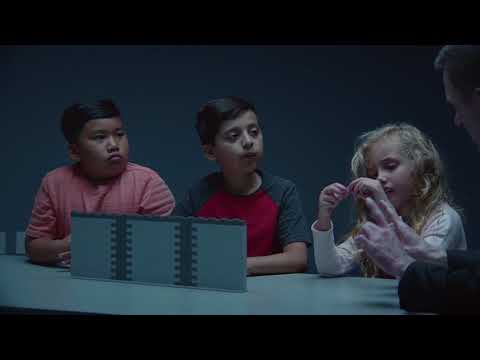
The Execution: The ad uses a Documentary/Educational style, presenting itself as a real focus group. The structure follows a classic Setup-Turn-Payoff model. The Setup (0:00-0:39) establishes the premise: a corporate-looking moderator presents a new, stark toy called 'The Wall' to groups of kids. Their immediate confusion and boredom establish the central problem: the 'product' is inherently flawed because it lacks creativity and purpose. The Turn (0:40-1:25) occurs when the moderator tries to explain the wall's purpose ('to keep bad guys out'), but is met with a devastatingly simple question: 'How do you know if someone's a bad guy?' This question pivots the ad from a product review to a philosophical debate. The moderator then dumps the raw materials on the table, and the children instinctively begin to build imaginative things, dismantling the original wall to do so. The Payoff (1:26-1:48) is the crystallization of the message. As the kids build rockets and parks, the super reads 'HELP BUILD FUTURES NOT WALLS.' The final lines of dialogue ('It costs billions of dollars.' 'I want a refund.') serve as a final, damning verdict on the entire concept, translating the children's emotional rejection into a savvy fiscal critique.
The Debrief: The key learning is that the most effective way to win a polarized argument is often to reframe it entirely. Instead of engaging in a head-to-head policy debate, the agency chose to change the venue to a child's playroom. This allowed them to use emotion and universally accepted truths (kids are creative, play should be fun) to make their point. The creative team successfully used the innocence of children as an unimpeachable authority, making their rejection of 'The Wall' feel like a fundamental, human verdict rather than a political opinion.
Theme Keywords
Brand Position
The constructive, humane, and hopeful alternative to divisive politics.
Brand Archetype
The Innocent
Creative Game Plan
Use the unfiltered honesty of children to expose the absurdity of building walls and champion the humanity of building futures.
Diagnosis: Issues & Solutions
Primary Issue: Strategic Sense
The Problem:
The ad's greatest strength—its subtle, metaphorical approach—is also a potential weakness. It preaches to the choir effectively, but it's unlikely to persuade anyone who is already a firm supporter of a border wall. The message might be too indirect for audiences not already aligned with the organization's viewpoint, potentially limiting its reach beyond a progressive base.
The Solution:
To broaden the impact, a future campaign could find a metaphor that speaks more directly to shared values that cross political divides, such as economic prosperity, community safety, or family, rather than focusing on a concept so directly tied to a partisan political project.
Secondary Issue: Clarity of "What's Next?"
The Problem:
The call to action is clear but very broad: 'Act Now.' For a viewer moved by the video, this doesn't provide a specific, single first step. The YouTube description offers 'Sign the Petition' and 'Donate,' but the film itself doesn't prioritize one, which can lead to inaction.
The Solution:
A more effective CTA might have been singular and directly tied to the film's theme. For example: '#BuildSomethingBetter: Help us fund a child's legal case for $50.' This makes the 'next step' concrete and emotionally connected to the ad's content.
Additional Notes
Related Links
Credits
Share this Analysis
More Esperanza Immigrant Rights Project ad breakdowns
- Ahadi Foundation - The Items (VO)Ahadi Foundation
- Just The Two Of Us | CoorDown | World Down Syndrome Day 2022CoorDown
- STOP VEO – THE WORDS I WON’T SAYStopVEO (Child without Educational Violence)
- AwarePodCanadian Women's Foundation
- People Like Us presents #NameTheBiasPeople Like Us
- Inter-LGBT / The Obstacle CourseInter-LGBT
- #drawaline | UN Women UK | Full FilmUN Women UK
- SOS RACISMO (EN)SOS Racismo