Пассажир рулит! / Passenger rules! / 90 sec - Ad Analysis

AI Editor notes
Straight from the gut!!
“This is a fantastic piece of film. It's weird, unsettling, and you can't look away. It hooks you with a simple question—'What is the deal with these two guys?'—and holds you for 90 seconds. The payoff is a genuine 'aha' moment that's more effective than any crashed car. It treats the audience like they're intelligent. Instead of lecturing, it tells a strange little story and lets the chillingly simple message land right at the end. Solid work.”
Quick Summary
This Russian PSA brilliantly avoids the gore and shock tactics typical of road safety ads. It uses a life-spanning metaphor of a man physically controlled by another to illustrate the loss of agency when you're a passive passenger. The final moment of separation, when the 'driver' leaves and the 'passenger' is left standing alone, powerfully reframes passenger responsibility not as a nagging duty, but as an act of taking back control of your own life.
Executive Summary
This Russian road safety PSA, "Passenger Rules!", is a masterwork of metaphorical advertising. It sidesteps the entire genre of bloody, fear-based warnings to deliver a message that is more subtle, more intellectually engaging, and ultimately, more profound. The campaign's core challenge is to transform passengers from passive occupants into active participants responsible for their own safety. [4] Instead of stating this plainly, the ad builds a 90-second cinematic parable.
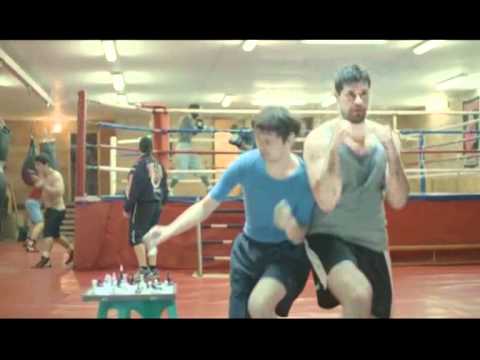
The core insight is that being a passive passenger is a complete abdication of personal control, akin to letting someone else live your life for you. The ad visualizes this abstract concept in a literal, unforgettable way. The entire piece serves as the setup, establishing the bizarre relationship between two men—one leading, one tethered to his back, mirroring his every move. This 'human puppet' dynamic is depicted across a lifetime of vignettes, from childhood play to teenage sports, work mishaps, and romantic failures. The quirky, upbeat cover of the song "Popcorn" provides a layer of surrealism, making the unsettling visuals feel like a strange, foreign film rather than a lecture. We are drawn in not by fear, but by sheer curiosity.
The execution follows a classic Setup-Turn-Payoff structure. The setup is the entire montage of the controlled life. The 'Turn' occurs at 1:15, when the two men approach a car. The controlling man gets into the driver's seat. Our expectation, based on the established logic, is that the other man will be pulled into the passenger seat. The 'Payoff' is the sharp, brilliant subversion of this expectation. The driver shuts the door and drives away, severing the connection and leaving the protagonist alone for the first time. The music stops. The message is delivered by a stark voiceover: "Don't lose control of your life. Don't be dependent on the driver." In that moment, the metaphor is unlocked. The film wasn't about a weird codependent relationship; it was about us, every time we sit silently in a passenger seat next to a reckless driver.
The debrief for any creative team watching this is clear: don't underestimate your audience. This ad trusts the viewer to connect the dots. By replacing a literal problem (a car crash) with a metaphorical one (a life unlived), it creates a stickier, more shareable idea. The feeling it leaves is not fear, but a sense of empowerment—the idea that taking control as a passenger isn't nagging, it's a form of liberation. It's a powerful and effective strategy that elevates the PSA genre.
Theme Keywords
Brand Position
The champion of passenger empowerment, transforming a passive role into one of active responsibility for one's own safety.
Brand Archetype
The Sage
Creative Game Plan
We will represent the profound loss of personal agency one experiences as a passive passenger by creating an unforgettable visual metaphor of a man whose entire life is physically controlled by someone else.
Diagnosis: Issues & Solutions
Primary Issue: Emotional Connection
The Problem:
The ad is intellectually brilliant but emotionally cool. The central 'passenger' character is a complete cipher, a blank slate for the metaphor to be projected onto, which prevents the audience from forming a deeper personal connection to his plight.
The Solution:
Add a single, fleeting moment where the passenger's facade cracks. For instance, in the bar scene after being slapped, a micro-expression of genuine frustration or despair before he is pulled away would have added a crucial layer of humanity without breaking the surreal concept.
Secondary Issue: Clarity of "What's Next?"
The Problem:
The ad masterfully communicates the 'why' (take control) but is silent on the 'how'. A viewer is left empowered but without a clear, practical first step on what being an active passenger actually entails in a real-world confrontation.
The Solution:
After the main tagline, a simple, text-only super could have provided a concrete tool. For example: 'Speaking up isn't rude. It's your right.' This would bridge the high-concept metaphor with a tangible, real-world action.