Introducing Google Tulip - Ad Analysis

AI Editor notes
Straight from the gut!!
“This is exactly what you want from a Google April Fools' gag. It's smart, incredibly well-produced, and just believable enough for the first 30 seconds to hook you. The commitment to the documentary format, complete with real experts, is what makes it work. It's pure brand building that makes the tech giant feel more approachable and fun, without trying to sell you a thing. A solid, charming win.”
Quick Summary
This is a textbook example of a successful April Fools' brand ad. It masterfully parodies the self-serious tone of tech product launches to reinforce Google's brand personality as innovative, clever, and possessing a vital sense of humor. By grounding the absurd concept in a specific, charming national identity—Dutch tulip culture—it creates a memorable piece of entertainment that transcends its function as an ad.
Executive Summary
Google's 'Tulip' is a masterclass in corporate self-parody, leveraging the established format of an earnest tech launch video to deliver a perfectly executed April Fools' joke. The ad's success lies in its unwavering commitment to the premise, blending real-world credibility with escalating absurdity to create a piece of content that is both hilarious and deeply reinforcing of the Google brand personality.
The core insight is twofold: first, that audiences are so accustomed to the messianic tone of tech advertising that it's ripe for satire; and second, that people are inherently charmed by the idea of technology solving whimsical, human-centric problems. The ad taps into a latent desire for technology to connect us to the world in magical ways, even if the application is communicating with a flower.
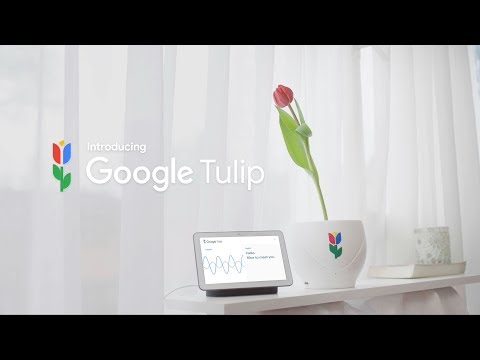
The execution follows a classic Setup-Turn-Payoff structure. The Setup is meticulously crafted. It opens with pristine visuals of the 'product' and stunning aerial shots of Dutch tulip fields, immediately grounding the story in a real, beautiful place. By featuring real experts—Bart Siemerink from the world-renowned Keukenhof gardens and Diederik Jekel, a known Dutch science journalist—the ad builds a powerful, if deceptive, layer of authenticity. The lab scenes, complete with serious-looking engineers and complex data visualizations, complete the illusion. The Turn is a slow, comedic burn. The joke begins to reveal itself through vignettes of human-tulip interaction. An elderly woman's heartfelt chat with her plant is funny, but when a man is chided by his tulip for not providing enough water, the absurdity escalates. The narrative peaks in a chaotic scene at Keukenhof, where gardeners scramble to meet the contradictory demands of thousands of newly-vocal tulips—a brilliant visualization of the old saying, 'be careful what you wish for.' The Payoff is delivered cleanly with the on-screen text, 'Only available on April 1st,' a satisfying confirmation of the viewer's suspicion. The final punchline—a grumpy cactus telling a scientist to 'Leave me alone'—is a perfect comedic button that broadens the joke's universe and ends the film on a high note.
The key debrief for the creative team is the power of specificity. The ad could have been about talking to any plant, anywhere. By focusing on tulips and embedding the story in Dutch culture, Google created a richer, more charming narrative. It demonstrates that even global brands can create universally appealing content by celebrating a specific local identity. The result is a piece of brand marketing that doesn't feel like marketing at all; it's simply great entertainment.
Theme Keywords
Brand Position
The helpful, yet playful, innovator that organizes the world's information and makes the impossible feel possible.
Brand Archetype
The Magician (making the impossible happen) with strong Jester (humorous, playful) undertones.
Creative Game Plan
Parody a serious technology launch to showcase Google's innovative capabilities and sense of humor in a highly shareable format.
Diagnosis: Issues & Solutions
Primary Issue: Emotional Connection
The Problem:
The ad's 2:24 runtime is essential for the slow-burn comedic timing but risks losing viewers with shorter attention spans before the main punchline lands.
The Solution:
Create a shorter, punchier 30-second cut specifically for social media feeds. This version could tease the absurdity more quickly to hook viewers and drive traffic to the full-length video on YouTube to experience the complete joke.
Secondary Issue: Clarity of "What's Next?"
The Problem:
The call-to-action is part of the joke ('Talk to your tulip'), which means the real desired action ('Share this video') is entirely implicit.
The Solution:
While maintaining the joke, a subtle visual cue or end-card text could have prompted sharing more directly. For example, a simple line like 'Know someone who talks to their plants?' could have encouraged tagging and sharing without breaking the comedic tone.
Additional Notes
Credits
Share this Analysis
More Google ad breakdowns
- Veo3 Launches in IndiaGoogle
- Introducing Gangoogly, Sourav Gangoogly 😉Google
- Make Everyday Easier With GeminiGoogle
- Google x Baker Boy | Helping you help othersGoogle
- Google Impact Challenge | UK 2013 - A better world, fasterGoogle
- Move On Dengan Bantuan GoogleGoogle
- Project Relate | Google for India 2022Google
- Suaramu Inspirasi Mereka #SelamatHariKartiniGoogle