Get House Proud: What Kids? | west elm - Ad Analysis

AI Editor notes
Straight from the gut!!
“This is a perfect 15-second spot. The insight—that parents crave a home that doesn't scream 'daycare'—is so sharp and relatable. They're not just selling a coffee table; they're selling a victory over clutter. It's smart, direct, and doesn't waste a single frame. This is the kind of work that makes clients happy and sells furniture.”
Quick Summary
This ad works because it sells an emotion, not just a product. It bypasses functional specs to focus on the feeling of smug satisfaction a parent gets from maintaining a stylish, adult home amidst the chaos of family life, brilliantly captured in the 'Get House Proud' campaign line.
Executive Summary
The 'Get House Proud: What Kids?' spot for West Elm is a case study in strategic precision. In just 15 seconds, it demonstrates a deep understanding of its target audience and delivers a solution that is both functional and, more importantly, emotionally resonant. The campaign, West Elm's first on a national scale, was designed to introduce the brand's core value proposition to a wider audience, and this execution does so with remarkable efficiency. [2, 4]
The Core Insight: The ad is built on a simple, powerful human truth: Parents, particularly design-conscious millennials, want to retain their personal style and feel in control of their environment, even after having children. They love their kids, but not the clutter that comes with them. The dream is to have a home that reflects their adult tastes, not a space that has been completely surrendered to primary colors and plastic toys. This insight is the engine of the entire creative.
The Execution: The ad uses a classic Problem-Solution narrative structure, executed flawlessly.
- Problem: The opening shot immediately establishes the conflict. We see a stylish, recognizably 'West Elm' living room, but its serenity is disrupted by a single child's toy on the sofa. The voiceover states the problem bluntly: "You have kids."
- Solution: The parent doesn't sigh in defeat; she acts. The toy is swiftly cleared and hidden inside the West Elm lift-top coffee table. The product is the hero, the enabler of the solution. The voiceover confirms this: "But your house doesn't look like you have kids. Because your hidden storage game is so on point."
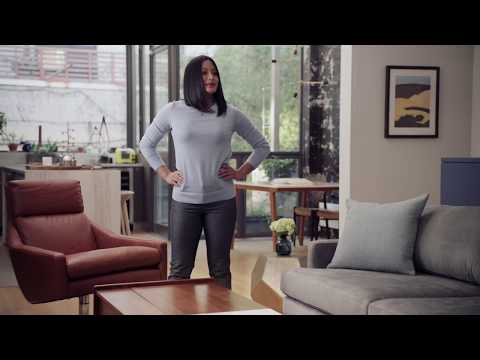
- Payoff: The final shot isn't of the furniture, but of the parent. She stands, hands on hips, with a look of pure, unadulterated pride. This is the emotional reward. The brand then connects itself directly to this feeling with the 'Get House Proud' tagline. The ad isn't just selling a table; it's selling the feeling of winning back your living room.
The Debrief: The key lesson from this ad is the power of a laser-focused strategy. By targeting a specific feeling within a specific audience, West Elm and its agency Humanaut created a piece of communication that punches far above its weight. [2, 5] It validates the customer's feelings and presents the brand as an ally in their quest for a stylish, orderly life. It proves that you don't need a 60-second spot or a celebrity to make an impact; a sharp insight, delivered cleanly, is often more effective.
Theme Keywords
Brand Position
Accessible modern design that solves the challenges of everyday life.
Brand Archetype
The Sage/Magician – It provides the wisdom (smart design) and tools (the furniture) to magically transform a chaotic space into an orderly one.
Creative Game Plan
Show style-conscious parents how our furniture elegantly solves the universal problem of kid clutter, making them feel proud of their home again.
Diagnosis: Issues & Solutions
Primary Issue: Strategic Sense
The Problem:
The ad's core benefit—clever, stylish storage—is not unique to West Elm. Competitors from IKEA to Crate & Barrel offer similar solutions. The ad relies heavily on the 'House Proud' tagline to create distinction, but the product function itself is not a deep, defensible moat.
The Solution:
Future iterations could lean more heavily into what *is* unique: West Elm's specific design DNA. Briefly highlighting the quality of the wood, the specific mid-century lines, or its sustainable sourcing could add a layer of brand-specific justification on top of the universal emotional benefit.
Secondary Issue: Clarity of "What's Next?"
The Problem:
The 'Get House Proud' tagline is a great brand-level call to action, but it's less effective at driving immediate commercial behavior. A viewer feels the emotion but isn't given a clear, low-friction path to purchase or explore the specific collection.
The Solution:
A simple, elegant text overlay in the final seconds (e.g., 'Shop the Mid-Century Storage Collection at westelm.com') would bridge the gap from brand inspiration to retail action without disrupting the ad's clever, minimalist feel.
Additional Notes
Related Links
Credits
Share this Analysis
More West Elm ad breakdowns
- Proudly Made in India. This Independence Day, bring home furniture worth celebrating.Pepperfry
- Are you buying a table, or a tabla? #BeFurniSureFlipkart
- The Robot | Never Normal | BurrowBurrow
- Vitra: ChairVitra
- Möbel Kraft | Echt starke Möbel - Sumos Sofa | lawinenstiftMöbel Kraft
- Not like any other chairIKEA
- Dream Home Fiesta | Godrej Interio | HindiGodrej Interio
- 1985-90: Godrej Storwel TV ads (Godrej Storewell Steel Almirah Wardrobe)Godrej Storwel