Cannes Lion Award-Winning "Three Little Pigs advert" - Ad Analysis

AI Editor notes
Straight from the gut!!
“This is how you do a brand manifesto without being preachy. It's smart, cinematic, and perfectly timed for the social media era. Instead of just *telling* us they see the whole picture, they *show* us by deconstructing a story we all think we know. It treats the audience like they're intelligent. It’s a flex, and a very effective one.”
Quick Summary
This ad brilliantly demonstrates The Guardian's 'open journalism' philosophy by transforming a simple fairytale into a complex, evolving news story. It shows how the initial report is just the beginning and that the 'whole picture' emerges from the combined force of professional journalism, public discourse, and digital investigation.
Executive Summary
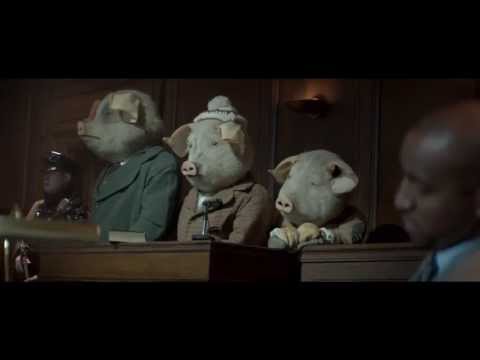
The Guardian's 'Three Little Pigs' is a masterfully constructed piece of brand communication that does what most ads only claim to do: it demonstrates its core value proposition rather than just stating it. The campaign's objective was to bring the concept of 'open journalism' to life, showcasing how the brand had evolved from a traditional newspaper into a digital-first, multi-platform news organization. [2] It succeeds by taking a universally known story and deconstructing it through the lens of modern media.
The Core Insight here is that in our hyper-connected world, truth is not a static headline but an evolving narrative, pieced together from professional reporting, user-generated content, public debate, and expert analysis. The initial story is rarely the whole story. The ad taps into a growing public skepticism of simple answers and a hunger for depth and context, a sentiment especially potent in the wake of the 2008 financial crisis.
The execution follows a classic Setup-Turn-Payoff structure. The Setup establishes the familiar fairytale ending as a modern news event: the 'Big Bad Wolf' is dead, and the heroic pig is questioned by police. The narrative seems straightforward. The Turn arrives swiftly as the story hits social media. The public debate ignites, but the crucial twist is the introduction of new evidence from the public itself—CCTV footage of the wolf with an asthma inhaler. This single piece of user-generated content shatters the initial premise and turns the investigation on its head. The Payoff is a cascade of revelations. The pigs are exposed for insurance fraud, a crime born of financial desperation. This personal story then explodes into a much larger societal issue—a mortgage crisis and widespread public protest. The Guardian is positioned not merely as a reporter of these events, but as the central platform where all these threads converge to form 'the whole picture.' The final tagline lands not as a boast, but as a summary of the process we've just witnessed.
The debrief for any brand team watching this is clear: show, don't tell. The Guardian didn't need to use voiceover to explain its philosophy; it created a gripping narrative that made its philosophy the hero. It proves that brand advertising can be intelligent, complex, and deeply resonant with cultural conversations without sacrificing clarity or impact. It set a new standard for how a legacy brand can re-articulate its relevance in the digital age.
Theme Keywords
Brand Position
The Guardian is the essential destination for understanding the complete, multifaceted story.
Brand Archetype
The Sage
Creative Game Plan
Demonstrate the power of multi-platform, open journalism by revealing the hidden, complex truth behind a story everyone assumes they already know.
Diagnosis: Issues & Solutions
Primary Issue: Clarity of "What's Next?"
The Problem:
The ad does a phenomenal job of selling the brand's philosophy but provides no clear, immediate path for the viewer to act on their newfound appreciation. The final message is philosophical, not transactional.
The Solution:
After the final brand card, add a simple, clean screen with a direct call to action, such as 'Get the whole picture. Download the Guardian App' or 'Follow the story at theguardian.com'. This would bridge the gap between inspiration and action without disrupting the film's powerful conclusion.
Secondary Issue: Emotional Connection
The Problem:
The ad's power is largely cerebral, built on intrigue and intellectual satisfaction. The use of masks, while visually striking, keeps the audience at an emotional distance from the characters and their motivations.
The Solution:
Incorporate one or two brief, humanizing shots. For example, a quick shot of the wolf's family photo on a mantelpiece, or a look of genuine financial despair on one of the pig's faces before the raid. This could have added a layer of pathos to complement the intellectual puzzle.
Additional Notes
Related Links
Credits
Share this Analysis
More The Guardian ad breakdowns
- Own The Weekend with the Guardian and ObserverThe Guardian
- Use in Moderation: The Guardian and Observer Weekend™The Guardian
- NBT का नया ब्रांड कैंपेन - प्रगति का पार्टनर। जोया लोबो - भारत की ट्रांसजेंडर फोटो जर्नलिस्टNavbharat Times
- The Truth Is Worth It: Witnessing | The New York TimesThe New York Times
- The Scotsman: PoemThe Scotsman
- Vesti casinoVesti Ural
- France 24 - The BirdsFrance 24
- 'Democracy Dies in Darkness': Super Bowl commercial (2019)The Washington Post