Own The Weekend with the Guardian and Observer - Ad Analysis

AI Editor notes
Straight from the gut!!
“It’s a charming, wholesome piece of work. The strategy is smart—it makes the paper an enabler of experiences. But it feels almost too perfect, a bit like a curated Pinterest board of weekend goals. It’s very earnest and speaks directly to the existing brand faithful. I wonder if it has enough edge to pull in someone who *isn’t* already inclined to bake their own bread or build a birdhouse.”
Quick Summary
This ad successfully repositions a newspaper from a passive source of information into an active catalyst for a more fulfilling life. It argues that The Guardian and Observer don't just help you understand the world, they give you the tools and inspiration to go out and live in it, turning the abstract idea of a 'good weekend' into a tangible, achievable reality.
Executive Summary
The Guardian’s ‘Own The Weekend’ is a quiet masterclass in repositioning a legacy product for a modern audience. At a time when the utility of print media is constantly questioned, this campaign from BBH London sidesteps the debate entirely. Instead of defending the newspaper as a medium for news, it reimagines it as a tool for living. The ad doesn't sell news; it sells the promise of a life well-lived, with the paper positioned as the essential weekend toolkit. The core insight is potent and universal: the gap between our desire for a fulfilling weekend and the inertia that often sets in. We all want to do more, but often lack the spark of inspiration. The Guardian presents itself as that spark.
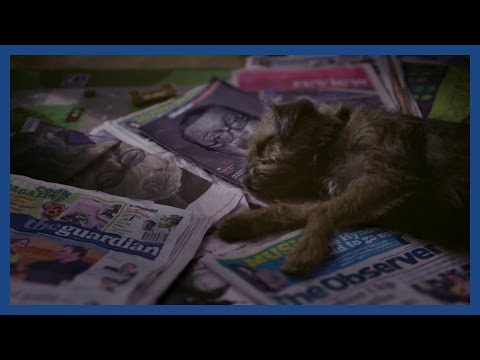
The execution follows a simple and elegant Problem-Solution-Proof structure. The 'problem' is implied by the gentle, dreamy song, 'I've been dreaming about this weekend,' suggesting aspiration without action. The 'solution' is the newspaper itself, shown as a gateway to ideas. The 'proof' forms the heart of the film—a beautifully shot montage directly connecting the content on the page with the vibrant reality it inspires. We see an article about building a birdhouse, then a family building one. We see a recipe, then we see it being cooked and enjoyed. This literal 'show, don't tell' approach is incredibly effective, making the paper's value tangible. The visual style, with its warm lighting and diverse, naturalistic casting, feels less like an ad and more like a documentary celebrating the small, joyful moments that make up a great weekend. The film builds to a crescendo of activity before resolving into a quiet, satisfying image of a dog asleep on a pile of well-read papers—a perfect visual metaphor for a weekend fully and happily exhausted.
The debrief for the team would be to recognize the power of selling an outcome, not a feature. The campaign didn't focus on the quality of its journalism (a feature) but on the quality of life it enables (the outcome). It successfully transformed the paper from a passive object to be consumed into an active ingredient for a better life. This is a crucial lesson for any legacy brand looking to reaffirm its relevance. The work is distinctively 'Guardian'—it's intelligent, creative, and community-minded—proving that staying true to your brand's core values is the most effective way to stand out.
Theme Keywords
Brand Position
The indispensable catalyst for a richer, more active, and interesting life.
Brand Archetype
The Sage (as a source of ideas) combined with The Creator (as a tool for making things).
Creative Game Plan
Demonstrate that The Guardian and Observer newspapers are the direct source of inspiration that transforms a mundane weekend into a fulfilling one.
Diagnosis: Issues & Solutions
Primary Issue: Emotional Connection
The Problem:
The ad's greatest strength—its aspirational, wholesome tone—is also a potential weakness. It presents a series of perfectly executed weekend activities, which can feel slightly unattainable and lacking in the messy authenticity of real life.
The Solution:
Inject a moment of relatable imperfection. Show a DIY project that's slightly wonky but loved anyway, or a baking attempt that doesn't look exactly like the picture in the paper. A small dose of humor and realism would make the aspirational message feel more grounded and inclusive.
Secondary Issue: Strategic Sense
The Problem:
While brilliantly reinforcing the brand for its core audience, the ad may be too insular to convert skeptics. It preaches to the choir of culturally-engaged readers who already value these kinds of activities.
The Solution:
To broaden the appeal, introduce a character who is initially disengaged (e.g., a bored teenager) but is drawn into an activity by an idea from the paper. This would demonstrate the brand's power to connect people and win over a more reluctant audience segment.