The Truth Is Worth It: Witnessing | The New York Times - Ad Analysis

AI Editor notes
Straight from the gut!!
“This is a solid piece of brand advertising. Instead of just telling us their journalism is good, they show the sweat and sacrifice that goes into it. It feels raw, urgent, and important. It makes reading an article feel like the endpoint of an expedition. My only question is whether this appeals to anyone who isn't already a believer. It may be preaching to the choir, but maybe that's the point—reinforce the base.”
Quick Summary
This ad brilliantly transforms the abstract, often grueling process of investigative journalism into a tangible, compelling product. By showing the arduous journey behind a single story, it frames a New York Times subscription not as a purchase, but as a patronage of a difficult and essential public service. [5, 7]
Executive Summary
In a media landscape cluttered with noise, The New York Times’ “The Truth Is Worth It” campaign cut through by turning the lens on itself. This particular ad, “Witnessing,” is a prime example of the campaign's effective strategy: making the arduous process of journalism the product. It doesn't sell news articles; it sells the relentless, often unseen, effort required to produce them. The ad's core insight is that in an era of disposable content, the value of information is directly proportional to the difficulty of its acquisition. We, as consumers, have been conditioned to see news as a free commodity. This ad dismantles that notion by showing us the receipts—not in dollars, but in boat trips, bureaucratic hurdles, and painstaking observation.
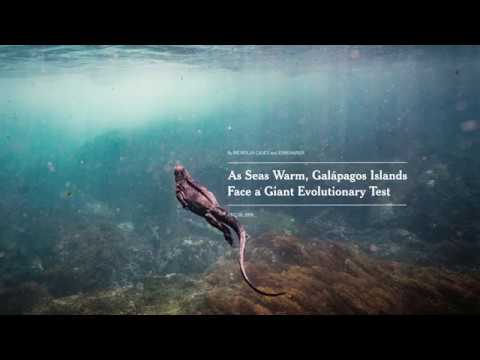
The execution follows a clean, compelling behind-the-scenes narrative. The setup is the mission: 'Investigate Warming in Galápagos.' The journey is immediately established as difficult—'No flights, no roads.' This isn't a casual assignment. The ad then meticulously builds a montage of the work itself: living on a boat for days, deploying drones, diving, and taking notes. The use of dynamic on-screen text, which mimics a reporter's notebook, is the key creative device. It reflects the iterative, often messy, path to clarity. The narrative 'turn' happens with the series of stark findings: 'Sea Lions Dying,' 'Fish Disappearing,' 'Birds Infertile.' The problem escalates from a scientific inquiry to an unfolding crisis. The payoff is twofold. First, the intellectual payoff is the final, polished headline, which feels earned after witnessing the 30-second journey. Second, the brand payoff is the tagline: 'The truth takes witnessing. The truth is worth it.' The connection is explicit: this level of truth requires this level of work, and that is something worth paying for. [5, 7]
The key lesson from this work is about branding for any entity whose value lies in expertise or craft. By dramatizing the process, The New York Times built a powerful moat around its brand. It shifted the conversation from the cost of a subscription to the value of the truth. It tells every other news outlet, particularly the free aggregators, 'You can't do this.' It's a confident, powerful stance that reinforces its position as a market leader and gives its subscribers a reason to feel like patrons of a vital cause, not just customers. [10]
Theme Keywords
Brand Position
The definitive source for deeply-reported, world-class journalism that requires immense effort to uncover the truth.
Brand Archetype
The Sage
Creative Game Plan
Visually dramatize the grueling, unseen process of investigative journalism to prove the inherent value of the final story.
Diagnosis: Issues & Solutions
Primary Issue: Emotional Connection
The Problem:
The ad is a cerebral masterpiece about process and importance, but it keeps the journalists themselves at arm's length. We see their work but don't feel their personal struggle or conviction on a human level.
The Solution:
Incorporate one or two micro-expressions or moments of humanity. A brief shot of a journalist looking exhausted but determined, or a moment of quiet awe when observing wildlife, could have added a layer of personal emotional investment for the viewer without slowing the edit.
Secondary Issue: Clarity of "What's Next?"
The Problem:
The final 'Subscribe Now' feels tacked on. It’s a generic call to action that follows a highly specific and emotionally resonant story.
The Solution:
A more integrated call to action would have been more powerful. For example: 'Support the journalists who witness the truth. Subscribe.' This would directly connect the commercial ask to the narrative the viewer just experienced.
Additional Notes
Related Links
Credits
Share this Analysis
More The New York Times ad breakdowns
- It’s Your World to Understand | The New York TimesThe New York Times
- NBT का नया ब्रांड कैंपेन - प्रगति का पार्टनर। जोया लोबो - भारत की ट्रांसजेंडर फोटो जर्नलिस्टNavbharat Times
- The Scotsman: PoemThe Scotsman
- Vesti casinoVesti Ural
- France 24 - The BirdsFrance 24
- 'Democracy Dies in Darkness': Super Bowl commercial (2019)The Washington Post
- Cannes Lion Award-Winning "Three Little Pigs advert"The Guardian
- We are defined by the choices we make...Irish Independent