Volvo EX60: Powered by Google Gemini - Ad Analysis

AI Editor notes
Straight from the gut!!
“It is a tech demo dressed up as a road trip, and it mostly works because it doesn't overpromise sci-fi fantasy. Having actual business development executives on camera feels a bit dry and corporate, but using everyday annoyances like deciphering parking signs or finding cinnamon buns grounds Google Gemini in practical vehicle utility rather than empty tech buzzwords.”
Quick Summary
Volvo and Google bypass generic automotive hype by framing conversational AI around pragmatic, everyday driving frictions—such as complex parking signs and bilingual translation—making high-tech integration feel calm, functional, and quintessentially Scandinavian.
Executive Summary
The Core Insight Most in-car voice assistants are clunky, rigid, and frustrating. Drivers are accustomed to memorizing specific voice syntax only to receive robotic errors. The strategic insight driving this piece is that true luxury in modern mobility is not just upholstery or horsepower, but conversational fluency: an in-car assistant that understands human ambiguity, reads the physical environment, and removes cognitive load without requiring drivers to take their eyes off the road.
The Execution The film adopts a structured Hook–Value–Proof–Ask demonstration format tailored to connected vehicle audiences.
-
Hook (0:00–0:25): The video establishes a quiet Scandinavian morning before introducing Amir Esfahani (Volvo Cars) and Joshua Hodgson (Google). The dialogue immediately jumps into practical scheduling and travel time queries, proving instant responsiveness.
-
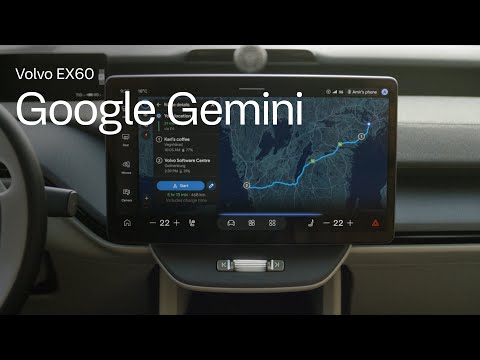
Value & In-Cabin Experience (0:26–1:44): The mid-drive sequence illustrates low-stress multi-intent voice requests. Amir asks for a detour that includes both coffee and pastry ('kanelbullar') in a single spoken sentence. The UI renders the detour seamlessly on the screen, followed by real-time Swedish-to-English translation. This section highlights natural conversational flow over rigid menu clicking.
-
Proof & Future Integration (1:45–2:42): Arriving at the Volvo Software Test Centre in Gothenburg, the narrative shifts from present software to future multi-modal AI capabilities. Through physical test props rolled across the car's sensors, the demo shows Gemini identifying local restaurants ('Gustaf's Bistro'), recognizing a classic Volvo 1800ES, and deciphering confusing multi-tier Swedish parking restriction boards. This provides concrete evidence of computer vision working inside consumer contexts.
-
Payoff (2:43–2:57): The film concludes as the executives exit the vehicle, summarizing the thesis of a smarter, more personal driving experience under the Volvo banner.
The Debrief The piece proves that automotive tech marketing succeeds when it swaps abstract algorithmic jargon for recognizable pain points. Demonstrating how an AI assistant handles a complex parking sign delivers far more commercial and consumer conviction than generic claims about processing power.
Theme Keywords
Brand Position
Human-centric, safe, and intuitive electric luxury that simplifies life through thoughtful Scandinavian design and modern software integration.
Brand Archetype
Sage / Caregiver
Creative Game Plan
Demonstrate the integration of Google Gemini into Volvo's next-gen electric platform through realistic road-trip problem-solving and software center testing.
Diagnosis: Issues & Solutions
Primary Issue: Emotional Connection
The Problem:
Using corporate partnership leads makes the dialogue feel scripted and corporate rather than like genuine consumer behavior.
The Solution:
Feature authentic drivers or family scenarios facing real commute chaos rather than calm executives role-playing test scenarios.
Secondary Issue: Clarity of "What's Next?"
The Problem:
The closing scene transitions abruptly to a plain Volvo end card without specifying feature availability timelines or a digital hub to learn more.
The Solution:
Include a discrete on-screen prompt directing viewers to explore EX60 launch specs and Gemini software rollout details on volvocars.com.
Additional Notes
Credits
Share this Analysis
More Volvo ad breakdowns
- Meet the new fully electric Volvo ES90Volvo
- Volvo EX30 – The small SUV doing big Volvo thingsVolvo
- Volvo XC60: Nordic landscapesVolvo
- Volvo - Made by Sweden - VintersagaVolvo
- Advert for Polestar – Time To Move OnPolestar
- Shhh… It’s zombie proof. Kia’s all-electric rangeKia
- Mars 2028 for Project Loveday. Made by Cathedra21Tesla
- Renault ZE - The PostmanRenault