Un Mágico Agradecimiento: Cuando un duende quiere impresionar a una chica. - Ad Analysis

AI Editor notes
Straight from the gut!!
“It’s classic Coke for Christmas. Sweet, safe, and has high production values. It feels like a mini-movie, which isn't surprising given it's from the director of 'Hidden Figures'. [2, 3] But it’s almost too familiar. An elf helping Santa feels like territory we’ve seen before. The Coke bottle at the end feels a little tacked on as the payoff, but the overall 'warm and fuzzy' feeling is exactly what they were going for. It does the job, but it doesn't innovate.”
Quick Summary
Coca-Cola uses a charming, movie-like narrative about an elf helping a stranded Santa to position the brand not just as a holiday beverage, but as the currency of gratitude and the catalyst for Christmas magic. It reinforces Coke's ownership of the holiday season by showing that a simple act of kindness—rewarded with a Coke—is the real gift.
Executive Summary
Coca-Cola’s 2017 holiday ad, “A Magical Thank You,” is a textbook example of a market leader reinforcing its long-held brand territory. Directed by Theodore Melfi, known for his feel-good cinematic style, the ad forgoes a hard sell in favor of a short, narrative film that positions Coca-Cola as an integral part of the Christmas spirit. [2, 3]
The Core Insight: At its heart, the ad is built on a simple human truth: during the hectic, often materialistic holiday season, the most valuable currency is a simple act of kindness. The brand understands that people crave genuine connection, and it positions Coca-Cola not as the hero of the story, but as the reward for heroic, selfless behavior.
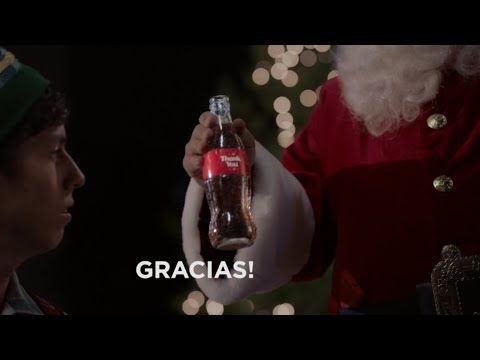
The Execution: The ad follows a classic Setup-Turn-Payoff structure. The Setup introduces us to Scott, a mall elf who, in a moment of social awkwardness, lies to impress a girl. This establishes a small, relatable character flaw. The Turn occurs when he encounters a stranded Santa Claus struggling with a rideshare app—a clever modern twist on a classic character. [1] Scott has a choice: wallow in his own problems or help someone else. He chooses the latter, embarking on a mission to help Santa deliver presents. This act of selfless kindness is the emotional core of the ad. The Payoff is twofold. First, Scott's kindness magically results in him getting the giant Christmas tree he lied about, impressing the girl in a genuine way. Second, and more importantly for the brand, his efforts are recognized by Santa with a simple, iconic reward: a glass bottle of Coca-Cola bearing the words “Thank You.” This perfectly integrates the product, making it a symbol of gratitude and shared magic.
The Debrief: The key lesson here is that for an established brand like Coca-Cola, consistency is as important as creativity. The ad doesn't try to reinvent the wheel. Instead, it leverages the brand's deep-rooted association with Santa Claus and the holidays, updating the narrative with modern touches like ridesharing to stay relevant. [1] By focusing on a universal value like kindness, the campaign achieves global appeal. The brand smartly makes the human characters the focus, allowing Coca-Cola to be the satisfying conclusion rather than the intrusive subject of the story.
Theme Keywords
Brand Position
Coca-Cola is the official catalyst for happiness, connection, and the magic of the holidays.
Brand Archetype
The Innocent
Creative Game Plan
Demonstrate that the true magic of Christmas lies in selfless kindness, positioning Coca-Cola as the perfect reward for that spirit.
Diagnosis: Issues & Solutions
Primary Issue: Memorability & Hook
The Problem:
While charming, the story follows a very familiar, safe holiday formula. An elf helping Santa is well-trodden ground, making the ad pleasant but not particularly distinctive or unforgettable compared to more innovative holiday campaigns from other major brands.
The Solution:
Introduce a more unexpected conflict or a character with a more modern dilemma. The 'rideshare' element was a good start, but the core narrative could have been pushed into a more surprising direction to create a stronger, more memorable emotional peak.
Secondary Issue: Strategic Sense
The Problem:
The 'Thank You' bottle is a strong product hook, but its connection to a wider, participatory campaign isn't fully realized within the ad itself. The story is self-contained, missing an opportunity to explicitly invite the audience to share their own 'Thank You' Cokes.
The Solution:
End the ad with a clearer call to participation, such as a simple graphic encouraging viewers to 'Give a Thank You' or a hashtag that links directly to the real-world packaging initiative. This would better bridge the gap between the story and a commercial action.
Additional Notes
Related Links
Credits
Share this Analysis
More Coca-Cola ad breakdowns
- COCA-COLA | O ANO DA VIRADACoca-Cola
- Who will you Share A Coke with?Coca-Cola
- The Lost Voices | Football World Cup FandomCoca-Cola
- McVeggie + Coke Zero @ Just ₹149!Coca-Cola
- Coca-Cola | It's Magic When the World Comes Together | Paris 2024 | Global Coca-Cola
- Kıpır Kıpır Bir Coca-Cola?Coca-Cola
- Pilav Show! - #TadınıÇıkarCoca-Cola
- Coca-Cola: Te tocó nacer acáCoca-Cola