This World TV Day, discover why TV is still India’s most powerful social network #sachmeinsocialhoja - Ad Analysis

AI Editor notes
Straight from the gut!!
“This is a smart, defensive play. It's trying to steal the word 'social' back from the tech giants. The insight is solid, and the execution is warm and fuzzy. But who is this really for? It feels like it's made for Gen X parents fretting about their kids' screen time, not for the cord-cutting kids themselves. It's a bit preachy, but the casting and the 'Sach mein social ho jao' tagline give it a fighting chance to stick.”
Quick Summary
In a world saturated by solitary digital scrolling, Tata Play's campaign strategically repositions television as the original, most authentic 'social network'. By contrasting the empty metrics of online life with the tangible joy of shared family viewing, the ad defends the relevance of its category not by fighting technology, but by championing genuine human connection.
Executive Summary
This campaign from Tata Play is a classic strategic move: defending a legacy category by reframing its value in the face of modern disruption. Instead of fighting a feature war against streaming services and mobile content, it wisely shifts the battlefield to emotion and human connection.
The Core Insight: The fundamental truth this ad leverages is that while we are more connected than ever digitally, we are also more isolated. The term 'social media' has become an oxymoron, often representing a solitary activity of scrolling through curated lives. The ad posits that true social connection is found in shared, real-time experiences, and television has always been the engine for that in the home. This insight is particularly potent in a culture like India, where family and community are central.
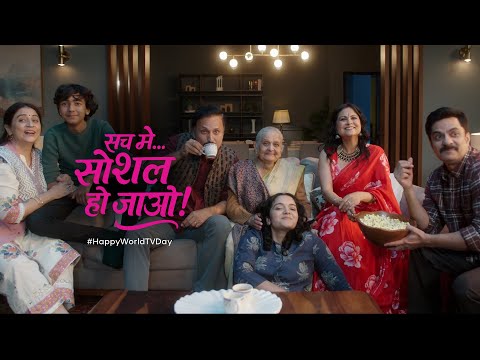
The Execution: The ad uses a simple but effective AIDA (Attention-Interest-Desire-Action) structure. It grabs Attention immediately by juxtaposing the cold, lonely image of a girl on her phone with the warm, vibrant scene of a family laughing together. The provocative voiceover instantly sets up the central conflict. It builds Interest through a series of relatable vignettes—a grandmother and grandson laughing, a father and daughter celebrating a cricket match—cleverly re-appropriating social media jargon like 'collab' and 'share' for these real-world moments. [1] This irony makes the viewer reconsider the shallow meaning of those words online versus their deeper meaning offline. Desire is cultivated by showcasing the emotional payoff: genuine laughter, lasting memories, and authentic bonds across generations. The casting of well-known, respected actors makes this idealized family feel both aspirational and accessible. Finally, the Action is not a transactional one, but a philosophical call to change behavior: "Don't increase followers, increase connections. Get truly social." For Tata Play, the underlying goal is that this change in mindset will lead to viewers valuing—and therefore keeping—its service.
The Debrief: The key lesson here is how to defend a mature product. You don't win by copying the disruptor; you win by reminding the audience of your unique, enduring value. The campaign successfully elevates TV from a mere utility to a facilitator of what matters most—family. However, the team must recognize that this ad preaches to the converted—older audiences who already feel this way. The strategic weakness is its limited power to persuade a younger, digital-native generation. Furthermore, by making it a category ad, Tata Play spends its money to remind people to watch TV, which benefits its competitors as much as itself. It's a generous act for the category, but not a competitively sharp one.
Theme Keywords
Brand Position
Tata Play is the facilitator of genuine family connection through shared entertainment.
Brand Archetype
The Caregiver
Creative Game Plan
Reposition television as the original and most authentic social network to defend its relevance in a digitally fragmented world.
Diagnosis: Issues & Solutions
Primary Issue: Strategic Sense
The Problem:
The ad creates a strong 'us vs. them' narrative (TV vs. mobile), which risks alienating younger viewers who don't see it as a binary choice. It positions TV as a legacy medium fighting the future, rather than an integrated part of a modern entertainment ecosystem.
The Solution:
Bridge the two worlds. Show the family using the Tata Play platform to watch both a traditional TV channel *and* an OTT streaming show together. This would have demonstrated that Tata Play embraces the future of content, while still being the hub for the shared experience the ad champions.
Secondary Issue: Clarity of "What's Next?"
The Problem:
The call to action is entirely emotional ('Get truly social'), leaving no tangible next step for the viewer. It builds brand affinity but misses the chance to connect that feeling back to a product feature or benefit.
The Solution:
A softer, product-relevant CTA could have been woven in. For instance, the voiceover could end with: 'Get truly social. With over 600 channels and all your favorite apps in one place, Tata Play brings everyone together.' This links the emotion to a reason-to-believe without sounding like a hard sell.
Additional Notes
Related Links
Credits
Share this Analysis
More Tata Play ad breakdowns
- Tata Play X Chimp&z Inc | World TV Day 2023 #HarTVJinagalalaTata Play
- Free HD Set-Top Box, Remote और Installation – सिर्फ Tata Play धमाका ऑफर के साथTata Play
- Tata Play Dhamaka Offer—Deposit ₹3600 & Get Amazing Benefits! Watch full video to know all the perksTata Play
- Tata Play Wishes You A Happy World TV Day #tvTata Play
- Celebrating 20 Years of Life JingalalaTata Play