The Rugby League of the Extraordinary - Ad Analysis

AI Editor notes
Straight from the gut!!
“This feels very 2012, in a good way. It's got that 'Guy Ritchie directs a superhero movie' vibe. The insight—that these athletes' abilities seem superhuman to the average person—is solid. Instead of just saying they're tough, they show it in a completely over-the-top way. It's memorable and, for a sports promo, refreshingly different from the usual slow-mo replays and emotional music.”
Quick Summary
By abandoning the traditional highlight reel and framing its players as real-life superheroes, the RFL created a cinematic, myth-making campaign that successfully repositioned Rugby League from just a sport into epic, must-see entertainment. It was a smart play to attract a broader audience beyond the hardcore fanbase by speaking the language of action movies and video games. [3, 6]
Executive Summary
This 2012 campaign from the Rugby Football League (RFL) is a textbook example of how to reframe a familiar product to attract a new audience. Instead of marketing the Super League play-offs to existing fans with game highlights, agency VCCP opted for a much bolder strategy: mythologizing the players and the sport itself for a mainstream audience conditioned by Hollywood blockbusters. The campaign's title, 'The Rugby League of the Extraordinary,' is a direct, and clever, cultural lift from Alan Moore's graphic novel, immediately setting a fantastical, high-stakes tone. [18]
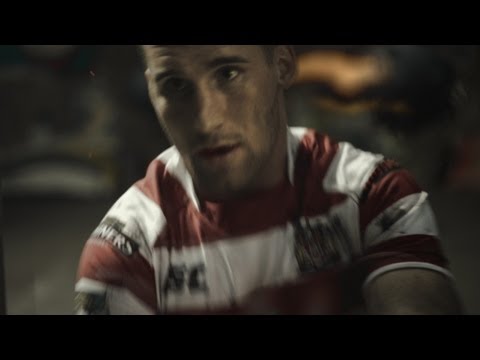
The Core Insight here is that to an average person, the physical feats of elite professional athletes are, for all intents and purposes, superhuman. The campaign takes this simple truth and visualizes it literally. We aren't just told these men are strong; we see Eorl Crabtree push an industrial skip loaded with scrap metal. We aren't just told they are powerful; we see a thrown ball dent a car and another pass through a concrete pillar. This is classic 'show, don't tell' on an epic scale.
The execution follows a simple but effective narrative structure: Setup-Turn-Payoff. The Setup is a gritty, mysterious opening. A hooded figure in a dark alley feels more like the start of a thriller than a sports ad, creating immediate intrigue. The Turn happens at 0:13 when the figure throws a rugby ball with impossible force, revealing the ad's premise: this isn't about crime, it's about extraordinary athletic power. This transitions into a montage of vignettes, each a mini-demonstration of a different player's 'power,' shot in a dark, desaturated, industrial style that screams 'intense training.' The driving electronic soundtrack builds anticipation throughout. The Payoff is the final reveal at 1:26, where a flamboyant ringmaster introduces the league as if it were a fantastical circus or a gladiatorial contest, cementing the 'extraordinary entertainment' positioning. The entire piece is a masterclass in building hype and making the sport feel larger than life.
The debrief for the marketing team would be clear: strategic reframing works. By borrowing from a more popular cultural genre (superhero/action films), they successfully broadened their appeal without alienating their core base. The campaign proved that you don't need to show the game to sell the game; sometimes, it's more effective to sell the idea of the game. Research following the campaign indicated it was successful in changing perceptions among non-fans and increasing their likelihood to attend matches. [6] It demonstrates the value of investing in a strong creative concept that can be executed across multiple platforms, from this viral film to outdoor media. [3]
Theme Keywords
Brand Position
The most intense, powerful, and entertaining sport on the planet, played by real-life supermen.
Brand Archetype
The Hero
Creative Game Plan
Transform Rugby League players into real-life superheroes to make the sport feel like epic, unmissable entertainment.
Diagnosis: Issues & Solutions
Primary Issue: Strategic Sense
The Problem:
The campaign's greatest strength—its reliance on a specific cultural reference ('The League of Extraordinary Gentlemen')—is also a potential weakness. Its effectiveness is somewhat tied to the audience's familiarity with the source material, and the gritty, dark, 2012-era aesthetic could feel dated to a contemporary audience.
The Solution:
Future campaigns should identify a more current cultural hook to achieve the same 'mythologizing' effect. The core strategy of turning players into icons is sound, but the creative wrapper needs to evolve with cultural tastes to maintain relevance.
Secondary Issue: Clarity of "What's Next?"
The Problem:
While the ad drives to a website and creates hype, it doesn't explicitly mention the event it's promoting (the Super League Grand Final) until the very end via context. A slightly clearer link to 'the final battle' or 'the championship' could have made the call to action even more urgent and specific for new audiences.
The Solution:
Incorporate a subtle on-screen graphic earlier or a mid-point voiceover line that hints at the ultimate prize or event the players are preparing for, better connecting the 'training' to the 'destination'.