The House I Grew up in - New Home Insurance TV advert | Hiscox - Ad Analysis

AI Editor notes
Straight from the gut!!
“It's a very polished, grown-up ad. The projection mapping is a neat trick, but does it feel more like a tech demo than a warm, human story? They're trying to say 'we get that your house is more than a house,' but the execution feels a bit cool and distant. I'm left admiring the craft more than feeling the emotion. Still, it effectively targets a discerning, affluent customer who appreciates that kind of clever subtlety.”
Quick Summary
This ad cleverly uses projection mapping to transform a static house into a dynamic canvas of life's most important moments. It emotionally links the physical structure to the invaluable memories it holds, elevating the need for specialized insurance beyond mere bricks and mortar to protecting a life's story.
Executive Summary
Hiscox's 'The House I Grew Up In' is a masterclass in strategic positioning for a premium brand. It sidesteps the insurance category's typical fear-based or price-driven messaging to tell a sophisticated story about value. The central thesis is that a home's worth isn't in its listing price, but in the life lived within it. For a brand targeting affluent individuals who have invested emotionally and financially in their homes, this is a potent starting point.
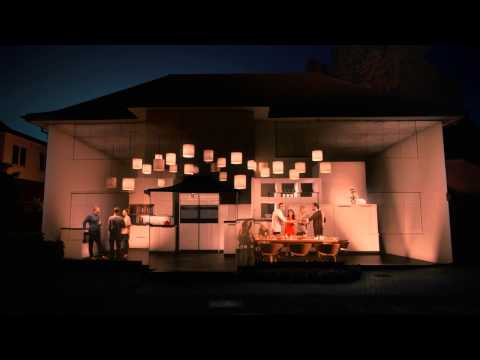
The ad's creative brilliance lies in its execution. The use of 3D projection mapping is not just a visual gimmick; it's the engine of the narrative. [8] It allows the house to literally become a vessel for memories, transforming a static object into a living, evolving character. The structure follows a simple Setup-Turn-Payoff model. The setup is the narrator's intriguing statement that this house he moved into as an adult is where he 'really grew up.' The turn is the visual spectacle of the house revealing its inner life—the kids' rooms, the dinner parties, the conflicting musical tastes. Each vignette represents a milestone in letting go of a singular identity and embracing a shared one. The payoff arrives when the narrator concludes, 'my home has changed with me,' seamlessly connecting this emotional journey to the brand proposition: a more valuable home needs a better insurer.
The choice to use a voiceover without showing the protagonist is a smart one. It makes the story universal, allowing any homeowner in the target demographic to project their own experiences onto the narrative. The gentle, reflective tone of the voiceover and the soaring musical score work to build an emotional atmosphere. [11] However, the ad's reliance on sleek, high-tech visuals creates a certain distance. It's an experience you observe and admire more than one you feel viscerally. While effective in communicating intelligence and quality, it may leave some viewers cold. Ultimately, the ad succeeds because it knows its audience. It's not trying to be a tearjerker for the masses; it's a thoughtful, elegant argument for a specific type of customer who values sophistication and understands that the most important things in life are often intangible.
Theme Keywords
Brand Position
The intelligent, specialist insurer for those who understand their home's value is measured in memories, not just square footage.
Brand Archetype
The Sage. The brand's personality is wise, sophisticated, and precise.
Creative Game Plan
Visually demonstrate how a home evolves into a priceless container of life's most important moments to justify the need for specialist insurance.
Diagnosis: Issues & Solutions
Primary Issue: Emotional Connection
The Problem:
The ad's greatest strength—its innovative projection mapping—is also its primary weakness. The high-tech, polished execution creates an observational distance, making the ad feel more like an impressive technical showcase than a genuinely warm, nostalgic story. The viewer is more likely to think 'what a clever technique' than 'that's my life.'
The Solution:
Ground the technology with humanity. Intercut the beautiful, sweeping projection shots with one or two brief, intimate, handheld-style close-ups of human moments: a child's hand running along a wall, a genuine laugh during the dinner party scene. This would have added a layer of raw, relatable emotion to anchor the sophisticated visuals.
Secondary Issue: Clarity of "What's Next?"
The Problem:
The call-to-action is exceptionally soft and passive. While fitting for a brand ad, it places the entire burden on the viewer to connect the emotional message to a future action. It inspires a thought but doesn't clearly guide what to do with that thought.
The Solution:
Sharpen the final brand message without sacrificing the tone. Instead of the slightly generic 'As your home becomes more important, so does your insurer,' a more specific line like 'Hiscox. Specialist insurance for the home you've truly grown into' would have tied the campaign's core idea directly to the brand's unique selling proposition.