The Fight to Live, Begins With a Place to Live | St. Jude India ChildCare Centres | - Ad Analysis

AI Editor notes
Straight from the gut!!
“This is a gut punch. The creative device—a child as a street-survival expert—is brilliant and deeply unsettling. You start off intrigued by her confidence, and then the horror of her 'tips' slowly dawns on you. It sidesteps the usual pity-plea of charity ads. Instead of making you feel sad for a victim, it makes you feel angry at the injustice. It’s emotionally manipulative in the most effective way, designed to make you uncomfortable enough to open your wallet.”
Quick Summary
This film masterfully reframes the fight against childhood cancer from a medical battle into a fight for basic human dignity. By using a resilient child to give a 'survival guide' for living on the streets during treatment, it creates a powerful emotional dissonance that makes the problem of inadequate housing feel immediate, unjust, and, most importantly, solvable through a donation. It's not just asking for money to fight a disease; it's asking for money to provide a safe home, a much more tangible and emotionally resonant proposition.
Executive Summary
This film from St. Jude India ChildCare Centres is a sharp, incisive piece of communication that understands a fundamental truth of charity advertising: to move people to act, you must first make them feel. It achieves this not through the tired tropes of suffering, but through a brilliant and unsettling narrative reversal.
The Core Insight: The campaign is built on a simple, powerful insight: for families traveling from rural India for their child's free cancer treatment, the disease is only the first battle. [3] The second, more insidious battle is against the city itself—a daily struggle for shelter, hygiene, and safety on the streets. [3, 9] This secondary struggle is often what forces families to abandon treatment altogether. St. Jude’s isn’t just offering a room; it’s offering the ability to continue the fight for life.
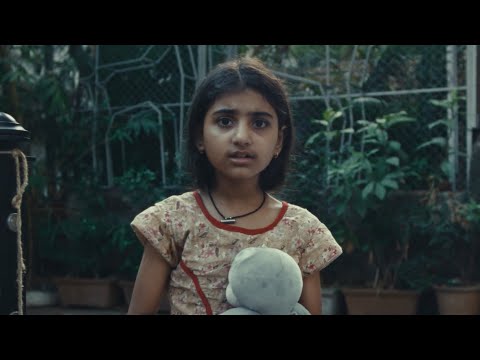
The Execution: The ad uses a classic Setup-Turn-Payoff structure to devastating effect. The Setup introduces us to Renu, a young girl who, with unnerving confidence, offers the viewer a tutorial on how to live on the pavement near the cancer hospital. Her advice is chillingly practical: find a spot away from traffic, use disinfectant to clean it, rent a stove, and always have a family member guard your space. The direction and performance make her feel like a seasoned expert, which is precisely the point.
The Turn happens gradually as her 'tour' continues. The reality behind her advice becomes increasingly grim. The tips about needing a bucket for vomiting, holding your bladder because the toilet is too far, and wearing socks to protect your toes from rats dismantle any sense of a quirky narrative. The facade crumbles entirely when her mother calls her for her medicine, jolting us back to the reality that this street-survival expert is also a sick child.
The Payoff is delivered with quiet force. As Renu walks away, the camera pulls back to reveal an entire pavement lined with families, contextualizing her story as one of thousands. [4] On-screen text explains the scale of the problem and identifies the true antagonist: the city itself. The film then presents St. Jude's as the clear, tangible solution, contrasting the grim pavement with images of clean rooms and safe play areas. The final call to action, a simple QR code, feels less like an ask and more like an obligation the film has earned from the viewer.
The Debrief: The team should recognize the power of reframing a problem. Instead of focusing on the abstract and overwhelming challenge of 'curing cancer,' they focused on a concrete, solvable problem: providing a safe place to stay. This makes a donor's contribution feel more direct and impactful. The creative choice to use a strong, resilient protagonist rather than a passive victim generated a more complex and powerful emotion—injustice—which is a stronger catalyst for action than simple pity.
Theme Keywords
Brand Position
The essential 'home away from home' that provides the safe, hygienic foundation for children to win their fight against cancer.
Brand Archetype
The Caregiver
Creative Game Plan
Expose the hidden crisis of homelessness among pediatric cancer patients by showing it through the resilient, yet heartbreaking, perspective of a child expert.
Diagnosis: Issues & Solutions
Primary Issue: Emotional Connection
The Problem:
The film's central conceit—the 'pavement tour'—is so powerful and memorable that it risks overshadowing the brand that provides the solution. Viewers might recall the heartbreaking story vividly but struggle to name St. Jude's as the organization to support.
The Solution:
Strengthen the brand link in the final sequence. After the emotional peak, hold on the St. Jude's logo and the shot of the clean, safe room for a fraction longer. Consider a simple voiceover like, 'The fight to live begins with a place to live. St. Jude's provides that place.' This would verbally cement the connection between the problem and the branded solution.
Secondary Issue: Strategic Sense
The Problem:
The ad's intensity, while effective, might make it unsuitable for all media placements. Its gut-wrenching nature could be perceived as too jarring in certain contexts, potentially leading to immediate tune-out from viewers not emotionally prepared for it.
The Solution:
Develop shorter, less intense 15-second and 30-second cutdowns that focus more on the solution (the 'after' picture) than the problem. These could be used for broader awareness, retargeting viewers who watched the full film with a hopeful message that reinforces the positive impact of their potential donation.