Renu vs The City - Ad Analysis

AI Editor notes
Straight from the gut!!
“This hits like a freight train. Instead of the usual tear-jerker NGO formula with gloomy slow-mo and dramatic crying, having this sweet little girl give a cheerful 'how-to' tour of surviving on a rat-infested footpath while taking chemo is devastatingly effective. It avoids emotional manipulation by letting the absurdity of her normalized reality do all the heavy lifting.”
Quick Summary
The campaign reframes the battle against pediatric cancer from a purely medical problem into a critical housing and hygiene crisis, using the disarming innocence of a child giving a pavement survival guide to make donor apathy impossible.
Executive Summary
The Core Insight: In developing markets like India, government initiatives and specialized charitable hospitals have made pediatric cancer treatment largely free or subsidized. However, the hidden barrier that drives treatment abandonment is the prohibitive cost of urban living. Thousands of low-income families travel to metropolitan centers with nowhere to stay, ending up on sidewalks where infection and secondary exposure threaten the child's life. The human truth at the core of this film is that dignity and shelter are fundamental components of medical healing.
The Execution (Setup–Turn–Payoff): Ogilvy Mumbai uses a disarming Setup–Turn–Payoff structure built around situational irony.
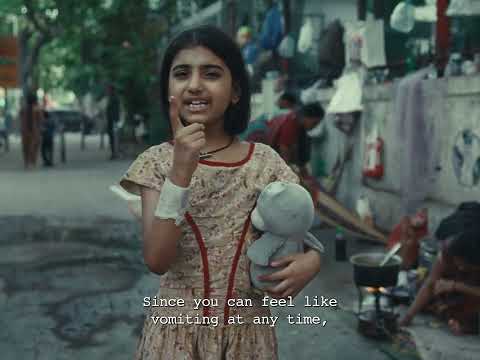
- Setup: The commercial opens with nine-year-old Renu standing at a gate, clutching a plush toy, innocently asking the viewer if they are looking for a place to stay. Her warm demeanor mimics a neighborhood host giving a friendly orientation.
- Turn: As the camera follows her along the pavement, the 'tips' she provides transition from logistical to harrowing—cleaning concrete with disinfectant, guarding space so it isn't stolen, managing nausea with a bucket, and wearing socks to prevent rats from gnawing toes at night. The normalization of these extreme conditions by a child undergoing active chemotherapy creates immense emotional friction.
- Payoff: When Renu's mother calls her for her medicine, the camera pulls back into a high-angle, wide tracking shot that reveals hundreds of families living identically on the street outside the hospital. As an emotive regional vocal tracks her departure, text reveals the statistic: 32,000 children travel annually for treatment, only to fight the city itself. The contrast is immediately resolved by showcasing the bright, hygienic, community-focused facilities of St. Jude India ChildCare Centres alongside a direct QR code for donor support.
The Debrief: The lesson for social impact and corporate responsibility campaigns is clear: contrast is more powerful than sorrow. When a child smiles through an unbearable reality, the audience feels the weight of the injustice far more acutely than if they were shown overt suffering. By anchoring the strategic premise on 'the fight before the hospital,' the ad provides a clear, actionable reason for donors to step in.
Theme Keywords
Brand Position
The indispensable home away from home ensuring no child abandons cancer treatment due to lack of shelter.
Brand Archetype
Caregiver (Nurturing, Protective, Empathetic)
Creative Game Plan
Deliver a cheerful 'pavement survival guide' through the eyes of a child patient to spotlight the grim absurdity of medical homelessness.
Diagnosis: Issues & Solutions
Primary Issue: Strategic Sense
The Problem:
The transition to the solution at the end is relatively brief compared to the immersive problem setup, dedicating only a few seconds of split-screen footage to the actual St. Jude facilities.
The Solution:
Give an extra 5–10 seconds to highlight the tangible impact inside a St. Jude center—showing a child transitioning from the sidewalk into a clean room—to strengthen the post-donation emotional payoff.
Secondary Issue: Clarity of "What's Next?"
The Problem:
The QR code appears in the final act alongside dense textual information, which can overwhelm viewers on smaller mobile devices.
The Solution:
Incorporate a simple verbal prompt or larger monetary tier cue (e.g., 'Sponsor one child's stay') to eliminate friction in the donation decision.