SMARTMILL (SMART HOUSE 2) – ENGLISH VERSION - REMA 1000 - Ad Analysis

AI Editor notes
Straight from the gut!!
“This is a great piece of work. It’s confident enough to not talk about itself. Instead of screaming 'low prices,' it tells a funny, relatable story about tech-bro culture getting its comeuppance. The contrast between the guy trapped by his 'smart' gadgets and the woman jogging outside is the whole pitch. It makes REMA 1000 feel less like a discount grocer and more like a brand that just *gets it*.”
Quick Summary
By satirizing the frustrating complexity of modern technology, REMA 1000 effectively sells its core brand philosophy—'Simplicity is king'—without ever showing a single grocery item. The ad brilliantly positions simplicity not just as a preference, but as a superior, more intelligent way to live, making the brand feel like a welcome escape from a needlessly complicated world.
Executive Summary
REMA 1000’s “SMARTMILL” is a masterclass in selling a philosophy, not a product. As the second installment in the “Smart House” saga, it builds on an established comedic world to land a simple, powerful message: in an age of over-engineered complexity, simplicity is the ultimate sophistication. The ad works by tapping into a deeply resonant cultural anxiety—that the technology meant to simplify our lives often does the exact opposite, creating new and absurd problems. By positioning the brand as the antidote to this modern madness, REMA 1000 elevates itself from a mere discount grocer to a champion of a more sane, human-centric way of living.
The Core Insight: The simple human truth at the heart of this ad is that convenience has a breaking point. The pursuit of a perfectly optimized, automated life can easily backfire, leaving us more stressed and frustrated than when we started. We’ve all experienced a version of this: a smart speaker that doesn’t understand us, a software update that breaks a key function, or an app that requires more work than the manual task it replaced. The ad intuits that people are growing weary of this, and that there's a latent desire for things that are simple, reliable, and just plain work. Simplicity has become a new form of luxury.
The Execution: The ad uses a classic Problem-Solution narrative structure, executed with sharp comedic timing.
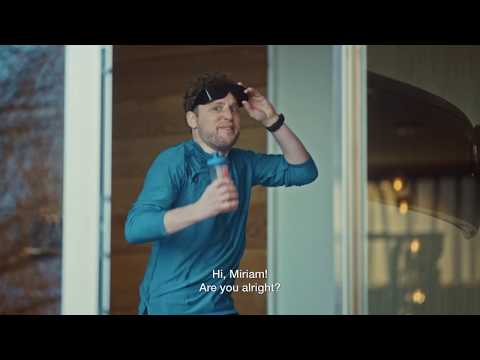
- Setup: The first 20 seconds flawlessly establish the character and his world. He's a bit smug, effortlessly commanding his environment with his voice. The smart home responds perfectly, creating a vision of a seamless, high-tech existence. This sets up his reliance on and pride in his complex system.
- The Turn: The narrative turns the moment the radio plays Bryan Adams' "Summer of '69." This is a clever choice—a simple, analog element that throws the complex digital system into chaos. The treadmill's voice recognition, unable to distinguish between a command and a song lyric, begins escalating the speed from a gentle '6' to a frantic '16'.
- The Payoff: The physical comedy of the man being tormented by his own machine provides the entertainment, but the strategic payoff is the cutaway to his neighbor jogging peacefully outside. She represents the REMA 1000 promise: an uncomplicated, analog, and ultimately superior experience. The final tagline, "Simplicity is king," doesn't feel like an advertisement; it feels like the moral of the story. This is followed by the brand logo and the secondary tagline, "Only low prices," connecting the abstract philosophy to the concrete benefit of shopping at their stores.
The Debrief: The key takeaway for any brand team is that you don't always have to show the thing you sell to sell what you stand for. REMA 1000 understands that its most powerful differentiator isn't just price, but its entire ethos. [2] The ad is confident, trusting the audience to connect the dots between the story's moral and the brand's promise. This approach builds enormous brand equity, making REMA 1000 feel less like a corporation and more like a kindred spirit.
Theme Keywords
Brand Position
REMA 1000 owns the concept of 'intelligent simplicity' in retail.
Brand Archetype
The Sage / Everyman
Creative Game Plan
Dramatize the superiority of a simple life by showing the hilarious and painful failure of a complex one.
Diagnosis: Issues & Solutions
Primary Issue: Emotional Connection
The Problem:
The humor is so effective and the tech-satire so sharp that the ad is more likely to be remembered as 'that funny smart treadmill ad' than 'that REMA 1000 ad'. The branding, while clear at the end, is secondary to the entertainment.
The Solution:
While disrupting the comedic flow is risky, a slightly more integrated brand presence could help. For example, the protagonist could be drinking from a water bottle with a subtle REMA 1000 brand logo, or the neighbor could be seen returning from a shopping trip, subtly reinforcing the brand as part of the 'simple' life.
Secondary Issue: Strategic Sense
The Problem:
The jump from the high-concept 'Simplicity is king' message to the very functional 'Only low prices' tagline at the end can be slightly jarring. The ad does a phenomenal job of selling the philosophy, but the connection to the price promise feels more like an add-on than an integrated conclusion.
The Solution:
The campaign could benefit from a middle-ground message that bridges the two ideas, such as a line that implies simplicity *enables* low prices (e.g., 'A simple way to shop. A simple way to save.'). This would make the link between the brand's philosophy and its price-point more seamless.
Additional Notes
Related Links
Credits
Share this Analysis
More REMA 1000 ad breakdowns
- SMART HOUSE – ENGLISH VERSION – REMA 1000REMA 1000
- CRAZY SANTA (SMART HOUSE 3) – ENGLISH SUBS – REMA 1000REMA 1000
- BILLA - TURN TRASH INTO CASH (EN)BILLA
- Be Super Ready For Summer With LidlLidl
- IGA, at your service!IGA
- Tesco | Aldi Price Match | Can't Argue with ThatTesco
- Get the Asda Price Feeling this Easter with AsdaAsda
- Рекламный ролик для Korzinka, «Работа всё лучше и лучше» (чеснок/таниш-билиш)Korzinka