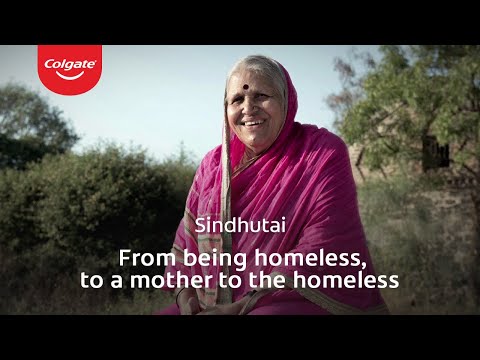
Sindhutai | From being homeless, to a mother to the homeless - Telugu - Ad Analysis

AI Editor notes
Straight from the gut!!
“This is a very well-executed piece of 'purpose' advertising. Using a real, beloved figure like Sindhutai Sapkal gives it instant credibility and emotional weight. But let's be honest: the link to Colgate is paper-thin. It feels like Colgate is borrowing her emotional equity rather than creating its own. It's effective for brand sentiment, but it feels like a well-trodden path for big brands trying to buy meaning.”
Quick Summary
Colgate bypasses product-level communication entirely to associate its brand with the powerful, true story of an Indian social icon, Sindhutai Sapkal. The strategy is to embed Colgate's tagline, 'Smile and Get Started,' into a profound narrative of optimism and resilience, positioning the brand not as a toothpaste, but as a champion of hope.
Executive Summary
This Colgate ad is a textbook example of modern purpose-driven marketing, where a brand steps back from its product to become the presenter of a powerful human story. The strategy is to align the brand with a universal value—in this case, optimism—by showcasing a real-life embodiment of that value.
The Core Insight: The simple human truth at the heart of this ad is that adversity is not an endpoint but a starting point. It suggests that the greatest acts of creation and love often stem from the deepest experiences of loss. Sindhutai Sapkal, having never received a mother's love, transforms her personal deficit into a universal gift. This reframes optimism not as a passive feeling, but as an active, defiant choice to create the future you believe in, which connects directly to the brand's tagline, "Smile and Get Started" ("Smile Karo Aur Shuru Ho Jao").
The Execution: The ad uses a simple, effective Documentary/Testimonial format. It follows a classic Setup-Turn-Payoff structure. The Setup establishes Sindhutai's initial hardship—abandoned by her family at a young age, she is left with nothing. The Turn occurs when she makes a conscious decision to transform her pain into purpose, stating, "I learnt to give the love that I never got... and I became the mother to the orphans." This is the film's pivot point, moving from a story of personal suffering to one of heroic action. The Payoff is a powerful montage of the results of her optimism: we see the happy, successful children she has raised, providing tangible proof of her life's work. The brand only appears at the very end, positioning itself as the champion of this philosophy. The pacing is deliberate, allowing Sindhutai's own words and the quiet, dignified visuals to carry the emotional weight.
The Debrief: This campaign demonstrates the immense power of authentic storytelling. Using a real, revered public figure like Sindhutai Sapkal provides an immediate shortcut to emotional depth and credibility. However, it also highlights the central challenge of this type of advertising: the risk of emotional appropriation. The connection between toothpaste and raising orphans is non-existent, and the brand's role can feel peripheral or even opportunistic. While effective for building positive sentiment, the team must recognize that this approach does little to build ownable brand assets. It makes the audience feel good about the story, but not necessarily different about Colgate.
Theme Keywords
Brand Position
The brand that champions the power of optimism to create a better future.
Brand Archetype
Caregiver
Creative Game Plan
Leverage the authentic, powerful life story of a beloved national figure to embody our brand's philosophy of optimism in action.
Diagnosis: Issues & Solutions
Primary Issue: Strategic Sense
The Problem:
The ad is entirely generic. Its emotional power is borrowed from Sindhutai's life story, not generated by the brand. A competitor could have produced this exact film, which means it fails to build any distinct brand equity for Colgate.
The Solution:
To make the brand's role more integral, the 'Keep India Smiling' initiative mentioned in the CTA could have been woven into the narrative. For instance, showing a brief, tangible example of how Colgate's foundation supports Sindhutai's work would have transformed the brand from a passive storyteller into an active enabler of her optimism.
Secondary Issue: Clarity of "What's Next?"
The Problem:
The call-to-action is a missed opportunity. After creating a powerful emotional response, the ad directs viewers to a generic corporate website, effectively dissipating all the generated goodwill.
The Solution:
Provide a more meaningful and direct action. A better CTA would have been to partner with a donation platform to 'Help Sindhutai raise another child' or to 'Share your own story of optimism,' making the viewer a participant in the campaign's philosophy.
Additional Notes
Related Links
Credits
Share this Analysis
More Colgate ad breakdowns
- Colgate Total prevents dental problems before they start | English | 20 secColgate
- Colgate Active Salt | Theater | HindiColgate
- Colgate Toothpaste for Diabetics, created with Diabetes Experts | EnglishColgate
- Colgate Swarna Vedshakti. The perfect sangam.(Hin)Colgate
- Kiran Kanojia - India’s first female Blade Runner | HindiColgate
- Colgate Strong Teeth - Andar se strong - Deepika Padukone (6+30s)Colgate
- New Colgate Visible White O2, a teeth whitening revolution, that whitens teeth in just 3 days*Colgate
- Upgrade to a healthier mouth with the new Colgate Total (Hindi)Colgate