Kiran Kanojia - India’s first female Blade Runner | Hindi - Ad Analysis

AI Editor notes
Straight from the gut!!
“Finally, a toothpaste ad that isn't about blindingly white teeth or fighting cartoon germs. This is a solid piece of brand work. It's gritty, real, and emotional. The connection to toothpaste is almost nonexistent, but that's the point. They're not selling a product; they're selling a feeling—optimism. Using Kiran's actual story makes it feel less like an ad and more like a short film the brand was proud to sponsor. It's a smart way for a legacy market leader to build a deeper moat.”
Quick Summary
Colgate successfully elevates its brand beyond the functional benefit of clean teeth to own the higher-order emotional territory of optimism. By using the powerful, true story of Kiran Kanojia, India's first female blade runner, it gives its long-running tagline, 'Smile Karo Aur Shuru Ho Jao' (Smile and Get Started), an authentic, earned meaning that a generic ad could never achieve. This is a deliberate move from product marketing to brand-purpose marketing.
Executive Summary
This Colgate film is a textbook example of a market leader shifting from defending its functional turf to capturing a higher emotional ground. For decades, toothpaste advertising has been a sea of sameness: dentists, cartoon germs, and social confidence. With the 'Smile Karo Aur Shuru Ho Jao' platform, and particularly this film, Colgate sidesteps the category conventions entirely. The strategy is to stop talking about the product (toothpaste) and start owning the outcome of its use (a smile), reframing it not as a cosmetic result, but as a symbol of inner strength.
The core insight is a simple but powerful human truth: true optimism isn't a passive state of mind, but an active, defiant choice you make in the face of adversity. A smile, in this context, becomes the first step in that journey. It's the physical manifestation of the will to begin again. This insight allows Colgate to connect a tube of toothpaste to a much larger, more meaningful human experience.
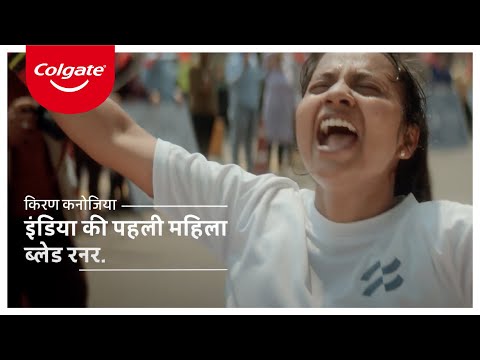
The execution uses a classic Setup-Turn-Payoff structure, rendered in a documentary style that lends it credibility. The Setup introduces us to the theme of hope before quickly plunging into the Turn: a harrowing train accident that results in amputation. The emotional turning point isn't the accident itself, but the doctor's dismissive comment: “it's not like you were planning to run a marathon anyway.” This line provides the crucial spark of defiance. The Payoff is a direct response to this challenge—a montage of Kiran Kanojia not only learning to walk but training for and completing a marathon. The line, “I had lost my leg… not my hope,” serves as the narrative climax, perfectly summarizing the film's thesis. The brand is revealed only at the end, positioning Colgate not as the hero of the story, but as the champion of the hero's spirit. [1, 2]
The team should learn that for a dominant brand, reinforcing leadership often means leading the category's conversation to a more meaningful place. By leveraging a real, verifiable story, the brand borrows immense emotional equity and authenticity. [2] The risk of a weak product link is offset by the strength of the brand message. People may not remember the toothpaste, but they will remember that Colgate stands for the optimism to 'smile and get started,' which is a far more durable asset in the long run.
Theme Keywords
Brand Position
The brand that champions the power of optimism to create a better future.
Brand Archetype
The Caregiver / The Hero
Creative Game Plan
Prove that a smile is the ultimate symbol of optimism by showing the true story of someone who used it to start again after an unimaginable tragedy.
Diagnosis: Issues & Solutions
Primary Issue: Strategic Sense
The Problem:
The biggest strategic risk is 'brand disconnect.' The story is so powerful and emotionally complete on its own that viewers might remember Kiran Kanojia's journey but completely forget that it was a Colgate ad. The branding feels tacked on at the very end.
The Solution:
Integrate the brand's core asset—the 'smile'—more organically into the narrative. For instance, the moment Kiran looks in the mirror and first chooses to smile despite her situation could have been a more deliberate, pivotal scene, subtly tying the brand's tagline to her act of defiance earlier in the film.
Secondary Issue: Clarity of "What's Next?"
The Problem:
The campaign lives and dies as a film, with a passive call-to-action to visit a website. It misses the opportunity to turn the inspiration it generates into a tangible brand action or community.
The Solution:
Create a campaign extension that gives the message a life beyond the video. This could be a partnership with adaptive sports foundations in India or a user-generated content platform where people share their own #SmileKaroAurShuruHoJao stories, making the campaign participatory rather than just inspirational.
Additional Notes
Related Links
Credits
Share this Analysis
More Colgate ad breakdowns
- Colgate Total prevents dental problems before they start | English | 20 secColgate
- Colgate Active Salt | Theater | HindiColgate
- Colgate Toothpaste for Diabetics, created with Diabetes Experts | EnglishColgate
- Colgate Swarna Vedshakti. The perfect sangam.(Hin)Colgate
- Colgate Strong Teeth - Andar se strong - Deepika Padukone (6+30s)Colgate
- New Colgate Visible White O2, a teeth whitening revolution, that whitens teeth in just 3 days*Colgate
- Upgrade to a healthier mouth with the new Colgate Total (Hindi)Colgate
- THE SWEET TRUTH | HindiColgate