Shaadi ka Shagun Cash Nahi, Paytm Karo | Instant Money Transfer from Paytm Wallet - Ad Analysis

AI Editor notes
Straight from the gut!!
“This is a textbook case of brilliant reactive advertising. They saw a national crisis and didn't just react; they reframed their product as the hero. The wedding setting is smart—it's traditional, aspirational, and a peak cash-transaction environment. The husband's frustration was every Indian's frustration in November 2016. The wife presenting the phone isn't just a product placement; it's a moment of empowerment and problem-solving. It feels less like an ad and more like a genuinely helpful tip for a new reality.”
Quick Summary
This ad's effectiveness comes from its perfect timing. Launched just ten days after India's 2016 demonetisation policy created a nationwide cash crisis, it brilliantly positioned Paytm as the essential solution. By wrapping this solution in the highly relatable cultural context of giving 'shagun' (monetary gifts) at a wedding, the ad transformed a digital product from a simple convenience into a timely necessity.
Executive Summary
This Paytm ad is a powerful piece of commercial work, not because of its cinematic artistry, but because of its strategic perfection. Its launch during India's 2016 demonetisation period transformed it from a simple advertisement into a piece of essential public information. The core insight it leverages is that social obligations and cultural traditions don't pause for economic crises; people will always seek ways to fulfill them, and they will embrace the easiest path forward.
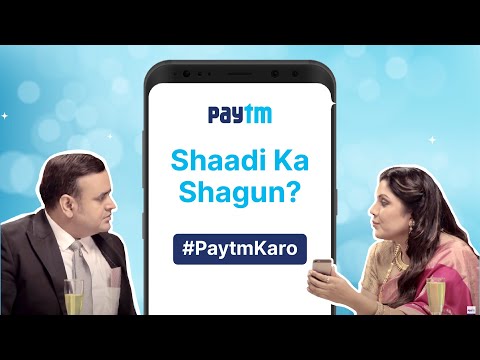
The execution follows a classic Problem-Solution framework, deployed with acute cultural and temporal awareness. The 'Problem' is established within the first 25 seconds. A couple at a grand wedding discusses the lavishness, a familiar scene. The tension arrives when the wife suggests increasing the 'shagun' (gift money). The husband's reaction—'How can we? There's a cash shortage!'—isn't just a plot point; it was the lived reality for hundreds of millions of Indians in November 2016. This grounds the ad in a powerful, shared anxiety. The 'Solution' is presented with elegant simplicity. The wife doesn't argue; she simply says, 'Change the tradition... Don't give cash... Paytm karo.' She presents her phone not as a gadget, but as the answer. This moment repositions Paytm from a tech product to a social facilitator. The final phase, 'Proof', is a straightforward UI demo. It demystifies the process, showing exactly how to add and send money. This was crucial for an audience that was being rapidly onboarded to digital payments out of necessity. The closing line, 'Ab ATM nahi, Paytm Karo' (Now, not ATM, do Paytm), was a masterstroke, directly positioning the service as the replacement for the old, failing system.
The debrief for the team that created this would be a lesson in the power of timing and relevance. The ad succeeded because it solved a real, pressing problem that was on everyone's mind. It didn't try to create a need; it met one. It taught the market that when a brand can offer a genuine solution during a time of collective stress, the message doesn't feel like an interruption but like a service. The campaign's success proves that the most powerful creative strategy is sometimes just being the right answer at the right time.
Theme Keywords
Brand Position
The simple, instant, and modern way to manage everyday payments in India.
Brand Archetype
Hero
Creative Game Plan
Demonstrate how Paytm is the immediate, simple solution to the national cash crisis by framing it within a relatable, high-stakes cultural tradition.
Diagnosis: Issues & Solutions
Primary Issue: Emotional Connection
The Problem:
The ad is highly functional, focusing on the pragmatic relief from a cash-crunch. The interaction is transactional. It misses the opportunity to connect the digital action to the emotional reward of gifting.
The Solution:
After the 'Send Money' screen in the demo, a quick cut back to the wedding showing the newlyweds' phone buzzing with the Paytm notification, followed by their happy, appreciative glance towards the couple, would have closed the emotional loop and made the digital transaction feel more personal and warm.
Secondary Issue: Strategic Sense
The Problem:
The ad's core strength—its hyper-relevance to demonetisation—is also its long-term weakness. Its primary conflict becomes dated once the cash crisis subsides.
The Solution:
A follow-up campaign could have been planned to transition the message from 'necessity' to 'convenience'. Showcase the same couple a year later using Paytm for movie tickets or bills, reinforcing the habit in an everyday context, not just a crisis one.
Additional Notes
Related Links
- Paytm seeks to cash in on demonetization with advertising blitz - Mint✓ Validated9/10AI Source
- How Paytm's quick marketing reflexes reaped demonetisation rewards - Zee Business✓ Validated9/10AI Source
- How Paytm went big on Indian demonetization - Euromoney✓ Validated9/10AI Source
- (PDF) OPPORTUNITY ANALYSIS: THE STORY OF PAYTM DURING DEMONETISATION✓ Validated9/10AI Source
- PAYTM New | PDF | Pay Pal | Strategic Management - Scribd✓ Validated9/10AI Source
Credits
Share this Analysis
More Paytm ad breakdowns
- How to Add Money to your Paytm Account? [Hindi]Paytm
- Paytm IPL 2021 Ad - The Salon (English)Paytm
- Achaar Paytm karna possible?Paytm
- Book 'Shubh Mangal Zyada Saavdhan' ticketsPaytm
- Book #Baaghi3 tickets on PaytmPaytm
- Household Bill Payments on PaytmPaytm
- Paytm IPL 2021 Ad - The Ice-cream (English)Paytm
- Paytm IPL 2021 Ad - The Tailor (English)Paytm