Ring of Fire | Tyson Fury vs Oleksandr Usyk official promo video - Ad Analysis

AI Editor notes
Straight from the gut!!
“This is completely unhinged, in the best and worst ways. It feels like they gave a nine-figure budget to a creative team that just watched 'Everything Everywhere All at Once.' The sheer audacity is impressive, but it's also chaotic. Is this for boxing fans or gamers? For a fight built on grit, the anime and pirate stuff feels like a bizarre distraction. It's less of an ad and more of a flex.”
Quick Summary
This isn't a fight promo; it's a declaration of intent. By mashing up Western, Gladiator, Pirate, and Anime genres, Riyadh Season sells its boxing match not as a sport, but as a mythological, multi-platform entertainment spectacle. It uses an extreme, budget-be-damned creative approach to position itself and Saudi Arabia as a new global hub for events so massive they defy a single genre.
Executive Summary
Riyadh Season's 'Ring of Fire' promo is less an advertisement and more a cultural declaration, a piece of marketing brute force designed to cement a new world order in entertainment. Its strategy is not to persuade, but to overwhelm. By positioning a boxing match as a multi-genre epic, it argues that Riyadh is not just hosting events, but creating entire universes around them.
The Core Insight here is that for a fight of this magnitude, the reality of sport is no longer enough to capture the imagination of a global, entertainment-saturated audience. The modern fan, fluent in the language of cinematic universes and open-world video games, craves myth. The insight is that to be the 'biggest fight in history,' it must feel bigger than history itself. It must feel like a story from the dawn of time, a legend.
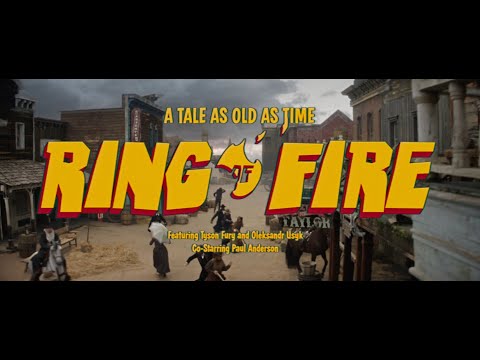
The execution follows a clear Setup-Turn-Payoff structure, albeit a chaotic one. The Setup (0:00-0:35) is a pitch-perfect homage to the classic Western. We see Usyk as a lone rider and Fury as the town's top dog, establishing the timeless 'stranger comes to town' trope. This is a smart, familiar hook. The Turn (0:35-2:05) is where the ad shows its hand. It refuses to commit to one genre, instead embarking on a dizzying tour through cinematic history. The Western town becomes a Roman Colosseum; the cowboys become gladiators. Then, they are pirates on the high seas, and finally, they transform into god-like anime warriors. Each transition is a deliberate escalation, a visual one-upmanship designed to leave the viewer breathless. The message is clear: this fight is bigger than a Western, bigger than a gladiator epic, bigger than anything you've seen before. The inclusion of Paul Anderson, channeling his 'Peaky Blinders' character, adds a layer of gritty, modern cool to the historical fantasy. The Payoff (2:06-2:25) arrives when Michael Buffer's iconic voice cuts through the chaos, grounding the spectacle back in the reality of the boxing ring. All the myth-making, the ad says, leads to this single, real moment. The final call to action makes the purpose plain: this fantasy is for sale.
The Debrief for the team is a lesson in the power of the 'shock and awe' strategy. When your budget is effectively limitless and your goal is to announce your arrival on the world stage, subtlety is the enemy. This ad demonstrates that you can trade narrative coherence for sheer, unforgettable spectacle. While it may alienate purists, it creates a gravitational pull for the casual viewer, turning a sporting event into a must-see pop culture phenomenon. It proves that in the modern era, the promotional material can become an event in its own right.
Theme Keywords
Brand Position
Riyadh Season: The global stage for entertainment so epic it becomes legend.
Brand Archetype
The Ruler
Creative Game Plan
Elevate a boxing match into a mythological, multi-genre clash of titans to justify its 'biggest fight in history' billing and generate global buzz.
Diagnosis: Issues & Solutions
Primary Issue: Emotional Connection
The Problem:
The ad creates an epic spectacle but fails to forge a human connection. By portraying the fighters as interchangeable genre archetypes (cowboy, gladiator, pirate), it strips them of their personal stories and struggles, which are the true source of emotional investment in sport.
The Solution:
Ground the fantasy in reality. Briefly show a young Fury or Usyk watching old movies or reading comics, establishing that these archetypes are their own personal inspirations. This would bridge the gap between the myth and the men, making the fantasy feel earned, not just imposed.
Secondary Issue: Strategic Sense
The Problem:
The 'everything but the kitchen sink' approach, while memorable, feels strategically unfocused. It risks confusing the audience and diluting the core message by refusing to commit to a single, powerful metaphor.
The Solution:
Choose one lane and own it. A full, two-minute promo executed as a high-end Western, for instance, could have built a more coherent and potent narrative, allowing the tension to build naturally rather than through jarring genre shifts.
Additional Notes
Related Links
Credits
Share this Analysis
More Riyadh Season ad breakdowns
- OBSESSION I Usyk2Fury Reignited Official Promo [4K]Riyadh Season
- Riyadh Season Card Los Angeles | Crawford VS Madrimov FilmRiyadh Season
- Press start for the Knockout Chaos | أنتوني جوشوا ضد فرانسيس انجانو 🥊 💥Riyadh Season
- Where Major is MadeMajor League Baseball (MLB)
- Day of Reckoning Trailer. DAZN PPV, December 23DAZN
- Phenoms | Official Trailer | FOX SPORTSFOX Sports
- When KL Rahul faced the Bengaluru Bulls! What happened next? | #PKL12Pro Kabaddi League
- Chaos Theory - You Can't Script This (WSL Official)World Surf League