Press start for the Knockout Chaos | أنتوني جوشوا ضد فرانسيس انجانو 🥊 💥 - Ad Analysis

AI Editor notes
Straight from the gut!!
“This is how you do a fight promo. It's big, dumb, and fun in the best way possible. Instead of the usual slow-motion, gritty training montages, they went full 'Street Fighter II'. It respects the audience's intelligence by acknowledging the video-game-like nature of the matchup. The production value is off the charts. My only question: is it selling the fight, or is it selling Saudi Arabia's ability to fund insane creative?”
Quick Summary
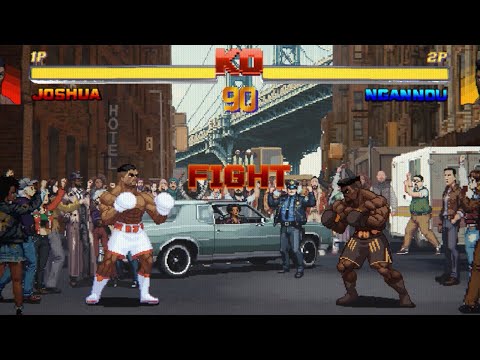
This ad succeeds by translating an unusual boxing matchup—an elite boxer versus an MMA powerhouse—into the language of 80s and 90s arcade fighting games. [3] By framing the fight as a fantasy battle too wild for reality, it uses nostalgia and humor to transform a niche sporting event into a must-see, epic spectacle, justifying its 'Knockout Chaos' title and global broadcast.
Executive Summary
Riyadh Season's 'Knockout Chaos' is less an advertisement and more a short film that understands its audience perfectly. It sidesteps the tired tropes of boxing promotion—the brooding stares, the slow-motion punches, the rags-to-riches voiceovers—and instead embraces the inherent absurdity and fantasy of its premise. The matchup itself, between a pure boxer in Anthony Joshua and an MMA brawler in Francis Ngannou, feels like something a kid would create in a video game. The agency, BigTime Creative Shop, didn't run from that; they ran toward it at full speed.
The creative execution is built on a simple, powerful narrative device: Setup-Turn-Payoff. The Setup is a beautifully realized, gritty 1990s New York street scene. It grounds the film in a familiar cinematic reality, making the subsequent chaos even more impactful. We see the fighters, the tension builds, and for a moment, we expect a conventional story. The Turn is the moment the world pixelates. The shift from live-action to 16-bit animation is the ad's core idea. It's a brilliant signal to the audience: 'We know this is wild, so let's have fun with it.' This is where the ad hooks anyone who grew up playing Street Fighter or Mortal Kombat. The Payoff is the escalating globe-trotting brawl. As the fighters are literally punched from New York to Mexico to Japan, the ad fully commits to its video game logic. The humor escalates with each new location—Ngannou bursting from a Day of the Dead skull, Joshua fighting a fishmonger with a broom. The mixed-media approach, blending live-action with high-end VFX and pixel art, keeps the energy high and the visuals constantly surprising. The final 'Game Over' screen in a real-life ring brings the concept full circle, cleverly landing the message that this fantasy fight is happening for real in Riyadh.
The debrief for the creative team would be a standing ovation. They correctly identified the core insight: this fight's appeal lies in its novelty and a 'what if' quality. By leaning into nostalgia and spectacle, they broadened the potential audience beyond hardcore boxing fans to anyone who appreciates pop culture and entertainment. It’s a campaign that doesn't just sell a fight; it sells an unforgettable experience, positioning Riyadh Season as a brand capable of delivering events that feel larger than life.
Theme Keywords
Brand Position
Riyadh Season: The global stage for impossible entertainment spectacles.
Brand Archetype
The Magician (making fantasy matchups a reality) with a touch of the Jester (the humorous, over-the-top execution).
Creative Game Plan
Frame a real-world fantasy fight as a literal video game to create hype and appeal beyond the core boxing audience.
Diagnosis: Issues & Solutions
Primary Issue: Strategic Sense
The Problem:
The ad's greatest strength—its commitment to entertainment—could also be its strategic pitfall. The 'Riyadh Season' branding, while present, is secondary to the spectacle. The final logos feel like an end-slate for a movie, not an integrated part of the narrative. An audience could easily remember the cool video game ad but forget who paid for it.
The Solution:
Integrate the destination brand more organically. Imagine a fight level that actually takes place in a stylized, 16-bit version of a recognizable Riyadh landmark earlier in the ad, not just as the final, real-world destination. This would cement the connection between the creative concept and the event's host.
Secondary Issue: Clarity of "What's Next?"
The Problem:
At 2 minutes and 28 seconds, the ad is a long-form piece best suited for YouTube and social media. Its length and narrative complexity make it difficult to adapt for shorter, high-frequency formats like 15-second pre-roll or broadcast TV spots without losing the entire concept.
The Solution:
Develop a modular creative system from the start. Create standalone, 10-15 second looping GIFs or videos of individual 'levels' (the Mexico scene, the Japan scene) for targeted social placements, each driving to the same core 'Buy Now' CTA. This would allow for broader reach and frequency while maintaining the campaign's unique visual identity.