Pee on a Plant: Super Flush - Ad Analysis

AI Editor notes
Straight from the gut!!
“I love the audacity here. Getting average sports fans to literally urinate in a houseplant during halftime sounds completely unhinged on paper, but the scientific framing makes you stop and think. The transition from apocalyptic drought footage to a peeing cherub statue is hilarious. It's provocative without feeling gross, though I wonder how many people actually do it versus just laughing and sharing the URL.”
Quick Summary
By hijacking America's most synchronized mass behavior—the Super Bowl halftime bathroom break—this campaign turns a taboo bodily function into an actionable environmental intervention through sharp comedic framing and sound agricultural science.
Executive Summary
The Core Insight: Human behavior changes faster when an awkward truth is reframed through humor rather than guilt. Environmental PSAs traditionally rely on apocalyptic imagery and moral finger-wagging, which often paralyzes audiences into apathy. Rich Earth Institute and LERMA/ identify a distinct cultural synchronization: during the Super Bowl halftime, over 100 million Americans flush their toilets simultaneously, draining billions of gallons of treated water and sending valuable agricultural nutrients (nitrogen, phosphorus, and potassium) into fragile waterways where they feed toxic algal blooms. The campaign's core insight is that by renaming this routine bio-break 'Plan P' and validating urine as natural plant food, you remove the social stigma and transform an everyday biological necessity into a mini act of environmental activism.
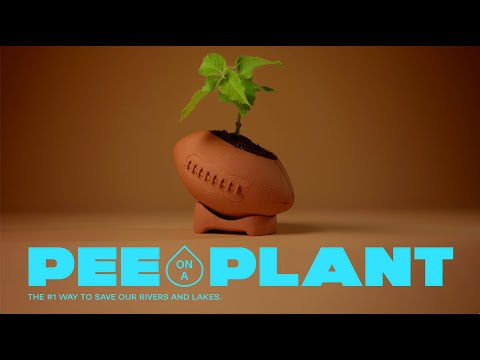
The Execution: The film uses a classic Problem–Solution–Proof narrative structure executed in sixty tight seconds. It opens on the premise: Sunday football viewing, wings, beer, and crowded living rooms, setting up the impending halftime rush. At the 0:07 mark, the spot pivots to the problem: an animated sea of people holding their bladders, followed by rapid-fire close-ups of chrome toilet handles flushing. CGI toilets floating over a downtown skyline visualize the scale before transitioning to harsh aerial shots of cracked, dried-up reservoirs. Having established the severity of the 'Super Flush,' the film delivers its comedic turn at 0:36 with bold typography reading 'PLAN P.' The payoff arrives at 0:41 with a sunlit football fan stepping outside, juxtaposed against a studio shot of a classic cherub statue urinating into a ceramic football-shaped planter. Scientific overlays displaying N-P-K chemical symbols provide instant proof and legitimacy before closing on the punchy title card: 'Pee on a Plant: The #1 Way to Save Our Rivers and Lakes.'
The Debrief: The lesson for marketers and nonprofit strategists is the power of cultural judo. Instead of trying to create an entirely new cultural moment or begging for donations, find an existing, synchronized national behavior and re-contextualize it. By embracing a slightly vulgar, highly relatable subject with scientific accuracy and polished art direction, the campaign earns attention that multimillion-dollar broadcast budgets typically monopolize.
Theme Keywords
Brand Position
The practical, science-backed pioneer making nutrient reclamation and circular sanitation culturally acceptable.
Brand Archetype
The Jester / The Sage
Creative Game Plan
Reframe human waste as an ecological resource by hijacking America's single largest simultaneous halftime bathroom break.
Diagnosis: Issues & Solutions
Primary Issue: Clarity of "What's Next?"
The Problem:
While 'pee on a plant' is a catchy slogan, practical urban dwellers in apartments without outdoor gardens face real hygienic and horticultural constraints regarding direct, undiluted indoor plant urination.
The Solution:
Include a micro-disclaimer or quick visual cue directing viewers to the website for practical home composting and dilution guidelines to avoid burning household flora.
Secondary Issue: Brand Distinctiveness
The Problem:
The campaign URL (peeonaplant.com) is heavily featured, but the sponsoring organization (Rich Earth Institute) receives virtually zero direct brand attribution on screen.
The Solution:
Add a discreet 'Powered by Rich Earth Institute' lockup alongside the URL on the final end frame to ensure the parent nonprofit captures institutional credibility and donor interest.