Rajdoot - Ad Analysis

AI Editor notes
Straight from the gut!!
“This feels less like an Indian ad from the 80s and more like something out of a Western action movie. It's all mood and vibe. They're not selling a bike; they're selling the feeling of being the coolest guy in the city. The strategy is obvious: use Yamaha's racing halo to make the sleepy Rajdoot brand exciting. For its time, this must have felt like a spaceship landing. It's a solid piece of aspirational marketing.”
Quick Summary
This ad's job was to introduce a new kind of motorcycle to India: a high-performance machine built for speed and style, not just utility. By partnering with Yamaha and adopting a moody, 'cool rider at night' aesthetic, it successfully positioned the Rajdoot 350 as a thrilling, modern, and aspirational alternative to the established, traditional players like Royal Enfield, fundamentally shifting the conversation from pure reliability to performance.
Executive Summary
This 1983 ad for the Rajdoot 350 is a textbook example of how to launch a disruptive product by selling an aspirational lifestyle, not just a machine. At a time when Indian motorcycles were largely seen as practical workhorses, this spot positioned the Rajdoot 350 as an object of desire, a symbol of power, and a ticket to a cooler, more modern identity.
The core insight is that for a certain segment of young Indian men, the desire for speed, style, and a sense of rebellion was an untapped emotional territory. The market was dominated by bikes that promised reliability; this ad promised excitement. It understood that its target customer didn't just want to get from point A to point B; he wanted to feel powerful and different while doing it. The ad leverages the universal trope of the mysterious lone rider—a figure of freedom and control—and places it in a context that would have felt incredibly fresh and aspirational in 1980s India.
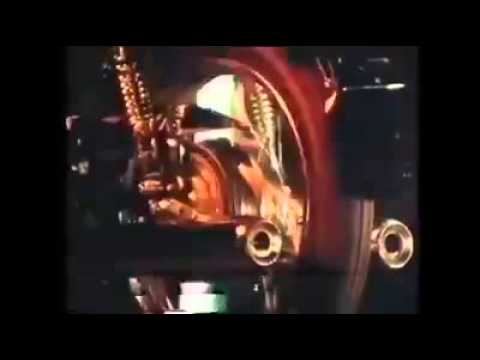
The execution follows a classic AIDA (Attention, Interest, Desire, Action) model. It grabs Attention immediately with the guttural sound of the two-stroke engine and the sleek, dark visuals. Interest is built through a montage of close-ups on the bike's features—the 'Rajdoot' and 'Yamaha' logos, the throttle, the gauges—all set against a moody, synth-driven soundtrack that feels cinematic. This establishes the bike's credentials and mystique. Desire is the main course. The shots of the anonymous rider carving through wet city streets at night are pure aspiration. It's not a product demonstration; it's a fantasy. The viewer is invited to project himself into the rider's leather jacket. Finally, the Action (or in this case, the prompt) is delivered by the voiceover: 'Now ride it and feel the difference.' It’s a challenge and a promise, cementing the idea that this bike offers a unique experience.
The debrief for any team watching this is clear: when you launch a product that creates a new category, your marketing must be as bold as your innovation. Rajdoot and Escorts didn't just bring a faster bike to India; they brought a new attitude. They understood that to sell a 'Race Derived' machine, they needed to sell the feeling of the race, even on city streets. [3, 8] The ad's success lies in its confidence and its single-minded focus on conveying an emotion—the thrill of performance—rather than getting bogged down in technical specs.
Theme Keywords
Brand Position
The fastest, most thrilling ride on Indian roads.
Brand Archetype
The Outlaw
Creative Game Plan
Position the Rajdoot 350 as the ultimate symbol of modern performance and aspirational cool by showcasing its power in a cinematic, mysterious urban nightscape.
Diagnosis: Issues & Solutions
Primary Issue: Strategic Sense
The Problem:
The ad brilliantly sells a high-performance dream, but it completely ignores the practical realities and potential anxieties of the Indian market at the time, such as fuel efficiency and maintenance. While this singular focus on 'cool' was effective for the launch, it may have contributed to the bike's eventual commercial struggles by setting an expectation that was disconnected from the cost-conscious reality for many potential buyers. [3, 8]
The Solution:
Acknowledge the practical concerns without diluting the core message. A follow-up ad could have featured a brief mention of Yamaha's 'advanced engineering for optimal performance,' subtly hinting at efficiency to assuage consumer fears without undermining the bike's powerful image.
Secondary Issue: Emotional Connection
The Problem:
The rider is so anonymous and the setting so generic that the ad feels culturally detached. While the 'Western cool' aesthetic was intentional and effective, it lacks any specific Indian cultural hook, which could have made the aspirational message feel more attainable and relatable to the local audience.
The Solution:
Incorporate a subtle cultural cue. For instance, the rider could briefly pull up near a landmark that is recognizably Indian yet modern, or the music could have blended the synth score with a subtle Indian classical motif, grounding the fantasy in a familiar context.
Additional Notes
Related Links
Credits
Share this Analysis
More Rajdoot ad breakdowns
- Rajdoot Advertisement ft. DHARMENDRARajdoot
- Calm to Boom | Xtreme 160R | Virat Kohli | #GoBoomGoXtremeHero MotoCorp
- Bajaj Avenger – The World’s Favourite IndianBajaj Auto
- Bajaj Pulsar – The World’s Favourite IndianBajaj Auto
- Introducing Passion XTEC | Alag Style, Alag Andaaz.Hero MotoCorp
- New and Re-loaded #Xtreme160R 2022 Edition | #GoBoomGoXtremeHero MotoCorp
- Bajaj Freedom | Azaadi aage badhne kiBajaj Freedom
- Tame the fear with Xtreme 160R StealthHero MotoCorp