Tame the fear with Xtreme 160R Stealth - Ad Analysis

AI Editor notes
Straight from the gut!!
“The strategy is smart, but the execution feels stiff. The opening dialogue is clunky and sounds like marketing copy, not how actual racers talk. It undermines the authenticity they were going for. The ad gets better once the riding starts, but that first ten seconds is an awkward hurdle. It's a rational ad that does its job explaining features, but it lacks the soul to be truly memorable.”
Quick Summary
Hero directly confronts the biggest barrier to performance motorcycling—fear—by positioning its Xtreme 160R Stealth not just as fast, but as intelligently safe. It uses professional racers to lend credibility to its technological solutions, arguing that true speed is unlocked by the confidence that comes from safety.
Executive Summary
In the crowded Indian commuter-performance motorcycle market, where brands typically shout about horsepower and aggressive styling, Hero MotoCorp takes a more calculated approach with its 'Tame the Fear' spot for the Xtreme 160R Stealth. The core strategy isn't to ignore the desire for speed but to reframe it. The campaign is built on a solid insight: for many young, aspiring riders, the biggest obstacle isn't a lack of desire for performance, but the very real, rational fear of danger. This fear is a powerful gatekeeper, for both the riders themselves and the family members who influence their purchase. By tackling this fear head-on, Hero positions itself not as the reckless choice, but as the smart one.
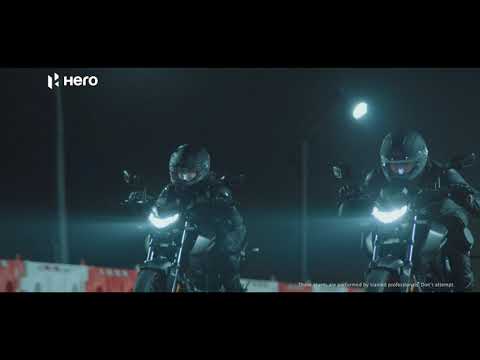
The execution uses a classic Problem-Solution framework, front-loaded with an explicit statement of the core conflict. The setup features two national racing champions, Alisha Abdullah and Hemanth Muddappa, having a rather stilted conversation about safety concerns. Hemanth states the problem directly: "Racing is a dangerous sport, and I'm always worried about safety." This is an unusually direct admission for a performance ad. The turn comes immediately as Alisha reframes this not as a barrier, but as a problem solved by the right equipment. The payoff is the introduction of the Xtreme 160R Stealth as 'the right one,' followed by a demonstration of its key safety technologies—the Side Stand Cut Off and the Bank Angle Sensor. These features are explained via on-screen text while the racers perform on a track, visually connecting the solution to the thrilling action. The inclusion of the '0-60 in 4.7 sec' claim serves as crucial reassurance that this focus on safety does not come at the expense of performance. The experts provide the credibility, and the feature call-outs provide the rational reasons to believe.
The debrief for the team would be that while the strategy was sound, the creative execution felt too safe for a campaign about taming fear. The dialogue was unnatural and sacrificed authenticity for message clarity. The ad tells us about overcoming fear but doesn't make us feel the visceral thrill of that journey. It's a product demo disguised as a conversation, and while it effectively educates the viewer on the features, it misses an opportunity to build a deeper, more resonant brand connection. The core idea is strong, but a more dynamic, less scripted execution could have elevated it from a competent ad to a truly memorable one.
Theme Keywords
Brand Position
The confident performance bike that makes speed feel safe.
Brand Archetype
The Sage (offering wisdom through technology) mixed with The Hero (enabling riders to conquer their fears).
Creative Game Plan
Prove that smart safety technology unlocks thrilling performance by having credible Indian racing champions validate our bike's features.
Diagnosis: Issues & Solutions
Primary Issue: Emotional Connection
The Problem:
The ad talks about the powerful emotion of fear but fails to generate any real feeling. The dialogue is stilted and overly rational, which keeps the viewer at an intellectual distance rather than pulling them in emotionally.
The Solution:
Show, don't just tell. Instead of a scripted conversation, use a more documentary-style approach. Capture the racers' genuine thoughts in an interview, or create a more visceral sequence where the bike's technology visibly prevents a fall, creating a moment of genuine relief and building trust in the product.
Secondary Issue: Strategic Sense
The Problem:
Using national champions as expert endorsers is a smart move, but their credibility is undermined by feeding them unnatural, corporate-sounding lines. They come across as actors, not authentic racers.
The Solution:
Let the experts be experts. Allow them to use their own words to describe the importance of safety and their confidence in the bike's technology. Unscripted, genuine testimonials would be far more powerful and believable.
Additional Notes
Credits
Share this Analysis
More Hero MotoCorp ad breakdowns
- Calm to Boom | Xtreme 160R | Virat Kohli | #GoBoomGoXtremeHero MotoCorp
- Introducing Passion XTEC | Alag Style, Alag Andaaz.Hero MotoCorp
- New and Re-loaded #Xtreme160R 2022 Edition | #GoBoomGoXtremeHero MotoCorp
- Launching The All New Xpulse 200T 4V | Where Next?Hero MotoCorp
- All new Maestro Edge 125 with Hero Connect! It’s Technomagical!Hero MotoCorp
- Hero Destini 125 - Socho Do Kadam AageyHero MotoCorp
- Xpulse 200 4V | Adventure CallingHero MotoCorp
- Unveiling the Legend: The All-New #KarizmaXMR!Hero MotoCorp